NFL: National Filibuster League
If games continue to grow longer while replay becomes a larger part of the spectacle, the NFL may discover that transparency is not always the same thing as improvement.

Greg Maresca , Bio and Archives--October 26, 2026
American Politics, News | Comments | Reader Friendly | Subscribe | Email Us
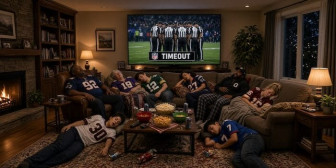
For years, the NFL has prided itself on being the perfect television product consisting of three hours of drama, violence, strategy and suspense packaged for a national audience.
That formula, however, is beginning to stretch beyond its limits. Games are taking longer than they have in years and the NFL’s latest solution would be to allow viewers to hear and see instant replay deliberations.
The average NFL game this season has lasted roughly 3 hours and 11 minutes, about seven minutes longer than in recent years. That may not sound significant, but across an entire Sunday slate it adds up.
By comparison, Major League Baseball, once criticized for a glacial pace, has transformed itself via the pitch clock. Games now average about 2 hours and 45 minutes. The NFL, meanwhile, seems to be drifting in the opposite direction.
Part of the increase is understandable as teams are more competitive than ever. Through the early part of the season, one-score games, overtime contests and last-minute comebacks have occurred at historic rates. Close games naturally lead to more timeouts, more clock stoppages and more strategic maneuvering.
Nobody is complaining when extra minutes are filled with drama and the NFL loves it as it add more commercials to the broadcast.
The issue is what occupies the rest of the time.
This season has seen a surge in penalties, averaging roughly 15 per game, a pace that would rank among the highest in league history. Every flag means a conference among officials, an announcement to the crowd, television analysis and another interruption to the flow of the game and more commercials.
Fans tune in to watch Patrick Mahomes throw touchdown passes and Micah Parsons chase quarterbacks, not to spend three minutes debating whether an offensive tackle got an early jump.
That backdrop makes the NFL’s consideration of expanded replay transparency particularly interesting.
According to reports, NFL officials are discussing allowing fans to hear conversations between replay officials in New York and on field referees during reviews. The move would follow the lead of many college conferences including the Big Ten, ACC, and Big 12, which already provide varying degrees of access to replay discussions.
The idea has obvious appeal.
Officiating remains one of the NFL’s most controversial topics. Fans constantly wonder who made a particular call, what evidence was considered and why certain rulings are overturned while others stand.
Greater transparency could improve confidence in the process.
Yet transparency and efficiency are often competing goals.
College football offers a cautionary tale. Replay was introduced to correct obvious mistakes. Instead, it frequently creates lengthy interruptions in which officials examine multiple camera angles while broadcasters speculate endlessly. What was intended as a safeguard against error has sometimes evolved into a form of legal proceeding.
The NFL has actually done a better job than most leagues at streamlining replay. Automatic reviews, coach’s challenges, replay assist and centralized decision making from their Manhattan headquarters were all designed to reduce delays. NFL officials have even expanded the number of people overseeing replay decisions sharing responsibilities.
Adding a live audio component may satisfy curiosity, but it also risks turning every review into another television event. Once viewers hear the conversations, broadcasters will dissect every word, every hesitation, and every judgment call. The scrutiny might make officiating more transparent, but it could also make already lengthy stoppages feel even longer.
NFL Commissioner Roger Goodell has argued that total penalties alone should not determine whether officiating is effective. Goodell is spot on here. The question remains whether calls are made properly.
But fans judge the game not only by accuracy.
They judge it by entertainment value.
The NFL’s challenge is not simply getting calls right. It is preserving the rhythm that made the game America’s dominant television attraction.
If games continue to grow longer while replay becomes a larger part of the spectacle, the NFL may discover that transparency is not always the same thing as improvement.
View Comments