A look ahead to the California primary, which could decide the whole thing
With 172 delegates at stake, Rubio's departure throws everything into question.

Dan Calabrese , Bio and Archives--March 18, 2016
American Politics, News | Comments | Reader Friendly | Subscribe | Email Us
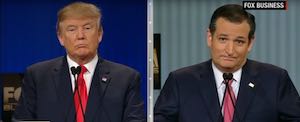 It’s roughly 11 weeks away, but it’s not too early to start considering the dynamics of the June 7 California primary – because there’s a very real chance it could decide the Republican nominee. And now that Marco Rubio has left the race, the prospect of a real battle in California looms.
The Washington Post today published the first detailed look at how things might be going in California, which is a difficult state to poll because of its sheer size. But as of last week, here were the statewide numbers (in percentages): Trump 24.9, Cruz 19.6, Rubio 17.6, Kasich 14.5.
It’s roughly 11 weeks away, but it’s not too early to start considering the dynamics of the June 7 California primary – because there’s a very real chance it could decide the Republican nominee. And now that Marco Rubio has left the race, the prospect of a real battle in California looms.
The Washington Post today published the first detailed look at how things might be going in California, which is a difficult state to poll because of its sheer size. But as of last week, here were the statewide numbers (in percentages): Trump 24.9, Cruz 19.6, Rubio 17.6, Kasich 14.5.California's delegates are winner-take-all but not on a statewide basis. Each congressional district, of which there are 53, awards 100 percent of its delegates to whoever wins that district. So you're really looking at 53 individual winner-take-all primaries happening on the same day. That obviously has the potential to end up as a split decision that doesn't change much, but a lot of that depends on where Rubio's former support goes, and whether Kasich is still viable (assuming he is even now) by the time we get to June. California is also closed primary, which eliminates Democrat mischief-makers as well as people who have little history as Republican voters or as voters in general. That would seem to create a problem for Trump, who presumably gets a lot of support from non-traditional voters. But Florida was a closed primary too, and we all know what happened there, so Cruz can't bank solely on that to get him to victory. Here's how the Post's Philip Bump sees the lay of the land as of now:
In the Bay Area, the second-most-popular Republican is John Kasich. This area includes Silicon Valley, of course, suggesting that perhaps his more moderate politics can find a home there. But also: Trump is still winning. There's a lot of open space above and below the bay itself (the visible inlet on the map), but not a lot of people living in those areas.
In Orange County, Trump is crushing it. This is probably to be expected in one of the most conservative parts of the state. We'll note here, though, that a lot of people in each area are still undecided -- also not a big surprise. In the Central Valley, it's Cruz who's winning, defeating Rubio. The agricultural heart of the state, the Central Valley, is both conservative and heavily Hispanic. This region also includes Sacramento, for what it's worth, making the picture a bit cloudier.Basically all the coastal regions showed Trump with modest leads before Rubio's exit, although the Los Angeles area was extremely close with Cruz within a single percentage point. The key to California will really be how each man appeals to Rubio's erstwhile supporters as the campaign progressees between now and June - and clearly a lot can happen. Cruz now trails Trump by 262 pledged delegates, and he needs to go on a winning streak - starting with this coming Tuesday's races in Arizona and Utah. I think there's still time for Cruz to catch Trump, especially if more conservatives start coalescing behind Cruz in a way that you'd see reflected in national polls. But Cruz is running out of time and he can't keep waiting for Kasich to quit so he'll get the two-man race he would really like. There's sadly no sign that Kasich is going anywhere.

And even if neither Trump nor Cruz is able to get to 1,237 via the primaries, I'd say it still matters a lot how the momentum looks heading into Cleveland in July. If the numbers are close but Cruz has been doing most of the winning, and the national poll numbers favor Cruz at that point, it's much easier for a divided conventional that needs multiple ballots to opt for Cruz even if Trump has a plurality on the first ballot. I don't mean to dismiss the possiblity that Kasich will gain traction and do well in California. That could happen. But if it does, it seems to me that it only helps Trump by denying Cruz the chance to pull close in the delegate race. Maybe Kasich is banking on a true brokered convention in which he gets the nod as the only compromise choice everyone can settle on. That is not outside the realm of the possible if he starts winning, but why would you expect that when he hasn't won anywhere but Ohio and everyone knows the base doesn't like him? The opportunity for Cruz in California is to quickly convert Rubio supporters to his side - and there's reason to think Rubio will help make that happen - then sweep enough districts that he can close whatever remaining gap there might be by June 7. None of this will matter, of course, if Cruz doesn't start winning consistently and quickly. He's not trailing in a Bills-Oilers 1993 playoff game sense, yet, but it's getting to that point. Does anyone know who Frank Reich is voting for?
View Comments
Dan Calabrese——Bio and Archives
Dan Calabrese’s column is distributed by HermanCain.com, which can be found at HermanCain
Follow all of Dan’s work, including his series of Christian spiritual warfare novels, by liking his page on Facebook.