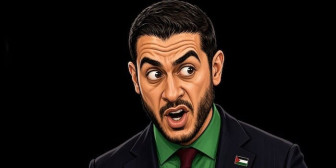
The Muslim Students Association (MSA), the Muslim Brotherhood’s main campus recruiting arm in America, also served as a recruiting arm for Al Qaeda
“We were hoping to establish an Islamic state anywhere,” Jamal Khashoggi, a Qatari operative killed while trying to stage an Islamist coup in Saudi Arabia, wrote about his time with Osama bin Laden in the Muslim Brotherhood. “We believed that the first one would lead to another, and that would have a domino effect which could reverse the history of mankind.”
Ayman al-Zawahiri, Osama bin Laden’s successor as head of Al Qaeda, joined the Muslim Brotherhood as a teenager and headed the Egyptian Islamic Jihad, a Brotherhood splinter group, and eventually merged it with Al Qaeda.
The Muslim Students Association (MSA), the Muslim Brotherhood’s main campus recruiting arm in America, also served as a recruiting arm for Al Qaeda.
Both Abdul El-Sayed and his wife were MSA leaders. MSA presidents and key figures went on to leadership roles in American politics or in Al Qaeda including Wa’el Hamza Julaidan, a co-founder of Al Qaeda and the former MSA president at the University of Arizona, and Anwar Al-Awlaki, who headed the MSA at Colorado State before heading Al Qaeda in Yemen.
Politics or Jihad were just one of two roads that an MSA leader groomed by the Islamist movement might take. And one did not necessarily preclude the other.
Abdul El-Sayed, despite his denials, came out of a Muslim Brotherhood family, played a leading role in a Muslim Brotherhood organization, married into another Muslim Brotherhood family, and both families had been involved in the networks of Islamic charities that came under close scrutiny in the years after September 11.
The Brotherhood’s organizations in the United States have claimed that organizations like Life for Relief and Development and the Islamic American Relief Agency were wrongly targeted by ‘Islamophobes’ as part of the ‘War on Terror’ after the Islamic terror attacks of September 11.