Friedrich Merz, the German Chancellor, is leading the charge to unleash AI. “I will push to ease the regulatory burden in the EU on AI,” he said recently, “and, where possible, to exempt industrial AI from the current regulatory straitjacket that is too tight.”
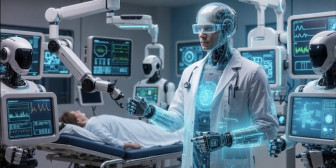
Now, before readers stop and say, “This has nothing to do with me,” think again. AI is not just about computers and robots. Increasingly, it will shape what happens when you visit your doctor, undergo a test, receive a diagnosis, or fill a prescription. And whether this becomes a blessing or another modern headache depends on our leaders setting the right course.
Americans are charging ahead at full speed with AI. In the United States, giant technology companies see healthcare as the next great gold rush. Faster diagnostics. Faster data collection. Faster treatment decisions.
Germany has a different attitude and people are asking questions. Who controls the data? Can patients trust computer-generated advice? Will medicine become colder and more mechanical? Will doctors eventually rely too heavily on algorithms? These are genuine concerns.
Medicine is not a math problem. Patients are frightened, confused, emotional, vulnerable. They need accurate information, but they also need judgment, experience, communication, and compassion.
A machine cannot look a worried patient in the eye and say, “You’re going to be alright.” At least not convincingly. But make no mistake. AI is coming to healthcare everywhere.
Soon, if not already, AI will read mammograms, identify skin cancers, flag dangerous drug interactions, predict heart disease risk, and analyze blood tests. In many cases, it will catch abnormalities earlier than physicians can do. That’s the good news.