At last: A company that posted a huge loss because of the tax cut
Because said company is highly dependent on tax breaks, which are no longer worth as much now that tax rates have been reduced.

Dan Calabrese , Bio and Archives--February 6, 2018
American Politics, News | Comments | Reader Friendly | Subscribe | Email Us
 Democrat/media predictions of calamity caused by the tax cuts have, needless to say, not come to fruition. Companies are keeping and reinvesting more of their earnings. People are keeping more take-home pay. Companies are bringing money home from overseas. And the economy is growing at a break-neck pace.
Things are not good for the doomsayers, but then how could it be otherwise. Is it possible that there's a company so inept that it could actually turn a gigantic reduction in the corporate tax rate into cause for a net loss on its balance sheet? Such a company would have to be monumentally dysfunctional, operating on an insane business model and led by utter fools. It would have to be such a terrible company that there might be a recent chapter in its history where it might have gone out of business without the benefit of a completely undeserved bailout.
Democrat/media predictions of calamity caused by the tax cuts have, needless to say, not come to fruition. Companies are keeping and reinvesting more of their earnings. People are keeping more take-home pay. Companies are bringing money home from overseas. And the economy is growing at a break-neck pace.
Things are not good for the doomsayers, but then how could it be otherwise. Is it possible that there's a company so inept that it could actually turn a gigantic reduction in the corporate tax rate into cause for a net loss on its balance sheet? Such a company would have to be monumentally dysfunctional, operating on an insane business model and led by utter fools. It would have to be such a terrible company that there might be a recent chapter in its history where it might have gone out of business without the benefit of a completely undeserved bailout.But there couldn't possibly be a company that awful out there. Could there? Oh, of course:
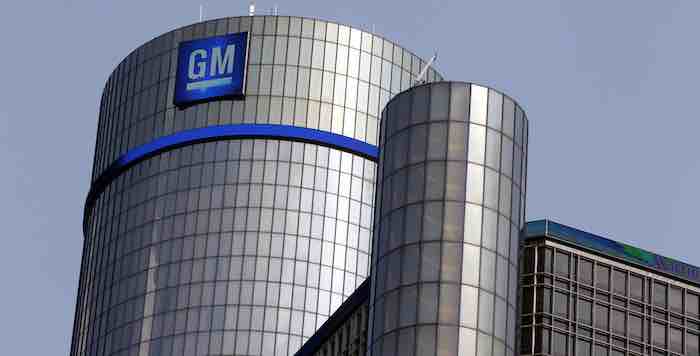
General Motors Co. GM +3.64% said its fourth-quarter bottom line swung to a $5.2 billion loss because of a hefty charge related to U.S. tax-law changes, but stout demand for pickup trucks and SUVs pushed operating profit to a record for the quarter, surpassing Wall Street forecasts. GM’s net loss for the final three months of 2017 included a $7.3 billion noncash write-down to reflect the loss in value of deferred tax assets held on its balance sheet. Several large companies have reported sizable write-downs in the value of those credits against future taxes, which fell because of the lower corporate tax rate under the federal tax overhaul. The largest U.S. auto maker in terms of sales said its fourth-quarter operating profit excluding one-time factors rose 19% to $3.1 billion, or $1.65 a share, easily hurdling analysts’ average estimate of $1.38. Revenue slipped 5.5% to $37.7 billion, higher than the average analyst forecast of $36.5 billion, bolstered by strong sales of sport-utility vehicles in North America.Basically this means that GM had accumulated tax credits from the federal government, and it was counting the value of these credits as assets on its balance sheet. The credits are worth more when the tax rate is higher because the credits save you more money. When tax rates are reduced and your tax obligations become less of a liability, your tax credits aren't worth as much so you have to write down the reduction in their value.
What GM did was take a one-time write-down, pushing its losses forward to the 2017 tax year so they would owe fewer taxes overall in the final year with the 35 percent corporate tax rate. That in itself was not an incompetent move. It was a perfectly reasonable move that any knowledgeable tax accountant would tell you to make. You want to reduce earnings subject to higher taxes while increasing earning subject to lower taxes. I am not criticizing this move. I would do the same thing. But the larger problem with GM continues to be what's always been: It is way too dependent on tax breaks, abatements, credits, subisides and protectionist government policies to shield it from the realities of its performance in the market. The Chevy Volt is a perfect example. There has never been large-scale demand for this electric car because GM can't control its costs to produce the car, forcing it to charge well over $40,000 per unit just to break even. Yet until recently GM was going balls-to-the-wall producing Volts. How could it do that? Because the federal government was subsidizing each unit sold to the tune of $7,000. That's how GM has operating for years. Much of what it does makes no sense, but politicians step in with favors, breaks and credits to protect GM from itself. And when GM bumbles to the brink of extinction in spite of all this, politicians step in with a politically driven bankruptcy that holds the company harmless for its high costs, lack of creativity and overall poor quality products. GM's tax maneuver was sensible in the moment, but one of the things this tells you is that the value of its balance sheet was overstated. Tax assets don't really have cash value. They have theoretical value to save you money on your taxes at a point in time, but even that creates a perverse incentive because your tax assets are worth more when your tax liability is larger. I'd like to see what GM would do without the favor of politicians, left simply to compete on its merits in a free and open market - and without the availability of a federal bailout if it fails. But that would require GM to get leaders who think in free-market terms, and that is certainly not the leaders GM has now.
View Comments
Dan Calabrese——Bio and Archives
Dan Calabrese’s column is distributed by HermanCain.com, which can be found at HermanCain
Follow all of Dan’s work, including his series of Christian spiritual warfare novels, by liking his page on Facebook.