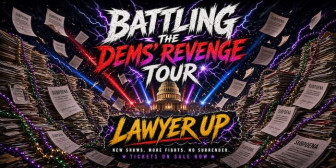
The temper-tantrum is a call for attention
This is being sold as an unprecedented assault. It isn't. It is nothing more than a temper-tantrum because they hate Trump, conservatism, MAGA, the Constitution, and a businessman’s approach to streamlining government and handling our enemies with a firm hand.
For leftism, what is coming in January is a perfectly ordinary exercise of what they believe to be a perfectly real power, mounted by people who have convinced themselves that volume is the same thing as legitimacy. If the squeaky wheel gets the grease, then a massive cacophony must get much much more--or so they believe. The temper-tantrum is a call for attention, and what they believe to be a revolutionary strategy to seize power and never let something like Trump ever happen again.
They think the voters are stupid, negative attention is just as good as fair practices, and that they can finally deliver the death-blow to anyone who might stand in their way politically. The Republican response needs to start from the understanding that, despite constitutionality or a lack thereof, the “oversight powers of Congress” exist in our modern system, so we will have to go through the whole thing and let them have their committees and their goon-squad meetings and their accusations and their subpoenas.
Unfortunately, the loudest voices inside the GOP are already getting it wrong, either treating use of “oversight” as a coup that can’t be stopped, or they are shrugging it off as theater that will pass in the night.
The Constitution does not contain a general grant of inquisitorial authority. Article I's powers are enumerated; the investigative power is implied, and implied only as an auxiliary to legislating. That is the whole architecture. Congress believes it may inquire because it must legislate, and it may compel because inquiry without compulsion is a suggestion. But the compulsion is derivative. Madison warned in Federalist 48 that "parchment barriers" collapse when one department is permitted to "exercise powers properly belonging to another," and Kilbourn v. Thompson said so in 1881 when the House tried to adjudicate a private bankruptcy: Congress had wandered out of its own department and into the judiciary's.