Far Better Than DrudgeUnfiltered News • Daily Headlines

Canada's Immigration Policies: Are We Truly Honouring Indigenous Rights?

Immigration, Indigenous ancestry, and Canada's commitment to reconciliation!


Canada prides itself on its commitment to human rights, multiculturalism, and reconciliation with Indigenous peoples. Yet an important question remains largely absent from our national immigration debate: Are Canada's immigration policies consistent with the principles of the United Nations Declaration on the Rights of Indigenous Peoples (UNDRIP), particularly when Indigenous people from Latin America seek refuge in our country?


Importantly, UNDRIP does not automatically grant Canadian immigration status to everyone with Indigenous ancestry

Long before Canada, the United States, and Mexico established their modern borders, Indigenous civilizations flourished throughout the Americas. Today, millions of people in Mexico, Central America, and South America retain Indigenous ancestry, whether through direct community membership or generations of mixed heritage.

Scientific and demographic research illustrates the depth of these ancestral connections. A 2011 mitochondrial DNA study involving Mexican Americans reported that approximately 85% to 90% of maternal lineages were of Native American origin. While mitochondrial DNA traces only maternal ancestry and cannot establish an individual's overall ancestry or Indigenous identity, these findings demonstrate the persistence of Indigenous heritage. Similarly, historical AmericasBarometer survey data found that approximately 78.1% of respondents in Mexico, 92.9% in Bolivia, and 84.4% in Peru identified as Indigenous or mestizo. These figures measure self-identification rather than genetic ancestry, but they highlight the extensive Indigenous heritage found throughout Latin America.

This raises an important question: When Indigenous migrants arrive at North America's borders, including those refused entry into the United States, how should Canada recognize their distinct historical and cultural circumstances?

Canada has endorsed UNDRIP and enacted legislation establishing a framework for implementing its principles. Article 36 recognizes the rights of Indigenous peoples divided by international borders to maintain relationships, cooperation, and connections with members of their communities.

Importantly, UNDRIP does not automatically grant Canadian immigration status to everyone with Indigenous ancestry. Nor does Indigenous ancestry alone establish membership in a particular Indigenous nation. Those distinctions matter, especially because Indigenous peoples have the right to determine their own identity and membership.



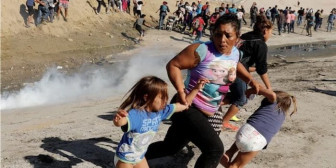
Indigenous rights intersect with immigration and refugee protection

Nevertheless, these legal limitations should not prevent a broader public discussion about how Indigenous rights intersect with immigration and refugee protection. Canada's federal government should explain whether existing immigration policies adequately consider Indigenous migrants whose communities, cultural traditions, and ancestral relationships predate the borders separating the Americas.

This does not mean abandoning immigration laws or granting automatic entry to everyone claiming Indigenous heritage. It means examining whether Canada's policies provide appropriate recognition of Indigenous identity, family connections, humanitarian circumstances, and the rights of Indigenous nations. It also means consulting First Nations, Inuit, and Métis governments rather than assuming that Indigenous peoples throughout the Americas share identical histories, political identities, or legal entitlements.

Reconciliation cannot be meaningful if it is reduced to political speeches and symbolic commitments. It requires governments to confront difficult questions about history, borders, sovereignty, and the treatment of Indigenous peoples. If Canada is committed to honouring UNDRIP, shouldn't its immigration policies at least reflect a serious consideration of Indigenous peoples whose ancestral connections extend beyond today's national boundaries? Canada does not have to choose between responsible immigration management and respect for Indigenous rights. A thoughtful policy can recognize both.

The real test of our commitment to reconciliation is whether we are prepared to examine these questions openly—and ensure that Indigenous rights remain more than words on paper.


Read next: SCOTUS Asked To Take Parental Rights Challenge To Gender Secrecy Policies

Email Us | Reader Friendly | Comments

Mark Macneill—— C. Mark MacNeill is a lifelong student of legal history, political philosophy, and public affairs. He writes on issues ranging from constitutional and administrative law to public finance, governance, and Canadian political culture. His professional experience includes legal consulting, strategic advisory work, corporate governance, and public policy analysis. He lives on Cape Breton Island, Nova Scotia