Adler Silveira, infrastructure secretary for Pará, said the COP summit is bringing about thirty major projects, so “we can have a legacy for the population and, more importantly, serve people for COP30 in the best possible way.”
Silveira stated that Avenida Liberdade will function as a "sustainable highway," featuring wildlife crossings for animals, bike lanes, and solar lighting. Additionally, he mentioned that hotels are being constructed in the area, and the port is being redeveloped to accommodate cruise ships.
Can you smell the money yet?
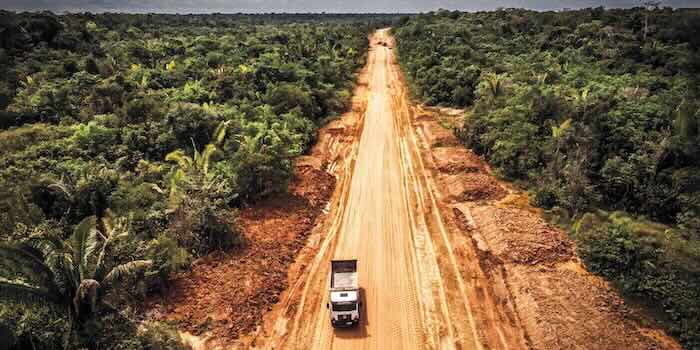
Rachael Garrett, a professor of conservation and development at the University of Cambridge, told ABC News in September that paving these roads has social benefits for nearby residents who have difficulty accessing hospitals, schools, and goods. She added that the construction of highways in the middle of the rainforest will likely lead to a "fishbone pattern" of deforestation extending from the roadway.
Claudio Verequete, a resident who lives near the road still under construction, disagrees with Garrett. He said the road has endangered his livelihood.
“Everything was destroyed,” said Verequete, who used to harvest açaí berries from trees where the road is now under construction. “Our harvest has already been cut down. We no longer have that income to support our family.”
He stated he received no government compensation and that, because of a barrier, he could not access the road.
“For us who live on the side of the highway, there will be no benefits. There will be benefits for the trucks that will pass through. If someone gets sick and needs to go to the center of Belém, we won’t be able to use it.”
COP stands for Conference of the Parties (COP) and refers to the United Nations Framework Convention on Climate Change (UNFCCC) international meeting, which is the main decision-making body of the UNFCCC.