Considering the Psychology of Corruption
However they justify it, these politicians and bureaucrats are stealing from taxpayers and should be arrested and thrown in prison

Jack Gleason , Bio and Archives--March 12, 2025
American Politics, News | Comments | Reader Friendly | Subscribe | Email Us
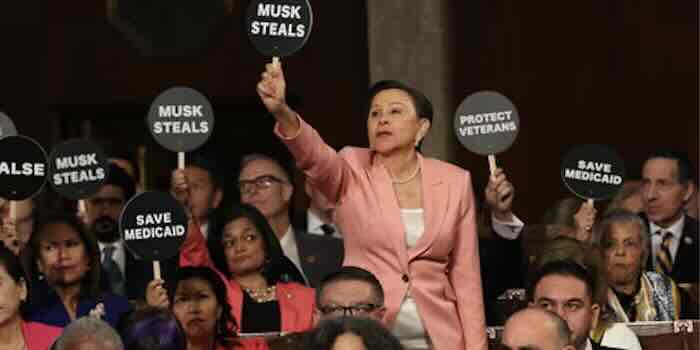
DOGE is uncovering blatant theft of taxpayer funds. How could any government official justify stealing money from neighbors who are barely surviving from day to day, simply to buy a bigger yacht?
Criminal psychology can help us understand how the human mind rationalizes committing heinous acts that harm innocent people.
Moral Disengagement, Cognitive Dissonance, Neutralization Theory
Criminology has developed theories, among them moral disengagement, cognitive dissonance, and neutralization theory, that may explain recent actions--a total disregard of rules of public decorum at a national speech, multiple staged protests and bullying tactics opposing Trump’s new initiatives, but also to justify political corruption and massive misuse of public funds.
Cognitive dissonance refers to the mental discomfort experienced when people’s actions are inconsistent with their values. This leads them to change their beliefs to justify those actions.
In the realm of campaign finance, cognitive dissonance may also occur when politicians publicly advocate for reducing the influence of money in politics while accepting huge donations from special interest groups, tech companies, or Wall Street firms and simultaneously promoting policies to benefit those industries. To resolve the dissonance between their public stance and private actions, they might emphasize the need for money for their political campaigns, rationalizing that their beneficial policy goals justify accepting such contributions.
Moral disengagement involves justifying unethical actions through various cognitive mechanisms. During the 2020 protests following the death of George Floyd, many engaged in violence and looting of business owners in their own neighborhoods. They may have justified their actions as a means of drawing attention to systemic injustice, or to right what they perceived as past wrongs —both forms of moral justification.
Neutralization theory provides insight into how individuals rationalize illegal behaviors like voter fraud. In recent years, there have been countless allegations of intentional misconduct in various elections, including the 2020 U.S. presidential election. In December of 2023, Rasmussen released a landmark poll where 20% of U.S. voters admitted cheating using absentee ballots in the 2020 election. Many may have rationalized their behavior by denying any real harm, a technique known as denial of injury. By convincing themselves that one fraudulent vote would not impact the election outcome, they neutralized the guilt associated with their actions.
One can only guess the kinds of rationalizations Democrat operatives might have used when they submitted thousands of voter registration forms they knew to be fraudulent.
Misuse of taxpayer money is a frequent issue in political corruption, often justified through moral disengagement. In 2018, Malaysia's former Prime Minister Najib Razak was implicated in the 1Malaysia Development Berhad scandal, where billions of dollars were embezzled from a government fund used by Najib and his associates for personal luxuries and political campaigns. Najib's defense centered around the claim that he believed the fund would benefit the Malaysian economy, illustrating moral justification.
Situational factors can significantly influence how individuals rationalize unethical behavior through the diffusion of responsibility. In a corrupt corporate culture, individuals may feel less personally accountable for their actions.
The 2001 Enron scandal, although primarily a corporate case, offers insights into political corruption. Executives at Enron engaged in widespread accounting fraud, leading to the company's collapse. Many involved justified their actions by pointing to a high-pressure environment where unethical behavior was normalized. By diffusing responsibility across the organization, individuals felt less culpable for their actions. Certainly this could apply in government agencies where “everyone” submits and approves wasteful or corrupt spending on useless or nonexistent projects.
Instances of document falsification can involve rationalization through the denial of victim. For example, in political news reporting, there might be cases where information is selectively edited or presented misleadingly to advance a narrative. If a Democratic operative was to spread false and misleading information about President Trump, they might rationalize this by viewing him as a legitimate target due to policy disagreements, past actions or simple dislike of his mannerisms.
Politically motivated “lawfare” can also be justified this way. In 2019, the U.S. House of Representatives initiated impeachment proceedings against President Trump, alleging abuse of power and obstruction of Congress. They used false and misleading evidence and ignored basic rules of legal process. They justified their actions and condemned his defense team by claiming that Trump was so corrupt that any method to get him out of office was acceptable.
By framing these actions as essential to uphold democratic norms or protect civil rights, individuals can rationalize the use of legal tools that might otherwise be seen as unfairly hyper-partisan. Yet they would be horrified if someone tried doing the same thing to them.
Some individuals engaged in political misconduct may actually exhibit psychopathic traits, characterized by a lack of empathy and remorse.This can be observed in the case of J. Michael Pearson, former CEO of Valeant Pharmaceuticals. Although not a politician, Pearson's actions have significant political implications. Under his leadership, Valeant used aggressive pricing strategies to put the cost of essential medications out of reach of many Americans. His apparent disregard for the well-being of patients highlights a lack of empathy, a hallmark of psychopathy, which facilitated his morally questionable business practices.
Understanding the psychological mechanisms behind the rationalization of harmful behavior is essential for addressing and preventing criminal activity, particularly in these political contexts. By examining real-life examples through the lenses of cognitive dissonance, moral disengagement, neutralization theory, and other psychological frameworks, we gain valuable insights into the complexities of human behavior which can help to develop interventions and policies aimed at promoting ethical conduct in political and corporate life.
DOGE is uncovering trillions of wasted taxpayer dollars, support of criminal activities, irreparable harm to the economy, and turning down other programs that would actually benefit the nation. Yet many oppose their every move.
The ones who are screaming the loudest are the criminals who are committing the fraud along with the judges who have been advancing their lawfare.
The solution is to continue pointing out the massive levels of corruption uncovered using clear facts and a dark sense of humor. We can explain how other projects may have been passed by in favor of corrupt activities such as criminal bribes and kickbacks, allowing criminals into the country, and rampant crime in our inner cities.
There is one objection to DOGE that does have some merit. Randomly interspersed through the fraud and corruption are a few government programs that actually may do more good than harm. It would be relatively easy for DOGE to set up a national hotline for citizens to report on good programs that have been temporarily frozen for expedited review and reinstatement.
However they justify it, these politicians and bureaucrats are stealing from taxpayers and should be arrested and thrown in prison.
View Comments
Jack Gleason is a common sense conservative writer. His always-free Substack is https://jackgleason.substack.com/.
For comments or article suggestions, you can reach him at .(JavaScript must be enabled to view this email address).
Recent articles…
Canada Free Press and American Thinker