You don't see a coup involving nearly 3,000 members of your own military when you've got any sort of consensus support for the government. Imagine the sheer logistics of organizing such a thing. How do you get that many people to play ball and not have anyone blab before it's time to execute the plan? Granted, there were apparently enough forces loyal to Erdogan - or just not convinced a coup was the right way to go - that they were able to put it down. But that is still one hell of a large faction prepared to rise up against a president who clearly has issues among his own people.
The media are portraying this as scary instability besetting a major U.S. ally. It certainly is unstable, but Turkey has not been quite as reliable a U.S. ally in recent years as it was in the past. Erdogan has either become more sympathetic to radical Islam or more intimidated by factions of it within his own country.
But who was really behind it? Erdogan apparently believes it was one
Fethullah Gullen, who lives in Pennsylvania of all places:
Erdogan believes a Muslim cleric living in exile in Pennsylvania named Fethullah Gullen was behind the coup. Gulen, 75, promotes a philosophy that blends a mystical form of Islam with staunch advocacy of democracy, education and science. In a televised speech Saturday night, Erdogan called on the U.S. to extradite Gulen.



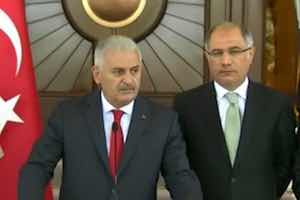 Things are not OK in Turkey. The coup has been put down, and President Recep Tayyip Erdoğan has returned to power. But the coup that nearly toppled him was not a matter of a few generals getting uppity and thinking they could wrestle control away. It was, shall we say, a tiny bit bigger than that: