Durango Southwest Colorado
The best Colorado has to offer, where tall mountains meet high desert

John Treadwell Dunbar , Bio and Archives--December 5, 2012
Travel | Comments | Reader Friendly | Subscribe | Email Us
 “What's that smell?” she asked one crisp fall morning standing on a corner in historic downtown Durango as the world-renowned Durango and Silverton Narrow Gauge Railroad, laden with giddy tourists bound north into the rugged fold of the spectacular San Juan Mountains, chugged by. With a toot of its horn that woke the guests at the Strater and Palmer hotels, Old Ironsides belched a thick, black column of smoke and coal cinders that stuck to the roof of my mouth and clogged my nostrils with a 19th century industrial stench, which, like the earthy aroma of horse manure, some people grow fond of.
“Money,” I said, holding a copy of “Chasing Sovereignty” in one hand, and with the other waving to Mabel and her camera peering out of the yellow box car that rolled past in a noisy procession that has been huffing and puffing, back and forth and up and down the verdant Animas River Valley for 130 years and counting. “Lots and lots of money.”
“What's that smell?” she asked one crisp fall morning standing on a corner in historic downtown Durango as the world-renowned Durango and Silverton Narrow Gauge Railroad, laden with giddy tourists bound north into the rugged fold of the spectacular San Juan Mountains, chugged by. With a toot of its horn that woke the guests at the Strater and Palmer hotels, Old Ironsides belched a thick, black column of smoke and coal cinders that stuck to the roof of my mouth and clogged my nostrils with a 19th century industrial stench, which, like the earthy aroma of horse manure, some people grow fond of.
“Money,” I said, holding a copy of “Chasing Sovereignty” in one hand, and with the other waving to Mabel and her camera peering out of the yellow box car that rolled past in a noisy procession that has been huffing and puffing, back and forth and up and down the verdant Animas River Valley for 130 years and counting. “Lots and lots of money.”Not just another train ride for the kids, the D & S Narrow Gauge is a journey for the ages, a step back in time seeped in American Western lore that conjures up the hard life that was the lot of hard-rock miners, and bowlegged cowboys on cattle ranches who inspired the likes of novelist Louis L'Amour to create imaginary lives and story out of the fabric of this adventurous landscape. It's not just one man's opinion. This country all about is the best Colorado has to offer, where tall mountains meet high desert, and Southern Ute tribes hunted and gathered among these hills and valleys framed by red sandstone cliffs, and the forests of towering ponderosa, and the white bark of aspen trees quaking – until they were run off at gunpoint under color of law by whitey's self-fulfilling prophecy of Manifest Destiny. Little did the travelers of old know that the D&S NGRR would be named the number one North American train trip by National Geographic Traveler in 2010, and one of the world's top ten most exciting train rides by the Society of American Travel Writers in 2008. Rapidly built within a year in the 1880s, the line was initially constructed to service the raucous mining camps near colorful Silverton. But it wasn't long before tourists in droves hopped aboard for the splendid scenery; coursing along narrow gorges, timbered valleys and plunging waterfalls; skirting beneath a towering mass of rocky alpine mountains that scrape the clear blue Colorado sky; mesmerized, hypnotized; watching the sparkle and white froth of the Animas river – that River of Lost Souls which Butch Cassidy and the Sundance Kid leaped into up at Baker's Bridge - as it tumbles and roars and settles down in the smooth green places, transporting at its own pace whitewater rafters bouncing and drifting at leisure; clear water playing host to the fisher man and the fisher woman, flicking and reeling long wet lines with hooks and barbs near the river's grassy banks.
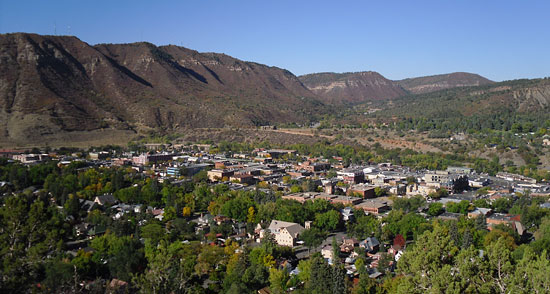
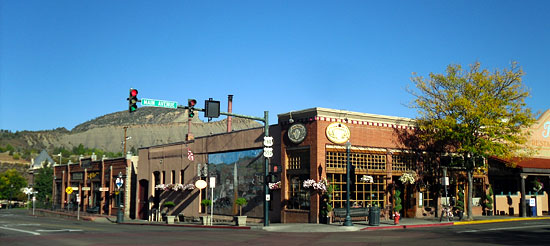
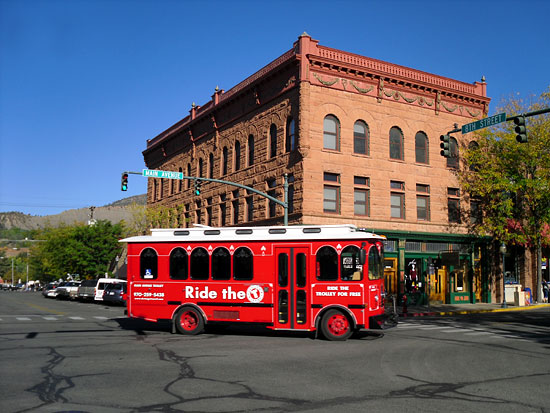
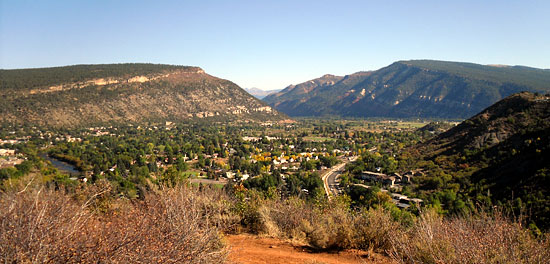
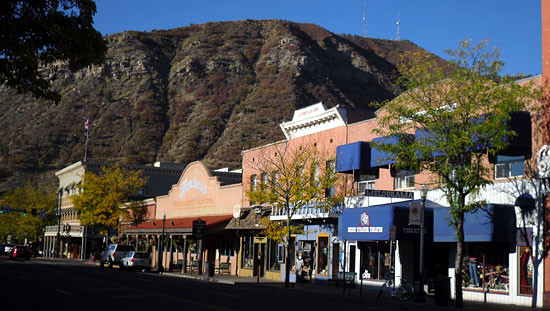
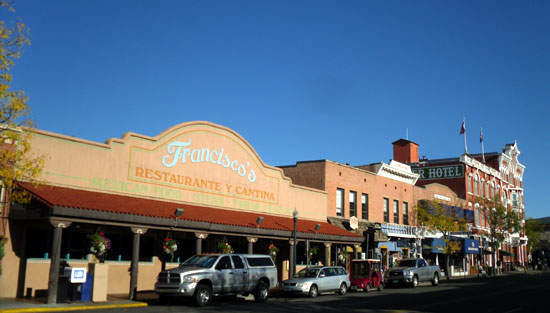
It had been twenty-five years since I left Durango. Returning late this summer was an unexpected bittersweet homecoming that unleashed a flood of cherished memories acquired over four years of college life at Fort Lewis up on the mesa overlooking town at the base of the La Plata mountains. Parents of the college-bound: Fort Lewis is one of the most beautiful campuses in the American West and a great place for a quality education at relatively reasonable prices. And, it's a rousing good time! With each mile of the winding, twisting and turning drive south from Ouray – the real Switzerland of America – over Red Mountain and Molas passes and Coal Bank Hill, images long forgotten emerged from my befuddled mind dizzy from the high altitude and thin air. I began wondering why I left in the first place – it's that beautiful – all those rugged high mountains and deep, plunging valleys; an exquisite, accessible alpine wonderland that draws them in by droves now. Here was the playground of my reckless youth. Back then I was a confident long-haired deep thinker of political philosophy, of which I remember absolutely nothing. Karl Marx had a beard; I remember that. Now I'm just bald and boring, muddling through what's left of life. No need for Outside Magazine or countless other “best of” lists to tell me Durango is one of the best places to live in America where the inward migration of good-life-seekers has pushed the population up to 17,000. Young, athletic and educated, Durango has become a resort town extraordinaire with a 21st century Western flair; a bustling haven for the “beautiful people” (I immediately felt out of place) spinning along on their mountain bikes, sipping on their camel backs, and dashing hither and yon with bottomless New Age energy. They're a happy, laid back progressive folk now, who know they live in a wonderful place and want to keep it that way. It seemed more crowded than I remember as I drove down Main that was crawling with tourists meandering in and out of eclectic business establishments. Durango exudes an artsy historic Western ambiance reminiscent of Bozeman, Montana; old two-story brick buildings and wooden store fronts now home to specialty shops, fine-art galleries, upscale boutiques, micro-breweries, coffee shops, Marie's bookstore, live theater at “The Hank,” all the fancy wining and dining and venerated burger joints still standing like Old Tymers, and great Mexican food at Franciscos.
And there's the Ore House where I grilled steaks my junior year to make up for the short-comings in the G.I. Bill. And across the street is the old Clancy's Pub and Abbey Theater where I flipped burgers (sweet Susan waited tables) and where I befriended George Wendt with free food right before he became Norm on Cheers. It was during the writers strike when Chicago's Second City came to town – and what a wild couple of weeks at Clancy's that was, oh, my.
 And there's the old Fahrquarts, that boisterous rock-and-roll joint blaring live electric music where we downed pitchers of beer in the gross and spewed gallons of sweat on the dance floor bumpin' and jivin', when the bar was against the back wall and the floor was sunk three feet deep. And down Second Avenue I drove, right on by the courthouse where I was hired as an extra in the film production of The Abduction of Kari Swenson; that's me in the back corner with a notepad raising my arm pretending to be a reporter at the sheriff’s news conference feeling awkward and talentless, but $25 richer.
Like many attractive communities, Durango pulls them in like a magnet. Jobs are few, for most of us, especially in this bleak economy, and the cost of living is up there. Out of morbid curiosity I counted at least 140 lawyers in the yellow pages – far too many for a carcass this size. American lawyers: capitalists who thrive on controversy, too often at our expense, filing too many motions at what, $300 an hour? $400? I'm glad to see their wages have kept pace with the cost of living index and the upward crawl of inflation. Can't say that for the service sector where the little people are still pulling down $8-9 an hour. That hasn't changed in twenty-five years and won't for another twenty-five. Of course, if you're desperate for a counselor at law, and he or she is good, honest and fair, they're worth their weight in gold.
My years in Durango filled me with inspiration that lingers to this day; not the raging bonfire keggers up at Junction Creek when camping was free and rangers in green trucks were civil and unarmed; or tipping over in a canoe as I bounced, panicking, through Smelter Rapids where the old radioactive tailings pile leached radionuclides into the Animas; or the crunchy midnight strolls through empty downtown streets in the dead of winter as the sky fell in large flakes and snow piled up in drifts, and electric lights twinkled and blinked. No, it's the people who inspired me, and left indelible marks on my personality that shape me to this day.
And there's the old Fahrquarts, that boisterous rock-and-roll joint blaring live electric music where we downed pitchers of beer in the gross and spewed gallons of sweat on the dance floor bumpin' and jivin', when the bar was against the back wall and the floor was sunk three feet deep. And down Second Avenue I drove, right on by the courthouse where I was hired as an extra in the film production of The Abduction of Kari Swenson; that's me in the back corner with a notepad raising my arm pretending to be a reporter at the sheriff’s news conference feeling awkward and talentless, but $25 richer.
Like many attractive communities, Durango pulls them in like a magnet. Jobs are few, for most of us, especially in this bleak economy, and the cost of living is up there. Out of morbid curiosity I counted at least 140 lawyers in the yellow pages – far too many for a carcass this size. American lawyers: capitalists who thrive on controversy, too often at our expense, filing too many motions at what, $300 an hour? $400? I'm glad to see their wages have kept pace with the cost of living index and the upward crawl of inflation. Can't say that for the service sector where the little people are still pulling down $8-9 an hour. That hasn't changed in twenty-five years and won't for another twenty-five. Of course, if you're desperate for a counselor at law, and he or she is good, honest and fair, they're worth their weight in gold.
My years in Durango filled me with inspiration that lingers to this day; not the raging bonfire keggers up at Junction Creek when camping was free and rangers in green trucks were civil and unarmed; or tipping over in a canoe as I bounced, panicking, through Smelter Rapids where the old radioactive tailings pile leached radionuclides into the Animas; or the crunchy midnight strolls through empty downtown streets in the dead of winter as the sky fell in large flakes and snow piled up in drifts, and electric lights twinkled and blinked. No, it's the people who inspired me, and left indelible marks on my personality that shape me to this day.
 Like my college roommate, Jeremiah. Everyone in Durango knows Jeremiah. He's the fellow who rode his motorcycle from Alaska to the southern tip of South America and back, and took us along for the ride with tales of daring-do published in the Herald and at journeysofar.com. I blame him for my incessant scribbling; perhaps a tad envious, his adventures moved me to put pen to paper in a desperate effort to catch up. But who can compete with Peru, Ecuador, Argentina and Brazil? Riding a motorcycle through Columbia; now that takes a pair, let me tell you. But I stay with it, scribbling, scribbling, snapping the occasional photo and aspiring to his fine writing and stellar photography that could easily grace the glossy pages of a National Geographic magazine.
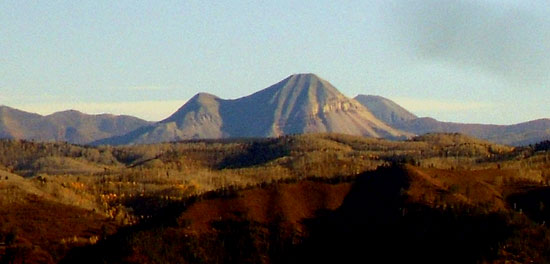
It was Jeremiah and J.T., and a couple of pretty girls who hauled me up Engineer Mountain, the first real mountain I had ever climbed, and which changed my life forever and set me on the path to becoming a hippie environmental lawyer (there, I said it), infusing me with environmental sensitivities that were all the rage. I can still hear them laughing at me as I crawled low to the ground the last hundred feet, waiting to be blown off by a gust of wind like a bread crumb, then standing straight and walking across the surface of the moon for the very first time, that rarefied land of rock and plummeting exposure so tantalizing and addictive. The view under deep blue skies, with clouds approaching and electricity in the air that stood our hair on end, put me in a trance that will never leave me. That's what makes Southwest Colorado so special; this, right here. I'm pointing south. There's Purgatory, down below, a world-class ski resort thirty miles north of town that will always be “Purgatory” and not the newly-named Durango Mountain Resort, where I worked at the ski school with my future X and with Susan, precious Susan, teaching rug rats to snowplow down bunny slopes. And over there up north I see Molas Pass where we slipped about on Nordic skis under a full moon, high on something I'm certain, sipping cheap red wine and sitting in a snow cave – another first - watching amber candlelight sway and shift our huddled shadows, waiting for the roof to collapse and bury us alive with a quick and powerful “thump.” And across the valley, the sheer face of Snowden where I hustled to keep up with J.T., and on gaining the summit heard rumbling, and peering over the other side watched eighty elk gallop single file down and away, across lichen-strewn alpine tundra and rocky outcroppings.
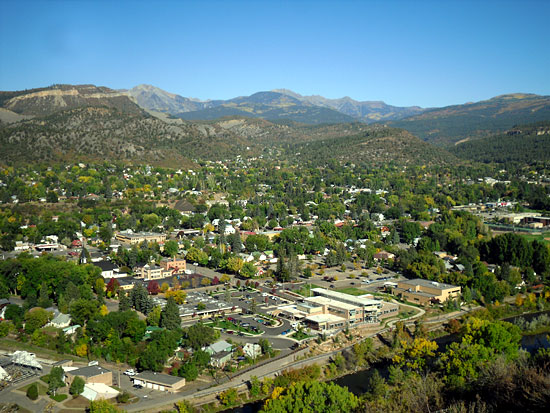 High country. To the east and north and west a crumpled carpet of mountains as far as the eye can see. Big mountains. Fourteeners like pointy Pigeon, Turret and bulky Eoulis, however that's spelled, just over there in plain sight where I slept one night under a different full moon in a high basin and woke to the clatter of hooves and watched a family of mountain goats stroll through camp ten feet from my sleeping bag. And I succumbed to the lure of the great bend of the Continental Divide Trail from Silverton to Wolf Creek Pass, a 70-mile meandering path almost all above timberline, way up there. It was my big solo trek as I methodically lugged an 80-pound pack from one end to the other, just me and my four-legged Maya wading waist deep through the wildflowers of the Weminuche Wilderness, outrunning bolts of lightning that chased us daily up and over green open country, loving it dearly.
I was crushed when I heard professor Don Gordon had passed away. The sad news came during the annual literary festival held in September at Durango's new high-tech public library. Don holds a special place in my heart. It was 1980, I think, when he took ten girls and ten guys in two vans to Mexico, Belize and Guatemala to further our education and for which we received six anthropology credit hours. What a trip that was as we explored ancient Mesoamerican ruins at Uxmal, Tulum, Palenque and Tikal; a life-altering experience for which I am forever grateful. “He's dead?” I asked another author peddling her stories, who answered glumly that yes, indeed, the man with twenty-eight trips to Mexico under his belt is no longer with us.
High country. To the east and north and west a crumpled carpet of mountains as far as the eye can see. Big mountains. Fourteeners like pointy Pigeon, Turret and bulky Eoulis, however that's spelled, just over there in plain sight where I slept one night under a different full moon in a high basin and woke to the clatter of hooves and watched a family of mountain goats stroll through camp ten feet from my sleeping bag. And I succumbed to the lure of the great bend of the Continental Divide Trail from Silverton to Wolf Creek Pass, a 70-mile meandering path almost all above timberline, way up there. It was my big solo trek as I methodically lugged an 80-pound pack from one end to the other, just me and my four-legged Maya wading waist deep through the wildflowers of the Weminuche Wilderness, outrunning bolts of lightning that chased us daily up and over green open country, loving it dearly.
I was crushed when I heard professor Don Gordon had passed away. The sad news came during the annual literary festival held in September at Durango's new high-tech public library. Don holds a special place in my heart. It was 1980, I think, when he took ten girls and ten guys in two vans to Mexico, Belize and Guatemala to further our education and for which we received six anthropology credit hours. What a trip that was as we explored ancient Mesoamerican ruins at Uxmal, Tulum, Palenque and Tikal; a life-altering experience for which I am forever grateful. “He's dead?” I asked another author peddling her stories, who answered glumly that yes, indeed, the man with twenty-eight trips to Mexico under his belt is no longer with us.
 “No, he's not,” said the man standing next to her, pointing up the hall. “He's right over there.” And by golly, there was Don Gordon, a little shorter perhaps, and much whiter in the hair. I went from sad to happy in an instant at my reunion with the man who gave higher education a higher meaning.
He never missed a beat as we reminisced about that trip, recounting minute details even I had forgotten; twenty pasty-white American kids skinny dipping in remote hot springs hallucinating on Tequila; crawling through the Mayan ruins at Palenque at dawn surrounded by jungle-shrouded hills; diving and swimming in crystal clear pools of fresh water gushing and roaring over enormous waterfalls deep in the remote jungle at Agua Azul; drinking Tecate beer, always drinking, and the van breaking down in the desolate hinterlands. And that fellow from Spain - a braver man I have never met – who took our counterfeit Belize dollars at one Chetumal bank (the ink still wet as they printed the stuff up in the back room) and exchanged it for American dollars at another bank across the street before we roared out of town and raced south across the border into Belize – leaving Fifi, Don's lapdog, behind, never to be seen again. This is college?
 My mentor, Dr. David Bass, deserves a special, heartfelt “thank you” for sanctioning another trip the next winter semester when I returned south with five good friends, receiving full credit, no less. We piled into good-old Dave's brown propane-fueled pickup and drove to Houston where we got smashed on Ouzo at Sheri's house one night, and the next morning flew to the Yucatan Peninsula. Six of us, including my future X, the cute blond, made the most of that semester, visiting all the good sites again, including Chitzen Itza, and Cancun before it became “Cancun”; San Crystobal de las Casas and the Indian festivals at remote Chamula in Chiapas.
After a month the cute blond and I peeled off from the group and by thumb and bus meandered down the Pacific Highway into Guatemala, exploring the mountain country, visiting old colonial cities like Antigua, relaxing at Lake Atitlan, climbing volcanoes and getting to know each other. This is college? And from Guatemala City we flew by yellow death-trap into the splendid ruins at Tikal in the dense jungles of the Peten. Little did we know, in our love-struck naivete, that all around us, mostly in the mountains, war was raging as Guatemala's right-wing dictatorship went about slaughtering tens of thousands of indigenous Mayan Indians with indifference.
My mentor, Dr. David Bass, deserves a special, heartfelt “thank you” for sanctioning another trip the next winter semester when I returned south with five good friends, receiving full credit, no less. We piled into good-old Dave's brown propane-fueled pickup and drove to Houston where we got smashed on Ouzo at Sheri's house one night, and the next morning flew to the Yucatan Peninsula. Six of us, including my future X, the cute blond, made the most of that semester, visiting all the good sites again, including Chitzen Itza, and Cancun before it became “Cancun”; San Crystobal de las Casas and the Indian festivals at remote Chamula in Chiapas.
After a month the cute blond and I peeled off from the group and by thumb and bus meandered down the Pacific Highway into Guatemala, exploring the mountain country, visiting old colonial cities like Antigua, relaxing at Lake Atitlan, climbing volcanoes and getting to know each other. This is college? And from Guatemala City we flew by yellow death-trap into the splendid ruins at Tikal in the dense jungles of the Peten. Little did we know, in our love-struck naivete, that all around us, mostly in the mountains, war was raging as Guatemala's right-wing dictatorship went about slaughtering tens of thousands of indigenous Mayan Indians with indifference.
 “Chasing Sovereignty,” my recently published novel (available at Amazon) grew out of these cherished memories and Guatemala's inferno of the 80s. And for all of these experiences that will last a lifetime I have Durango to thank, and especially Fort Lewis College on the mesa, the greatest liberal arts college of its size in the American West.
As soon as I saw the large crowd at the Ska Brewing Company I knew I was in for a rough afternoon. They came in the hundreds because they cared, and I understood right then and there what elevates this community above others. Live music played out back, the auction was ongoing and beer flowed as Durangoans of all walks of life came to the benefit with money in hand for one of their own; to help shoulder the burden of crushing and oppressive medical bills that had saddled Susan and the James gang. How many times have we witnessed this scenario, where astronomical medical expenses wipe out honest lives of toil. Some day we will look back and recognize it as the bane of American society, to our collective shame.
“Chasing Sovereignty,” my recently published novel (available at Amazon) grew out of these cherished memories and Guatemala's inferno of the 80s. And for all of these experiences that will last a lifetime I have Durango to thank, and especially Fort Lewis College on the mesa, the greatest liberal arts college of its size in the American West.
As soon as I saw the large crowd at the Ska Brewing Company I knew I was in for a rough afternoon. They came in the hundreds because they cared, and I understood right then and there what elevates this community above others. Live music played out back, the auction was ongoing and beer flowed as Durangoans of all walks of life came to the benefit with money in hand for one of their own; to help shoulder the burden of crushing and oppressive medical bills that had saddled Susan and the James gang. How many times have we witnessed this scenario, where astronomical medical expenses wipe out honest lives of toil. Some day we will look back and recognize it as the bane of American society, to our collective shame.
 Durango's love was in the air, and the smell of beer, my nemesis. With not a drink in over six years, it was a struggle navigating the brewery and the crowds looking for my platonic friend, pretty, slender Susan. Would she remember me after the blink of twenty-five years? Our time at Clancy's? The skiing? The wild parties, and all of our friends, many of whom had drifted on? I made my way through the downstairs crowd looking for her, and the crowds out back where live electric music played. And then I climbed the stairs and strolled about the top floor, and when I slowly walked by our eyes locked and our jaws dropped. Oh, my.
And then the hugging and the tears gushing, and the kissing – not on the lips – and more tears and more clinging to each other as she bubbled forth, and I sputtered gibberish. And then came the profound, unanswerable questions about life's cruel tricks that keep us up at night, tossing and turning: Why this? Why that? Why us? What did we do wrong? What did we do to deserve this? And why on earth did they build the visitors center next to the smelly sewage treatment plant? (By grace you are saved).
Durango's love was in the air, and the smell of beer, my nemesis. With not a drink in over six years, it was a struggle navigating the brewery and the crowds looking for my platonic friend, pretty, slender Susan. Would she remember me after the blink of twenty-five years? Our time at Clancy's? The skiing? The wild parties, and all of our friends, many of whom had drifted on? I made my way through the downstairs crowd looking for her, and the crowds out back where live electric music played. And then I climbed the stairs and strolled about the top floor, and when I slowly walked by our eyes locked and our jaws dropped. Oh, my.
And then the hugging and the tears gushing, and the kissing – not on the lips – and more tears and more clinging to each other as she bubbled forth, and I sputtered gibberish. And then came the profound, unanswerable questions about life's cruel tricks that keep us up at night, tossing and turning: Why this? Why that? Why us? What did we do wrong? What did we do to deserve this? And why on earth did they build the visitors center next to the smelly sewage treatment plant? (By grace you are saved).
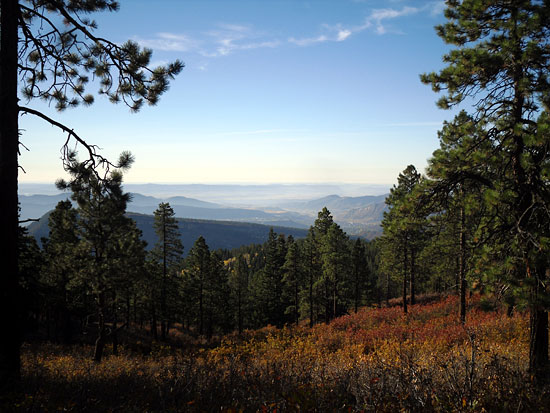 She told me about hers, and I showed her mine; lifted up my shirt and pulled my pants down, just far enough to reveal that long, crooked gash on my belly still seeping blood where they sliced me open a few weeks earlier and cut out half of my large intestine and that enormous tumor lodged therein. (By grace you are saved).
And here I sit in the sun waiting, glancing at my watch and the seconds ticking by all too fast, finding solace in Paul's words, “To die is gain” for some of us; trying to figure out how to send a text message on my cell phone (another first), and thinking of death, and rot; wondering what Marilyn Monroe looks like right about now, down there in her quiet little cubicle; not so pretty, I bet; not so sexy any more.
She told me about hers, and I showed her mine; lifted up my shirt and pulled my pants down, just far enough to reveal that long, crooked gash on my belly still seeping blood where they sliced me open a few weeks earlier and cut out half of my large intestine and that enormous tumor lodged therein. (By grace you are saved).
And here I sit in the sun waiting, glancing at my watch and the seconds ticking by all too fast, finding solace in Paul's words, “To die is gain” for some of us; trying to figure out how to send a text message on my cell phone (another first), and thinking of death, and rot; wondering what Marilyn Monroe looks like right about now, down there in her quiet little cubicle; not so pretty, I bet; not so sexy any more. View Comments
John Treadwell Dunbar——Bio and Archives
John Treadwell Dunbar is a freelance writer