True election integrity requires returning to the principles our Founders established
Today's debate about "voter suppression" versus "voter responsibility" reflects a deeper cultural shift away from civic virtue. Expecting voters to ensure their ballots arrive on time isn't suppression. It's responsible participation in our electoral processes. The Founders would have viewed such requirements as consistent with republican self-government.
We've become so intent on rewarding irresponsibility that we've forgotten basic truths: if you don't want your vote compromised, don't put yourself in a position where it might be. Strict Election Day deadlines, absentee ballots only for those who request them, precinct-based counting, and voter ID aren't unreasonable. They're common-sense measures that protect everyone's vote by protecting the integrity of the entire system.
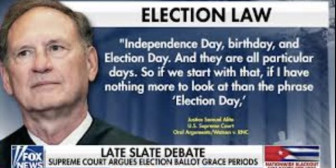
A Supreme Court ruling aligned with the Constitution and Election Day deadlines as established by federal law would be a step toward restoring constitutional balance. But it's only one step. True election integrity requires returning to the principles our Founders established: federal standards for federal elections, state administration within those bounds, and civic responsibility from voters.
The stability of self-government demands processes that are transparent, timely, and trustworthy. Prolonged ballot counting undermines this, inviting the very doubts that weaken our republic. "The day for the election" carries a precision that grace periods blur, turning a singular civic moment into an ambiguous process open to contestation.
Whatever the outcome in Watson v. RNC, the case offers an opportunity to reaffirm foundational election principles. Americans deserve elections resolved on Election Day itself, preserving the solemnity and certainty that undergird our constitutional republic.
The Founders gave us the tools to prevent election chaos. It's time we used them again.