From Norman Rockwell to George Orwell: In One Generation
Back in the day, some of the kids in that idyllic street could have been images in Rockwell’s illustrations. In our eighties now, some could still be images
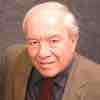
Bob Hoye , Bio and Archives--January 18, 2021
American Politics, News | Comments | Reader Friendly | Subscribe | Email Us
In only one generation the change has been staggering. At home, our doors were rarely locked and now we suffer lockdowns, forced by those that don’t bother to obey them. Unacceptable opinion is not challenged by debate but arbitrarily censored. Opposing but constructive alternatives are not countered but eliminated. Even Angela Merkel, a graduate of East German communism, has criticized America’s Big Tech’s arbitrary censorship. As has the socialist president of Mexico. Merkel would be familiar with the dire threats of the GDR and the Stasi. Would she know of Orwell’s 1956 observation? “A society becomes totalitarian when its structure becomes flagrantly artificial: that is when its ruling class has lost its function but succeeds in clinging to power through fraud.” And there is a definition of a totalitarian system that provides clarity. From modern physics: “That which is not compulsory, is prohibited.” An elegant description of today’s politics from communism to schoolboards. In the early 1950s, our street was only a block long and with a turn at the end the “traffic” was local. In the summer, the iceman. Two doors up, Jack drove his1930 Model A Ford to work. Until selling it to me for forty dollars.
The big house down the street was home to 10 children. A boy or girl for kids of every age on the block. Except for the youngest, Brenda, who was four. On a pleasant morning she would wander from house to house. Even when no one was at home. Mothers always knew of a Brenda visit—all the doors on the main floor would be closed. Job done she went home. Street games such as kick-the-can were played. At a later age the boys played catch with baseballs or lacrosse balls. A future Rhodes Scholar who lived the next street over would arrive with his football. Footballs were expensive. Also, from nearby we had a friend who was deadly in snowball fights. An outstanding pitcher, Ted enjoyed a career in major-league baseball, starting with the Boston Red Sox. Doors were usually unlocked, and boys did not use offensive language in mixed company. Parents liked businesses but worried about Communism. In the previous decade, dads, uncles and even Eddie the 18-year-old up the street went to war and most came back. We were fully aware of the sacrifices made to defeat military dictatorships. To save the world from a destructive global experiment in tyranny. Freedom was cherished and in civics even taught at school. Over time, we all moved away from that wonderful small-town street, grew up and raised families. Some have stayed in touch.
And now, there is a raging fury by control freaks to restrict both freedom of assembly and freedom of speech. Big Tech is powerful enough to censor anyone they hate. In an historical blunder, Twitter admonishes Uganda on possible election infractions and cancels President Trump’s account. For detailing a suspect election. Ironically, anyone who questions government expansion is condemned as “fascist”. Which is just plain stupid. A classic description of fascism has been “The combination of big government and big business”. Unwittingly, today’s powerful fascists condemn those who see the dangers of big government—as fascist. The Left has a lot to be unwitting about. Big business imposes censorship. With big government pushing hysteria about another influenza locks down small businesses. Well, the ones that weren’t already trashed by fashionable rioters. Big Gov blesses Big Box Stores. It’s worse than Mafia shakedowns of small businesses for “protection”. With small businesses employing some 49 percent of the workforce, just what is the goal of selective lockdowns? Control for the sake of control. When you are righteous, consequent hardships and distress do not matter. And, what’s more, Big Gov will have a new hysteria in time for the next election. And in reviewing the profound change from the past, one of the girls in our street married into an academic life and has a daughter who earned a PhD in biology. Carried by a full scholarship at Harvard and funded by the Department of Defense.
Immediately after the 9/11 murder of some 3,000 innocent people it was fashionable for some academics to quip “Americans got what they deserved”. On radio, TV and in print. By American and Canadian academics. Later that year, Dr. “Barbara” was visiting friends who had attended a performance of Beethoven’s “Ninth”. For which, the conductor had modified the libretto opening of “O Freude”, meaning joy, to “Freedom”. To honor those that perished in the atrocity. When the change was explained she responded with the heartless mantra about Americans finally getting what they deserved. More recently but not during a lockdown command, Amanda from our long-ago street visited Barbara’s parents. Her father is a professor emeritus. Other friends who grew up in our 1950s street were invited for dinner. Initially, the evening was convivial. Unfortunately, today’s corruption of liberalism was at the table. Instead of grace, the dinner started with a round of scorn for President Trump. Always practical, Amanda began to review tax and business reforms that inspired a recovery with the lowest employment rates in generations. Despite being ancient friends, it was met with unbridled hostility. Becoming heated, the professor exclaimed “Conservatives should not be allowed to vote!” In noticing the look of astonishment on Amanda’s face there was dead silence.
The instruction could be that today’s liberals, while still considering the word has esteem, are control freaks. And naively assume everyone is as well. And those who aren’t, must be submissive. Regrettably, today’s activist mob seems within the frenzied early stages of the French Revolution. This financial historian is very concerned about permanent damage to the social fabric and the economy. (Socialism took less than twenty years to destroy Venezuela.) And so far, has been hoping that the crowd would do the equivalent of storming the Bastille and satiated, go home for tea. Or to the pub for a brew. Instead, ordinary folk are suffering one dreadful “Beer Hall Putsch” after another. It is getting tiresome. Constitutions are designed to prevent ambition without limits. Aren’t they? But in hating the benefits of limited government, revolutionaries typically run non-stop to political and economic destruction. Previously mainly in Europe or South America. Back in the day, some of the kids in that idyllic street could have been images in Rockwell’s illustrations. In our eighties now, some could still be images. But dangerously, some being more equal than others fit Orwellian images of disaster.
View Comments
Bob Hoye (BobHoye.com) has been researching investments for decades, which eventually included the history of financial and political markets. He considers now to be the most fascinating time for both since the Great Reformation of the 1600s. Bob casts a caustic eye on all promotions and, having a degree in geophysics, is severely critical of the audacity that a committee can “manage” not just the economy, but also the temperature of the nearest planet. He has had articles published in major financial journals and, as a speaker, has amused assemblies in a number of cities, from London to Zurich to Tokyo.