Frost Dates and Temperatures
Survival in Tough Times: It will be a brilliant two weeks, then a cold rain will come through to drop the last leaves and bring us the dull colors of winter, alas.
Dr. Bruce Smith , Bio and Archives--October 16, 2024
HeartlandLifestyles | Comments | Reader Friendly | Subscribe | Email Us
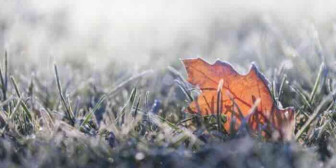
For gardeners and orchardists, frost dates have long been the anchors for the calendar year. Those dates define the local primary growing season. Between the local frost dates in the warmer part of the year all of the tender garden vegetable and flower crops can survive. In the cold months between the frost dates the tender vegetable and flower crops can only survive if carefully protected.
In this link, Finding Your Frost Free Dates, there are excellent maps of average last spring and first fall frosts for North America. The maps are very useful because they give ranges of dates when frosts can be expected. I can’t remember a time when last or first frosts occurred on the same days of their months two years in a row.
The keys are location and weather. We look at average frost dates because that gives us an idea of when to watch. The only frost date that really matters is the one where you are.
Some plants thrive in cooler weather. Spinach, onions, leeks, carrots, and peas do better when it’s not the hottest part of the year. Kale thrives best in cool weather even in the Northland, and will often survive the winter if planted at the proper time in the fall. In the far north it likes protection from leaves or row covers. With seasonal lag it’s easier to extend the growing season in the fall with cool weather crops that will continue to maturity after the first frost. The fall frost comes on one or two nights in a row, so if tender plants like tomatoes can be covered and protected, their season can be extended also.
Weather sites and radio stations give temperatures and other conditions at a (hopefully) nearby weather recording station, but these are notoriously unreliable when it comes to knowing actual temperatures in our own gardens. The stations may be miles away and are often in towns large and small. Unless one gardens in the same nearby town or location, your mileage may vary.
It helps to know the possible spread between the reported temperature on the radio or phone and the actual temperature in your garden. My general rule here in the Heartland along the National Road is that if the forecast calls for 40 degrees or lower, I can expect frost. Cold air settles into lower places, and I’m in one of those. On clear nights the earth gives off more heat than on cloudy ones. If the forecast is for 38 degrees and clear, frost is a certainty. Set an alarm for 2 or 3 AM to check the temperature, and remember that the last hour or two before the sun comes up is often the coldest. If you remembered to drain the hoses and put the sprinklers out, the garden can be protected from as much as four or five degrees of frost sometimes. Row covers are rated for the number of degrees of frost they can protect against. Frost seems to form on vehicles and cold roofs first.
A more accurate measure of frost and its danger is a minimum-maximum thermometer placed where frost matters. For orchards especially, a min-max thermometer tells us in the morning how cold it was overnight. When fruit trees bud and bloom in the spring they are subject to more damage on colder nights. After a late spring frost, charts tell us whether to expect a crop based on the low temperature and the bud stage. In the fall the min-max tells us whether moisture actually froze in the garden. Plastic covers and sprinklers can help extend the summer season well into the fall.
This past Wednesday the weather forecasts told of a cold front coming Sunday afternoon, with the coolest temperatures since spring to follow. Our forecast is for 37 degrees Wednesday morning and 34 degrees Thursday morning. I’m counting on frost both of those mornings, so the tomatoes will have to be picked green and brought in. The black-eyed Susan vine will be covered with the hope of saving it for another couple of weeks before it will be too cold to protect it. Perhaps some sprouts might prompt me to bring it in for the winter. The morning glories will be glorious no more until next year. Time will tell.
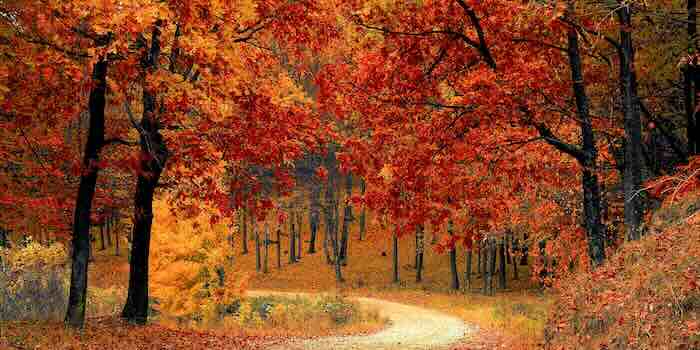
At any rate the 2024 fall frost date approaches rapidly here in the hilly part of Indiana. The tulip poplars and black walnuts are beginning to look bare and the sugar maples are just beginning to show orange and scarlet tops. The sumacs are deep red along with the burning bushes, and hickories have begun their turn to pale gold. It will be a brilliant two weeks, then a cold rain will come through to drop the last leaves and bring us the dull colors of winter, alas.
It’s time to brush the flue and look to the woodpile. Looks like we’re going to need a fire in the stove before long!
View Comments
Dr. Bruce Smith (Inkwell, Hearth and Plow) is a retired professor of history and a lifelong observer of politics and world events. He holds degrees from Indiana University and the University of Notre Dame. In addition to writing, he works as a caretaker and handyman. His non-fiction book The War Comes to Plum Street, about daily life in the 1930s and during World War II, may be ordered from Indiana University Press.