Guess what appears to be the single greatest contributor to the opioid crisis
Hint: It's spelled M-E-D-I-C-A-I-D, and its expansion under ObamaCare made access to opioids cheap and easy for far too many people, including the ones who want to obtain them illegally.

Dan Calabrese , Bio and Archives--January 30, 2018
American Politics, News | Comments | Reader Friendly | Subscribe | Email Us
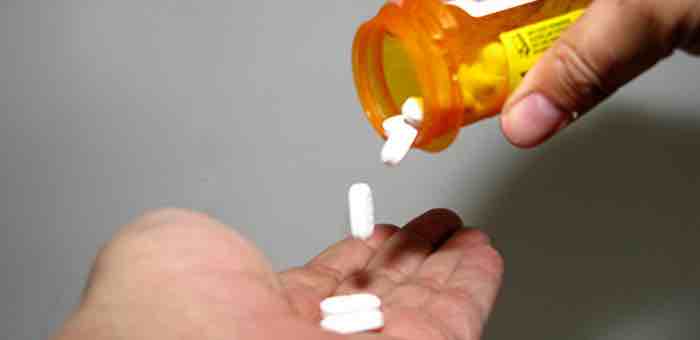 I'm convinced that an awful lot of the opioid crisis owes simply to current cultural attitudes about drugs, which is to say medicating everything from a sore back to a bad mood is not only fine but encouraged. And altering the workings of your brain just so you can escape reality for awhile? That's "recreation."
No drug abuse problem is quite as serious without these sad societal trends. You don't need to medicate every little thing, and you can have lots of fun in life without altering your consciousness. I don't know why that's hard for people to understand, but I guess you're never going to understand anything if you just plain don't want to.
I'm convinced that an awful lot of the opioid crisis owes simply to current cultural attitudes about drugs, which is to say medicating everything from a sore back to a bad mood is not only fine but encouraged. And altering the workings of your brain just so you can escape reality for awhile? That's "recreation."
No drug abuse problem is quite as serious without these sad societal trends. You don't need to medicate every little thing, and you can have lots of fun in life without altering your consciousness. I don't know why that's hard for people to understand, but I guess you're never going to understand anything if you just plain don't want to.That said, it's also true that a bad problem can be made worse by perverse incentives. If you make it easier to do something bad, and harder to face consequences for it, what do you think is going to happen? And this is where ObamaCare comes in. Medicaid is the federally funded and state-administered program of health care coverage for the poor. One of the things Medicaid does is artificially lower the price of prescription drugs, with virtually no controls on what a person who's prescribed the drugs can do with them once they're obtained. Re-selling your prescriptions is illegal, of course, but since it's legal to obtain them in the first place it's almost impossible to prevent you from selling them to others. And since the federal government bribed states to expand Medicaid under ObamaCare - with an enticing but temporary promise free federal money to kick off the expansion - an awful lot more people in the states that took the bribe are now hooked on opioids. It is not likely that this is a coincidence, as a recent report by Senator Ron Johnson of Wisconsin demonstrates:
Yet Medicaid offers cheap access to astronomical quantities of pills that can be resold on the black market. For as low as a $1 co-pay Medicaid beneficiaries can get up to 240 oxycodone pills that can be resold for $4,000, according to the report. Since 2010 more than 1,000 people across the country have been charged or convicted of improper use of Medicaid to obtain prescription opioids. Mr. Johnson’s report captures some of the sordid specifics, including a case in Connecticut where a perpetrator “preyed on” Medicaid beneficiaries who were “down on their luck,” according to a detective the committee interviewed. The drug ring leader would pay Medicaid beneficiaries, say, $50 to get a prescription filled. Pharmacists tended to trust the Medicaid system and filled the scripts. Then the perpetrator would sell the opioids on the street for up to $3,000 for a single bottle. The perpetrator pleaded guilty to multiple charges in 2015.
Fraud is a feature of any government program, but here crime is especially lucrative. The Johnson report walks through everything from a drug ring in a Bronx bodega to a Maryland pharmacist who defrauded Medicaid for some $90,000 to a $1 billion fraud from a cabal of health-care providers in Miami. One notable point is that this crisis seems to be worse in states that expanded Medicaid as part of ObamaCare. More than 80% of nearly 300 cases were filed in Medicaid expansion states, the report found, with New York, Michigan, Louisiana, New Jersey and Ohio topping the roll call. Moreover, “the number of criminal cases increased 55 percent in the first four years after Medicaid expansion, from 2014 to 2017, compared to the four-year period before expansion.” This correlation doesn’t prove causation but certainly warrants a closer look from Health and Human Services and fair-minded academics. The left says Medicaid isn’t the problem and is essential to treating opioid addicts, though this overstates the case. Medicaid beneficiaries are often targeted by junk treatment centers that bill the government for reimbursement. The committee staff also found, “in preliminary research,” 243 recent instances of fraud involving opioids and Medicare, where abuse is by some reports worse. Veterans Affairs had several dozen opioid investigations running late last year.
243 recent instances of fraud involving opioids and Medicare
The left and their libertarian allies (at least when it comes to championing immorality and self-destructive behavior) have long argued that legalizing drugs would take the money out of it because it would eliminate black markets. Better to regulate and tax it, they say.If you want to stop the explosion of opioid addition, it starts by changing cultural attitudes about drugs
Here you go. This is what happens when you put the government in charge of drug distribution. Left-wing politicians want to make it was cheap and easy as possible for people to get their hands on drugs - because that's what the left-wing voting base wants - so they impose de facto price controls while using reimbursement policies to encourage doctors to hand out the drugs like candy. We've been told for more than a decade that marijuana should be legal because of its "medicinal uses," yet those of us with brains understood that this would quickly become a thinly veiled pretense for access to marijuana by people who have no medical need for it but simply want to get stoned. And that's exactly what we're seeing with opioids. Some people use them according to doctors' instructions to deal with pain or whatever, but far too many others abuse them and more still turn around and re-sell them to people who don't even have a hint of a medical rationale for using them. And ObamaCare institutionalized all this and baked in the economic incentives to make it happen. If you want to stop the explosion of opioid addition, it starts by changing cultural attitudes about drugs. But it sure would help if we stopped bankrolling the activity that's causing the problem. That's exactly what Medicaid is doing, and since ObamaCare it's been worse than ever. Stop that please.View Comments
Dan Calabrese——Bio and Archives
Dan Calabrese’s column is distributed by HermanCain.com, which can be found at HermanCain
Follow all of Dan’s work, including his series of Christian spiritual warfare novels, by liking his page on Facebook.