How Anxiety Became a Prescription
Every generation of medicine believes it has finally discovered the safe sedative. History repeatedly proves otherwise;

Chet Nagle , Bio and Archives--July 18, 2026
Health and Medicine | Comments | Reader Friendly | Subscribe | Email Us
(This post is adapted from an article by A Midwestern Doctor, with editing for clarity and readability.)
Anxiety has become one of the defining health problems of modern America. By 2023, more than half of young adults between the ages of 18 and 26 reported suffering from anxiety. Nearly half had experienced panic attacks, and millions were already taking medication to cope with the condition.
Yet despite Americans spending tens of billions of dollars each year treating anxiety and mood disorders, the problem continues to grow.
One reason is that the drugs prescribed to relieve anxiety can worsen many of the symptoms they were intended to treat.
A large study of prescription sleeping pills found that users were nearly five times more likely to die prematurely than non-users and, at higher doses, had a significantly increased risk of developing cancer. One of the study’s investigators, sleep researcher Dr. Daniel Kripke, reached a sobering conclusion:
“I don’t think there’s any dose which is safe.”
To understand why benzodiazepines can become so dangerous, it helps to understand what they do inside the brain.
The brain’s primary calming neurotransmitter is gamma-aminobutyric acid, better known as GABA. Think of GABA as the brain’s braking system. It slows excessive nerve activity and helps regulate anxiety, relaxation, and sleep.
Alcohol, barbiturates, and benzodiazepines do not activate GABA receptors directly. Instead, they amplify GABA’s natural effect, making the brain’s own braking system work harder than it normally would.

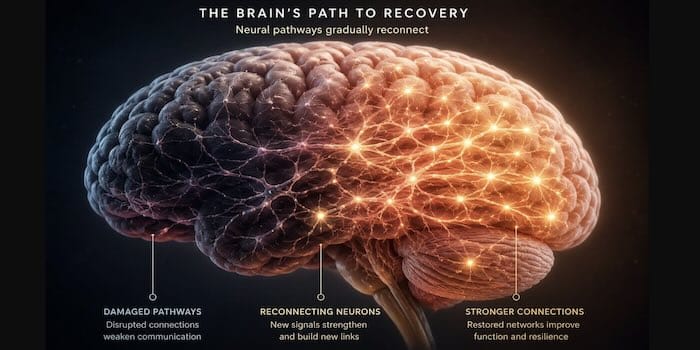
The brain constantly monitors its own activity. When receptors are repeatedly overstimulated, it adapts by making them less responsive—a protective process known as downregulation.
At first, the drug seems to work well. Over time, however, the same dose becomes less effective, leading patients to require progressively larger amounts.
When the medication is reduced or stopped, those downregulated receptors can no longer produce normal calming activity on their own.
The result is withdrawal.
For many people, withdrawal from benzodiazepines can resemble severe alcohol withdrawal. It is not a weakness of character or a lack of willpower. It is the predictable consequence of how the brain adapts to prolonged exposure to those drugs.
Barbiturates Versus Benzodiazepines
In 1903, the first barbiturate was introduced into medicine. It was initially welcomed as a breakthrough—a powerful sedative that could calm anxiety and help patients sleep.
Within a year, however, medical literature was already documenting what was called the “Veronal habit”, a reference to one of the earliest widely used barbiturates.
Over the following decades, evidence accumulated showing that barbiturates carried serious risks, including tolerance, dependence, and overdose. Yet meaningful restrictions came slowly. By the time regulations tightened in the 1970s, the medical community had already been searching for a replacement.
The lesson from the barbiturate era was not that sedatives were unnecessary. It was that the medical system repeatedly underestimated the risks of drugs that altered the brain’s chemistry.
The pharmaceutical industry began looking for a safer alternative.
That alternative became the benzodiazepine class of drugs.

Hoffmann-La Roche developed Librium, the first benzodiazepine, and launched it as a revolutionary improvement over older sedatives. The company conducted one of the largest clinical trials of its time, involving approximately 20,000 patients.
However, the patients included in the Roche submission for approval by the FDA represented a much smaller group—1,163 individuals who had been selected after showing no signs of addiction or other concerns.
As a result, the FDA approved Librium in 1960.
The marketing campaign that followed became one of the most influential in modern pharmaceutical history.
Roche hired advertising executive Arthur Sackler to promote Librium. Sackler pioneered methods that blurred the line between medical education and pharmaceutical marketing, including encouraging favorable newspaper coverage and distributing those articles to physicians.
The primary targets were not psychiatrists but general practitioners—the GP doctors most likely to encounter everyday complaints of anxiety, stress, insomnia, and tension.
The strategy worked.
Within the first month after its introduction, Librium generated approximately 1.5 million prescriptions. GP doctors prescribed it not only for anxiety but also for conditions ranging from muscle tension and headaches to ulcers and other stress-related complaints.
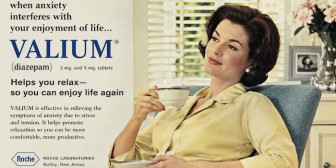
In 1963, Roche introduced Valium, and the prescribing explosion accelerated.
By the mid-1970s, benzodiazepines had become among the most frequently prescribed medications in America.
The drugs were promoted as safer, more modern, and less addictive than the barbiturates they replaced.
But history was beginning to repeat itself.
The Hidden Costs of Benzodiazepines
Benzodiazepines eventually lost their reputation as harmless calming medications, but the full extent of their risks took decades to become clear.
The problems fall into two broad categories:
They can impair normal sleep and brain function, and they can create physical dependence that makes stopping difficult.
The first problem is one many patients are never told about.
Benzodiazepines do not create natural sleep. They create sedation.
Those two things are not the same.
Normal sleep is an active biological process involving different stages of brain activity that restore memory, cognition, and emotional regulation. Sedation, by contrast, suppresses brain activity.
A person may feel as though they are sleeping better, while the quality of that sleep is actually being impaired.
Research on prescription sleeping drugs has raised serious concerns about increased mortality among long-term users.
The issue is not simply whether someone falls asleep. The issue is whether the brain is receiving the restorative sleep it requires.
The second major concern is what long-term benzodiazepine use can do to the brain.
Long-term use has been associated with problems in processing speed, working memory, sustained attention, and the formation of new memories.
Some studies have found measurable cognitive impairment among long-term users, and several analyses have reported an association between benzodiazepine exposure and increased dementia risk. While researchers continue to debate the strength and direction of that relationship, the concern has been significant enough to change prescribing recommendations, especially for older adults.
The effects are not limited to memory.
A study examining driving performance found that benzodiazepines can significantly impair reaction time and attention. Long-acting benzodiazepines have been associated with increased motor vehicle accident risk.
For older adults, the consequences can be especially serious. Studies of nursing home residents have found increased rates of falls among benzodiazepine users—a concern because falls can lead to fractures, loss of independence, and serious complications.
Then there is the memory effect.
Many long-term users describe years that seem strangely compressed, with difficulty recalling events that occurred while they were taking the medication.
This phenomenon is known as anterograde amnesia—difficulty forming new memories after taking the drug.
Research dating back to the early years of Valium use documented measurable effects on memory among patients.
The final and perhaps most misunderstood problem is dependence.
Many patients assume that if a medication was prescribed by a physician, stopping it will simply require deciding to stop.
With benzodiazepines, that assumption can be dangerously wrong.
Physical dependence can develop even when the medication is taken exactly as prescribed.
When the brain has adapted to the presence of a benzodiazepine, suddenly removing the drug can leave the nervous system in a state of overactivity.
The result can include severe anxiety, panic attacks, insomnia, tremors, sweating, dizziness, depression, heart palpitations, and cognitive problems.
In severe cases, withdrawal can involve hallucinations, seizures, paranoia, or psychosis.
This is why benzodiazepines must be tapered slowly rather than stopped abruptly.
For some patients, tapering takes months. For others, it may take years.
The problem is that many patients were never warned this could happen.
A medication intended to provide relief can become a drug that the patient feels unable to leave.
A Crisis Recognized, Then Ignored
The addictive potential of sedatives was not a new discovery.
By 1962, Senator Edward Kennedy’s congressional investigation estimated that approximately 250,000 Americans were addicted to barbiturates. In England, the estimate was approximately 135,000.
Among the tragic consequences of barbiturate misuse was the death of actress Marilyn Monroe.
The medical community had already learned an important lesson: drugs that alter the brain’s chemistry can create dependence even when they begin as legitimate medical treatments.
Yet the same warning signs were beginning to appear with benzodiazepines.
In 1979, a Senate subcommittee chaired by Senator Edward Kennedy examined the growing use of Valium and other benzodiazepines.
A Navy psychiatrist testified that some patients were becoming dependent on Valium after only three weeks of use.
By that year, more than 44 million Valium prescriptions had been written.
Kennedy described the situation as a “nightmare of dependence.”
The psychiatrists offered an even more fundamental criticism: “None of these drugs solve our problems. They make people feel better because they make you feel dull and insensitive.”
Hoffmann-La Roche, the manufacturer of Valium, and said addiction was rare when the medication was used as directed.
Despite the concerns raised during the hearing, benzodiazepine prescribing did not decline.
It continued to grow.
By 1996, 4.1% of American adults reported having a benzodiazepine prescription.
By 2018, 12.6% reported benzodiazepine use in the past year.
That’s a 917% increase in 22 years.
Emergency department visits involving benzodiazepine misuse also increased during the 2000s, and benzodiazepines became a frequent factor in overdose deaths—particularly when combined with opioids or other substances that suppress breathing.
Several highly publicized deaths, including those of Michael Jackson, Heath Ledger, Tom Petty, and Prince, involved benzodiazepines in combination with other drugs.
The pattern was becoming familiar:
A drug introduced as a safer alternative became a medication with its own serious risks.
Why the Problem Persists
The continuing use of benzodiazepines is not simply the result of individual prescribing decisions or addiction.
The drugs are often used in situations that require careful evaluation:
What type of anxiety does the patient have?
Is a benzodiazepine appropriate for that condition?
What is the patient’s age, medical history, and other medications?
How can the drug eventually be tapered?
These are not simple questions.
Yet modern medical practice often provides only a brief appointment, frequently limited by insurance reimbursement and time constraints.
Nevertheless, a fifteen-minute visit with a doctor may be enough to prescribe a benzodiazepine drug.
It is rarely enough time to explore why a person is anxious, whether the drug is appropriate, and how difficult stopping may become.
Many patients are never told that addiction can develop within weeks and that discontinuing the drug may require a carefully managed tapering.
One survey of benzodiazepine users found that many patients developed symptoms like the problems the medication was originally intended to treat.
Among patients prescribed benzodiazepines for restlessness, a large percentage reported restlessness as a new drug-associated symptom.
Similar patterns were reported among those taking the drugs for anxiety and insomnia.
Finding a Better Way Forward
The subscriber-only portion of A Midwestern Doctor’s original article examines approaches that may help patients reduce reliance on benzodiazepines, including specific therapies, lifestyle interventions, non-benzodiazepine medications, mind-body approaches, and strategies for carefully tapering these drugs.
The larger lesson is that anxiety is not a single disease with a single solution.
Generalized anxiety disorder, panic disorders, trauma-related conditions, sleep disorders, and stress-related anxiety can have different causes and may require different approaches.
For many forms of anxiety, cognitive behavioral therapy (CBT) has strong research support. Unlike a sedative medication that suppresses symptoms temporarily, CBT attempts to change the patterns of thought and behavior that maintain anxiety.
But anxiety is not purely psychological.
Modern life has introduced many factors that may contribute to rising anxiety levels: chronic stress, social isolation, disrupted sleep, economic uncertainty, excessive digital stimulation, substance abuse, and other changes in daily life.
The challenge is that medicine often focuses on treating the symptom that appears in front of the general practitioner doctor rather than identifying the underlying cause of the anxiety.
A patient feels anxious.
A drug is prescribed.
Immediate distress might improve.
The underlying causes of anxiety are rarely identified by conventional care doctors. When the root cause is left untreated and only the symptom is managed with drugs, the condition doesn’t resolve, it deepens.
And the drug prescribed to manage it often accelerates that deepening process.
What Happened After Librium and Valium?
The original benzodiazepines eventually lost patent protection.
Once off patent, inexpensive generic versions flooded the market. The drugs themselves became remarkably cheap to manufacture, often costing only pennies per tablet.
Yet despite the low production costs, benzodiazepines remained highly profitable because of the enormous prescription volume. Newer benzodiazepines such as Xanax (alprazolam), Ativan (lorazepam), and Klonopin (clonazepam) entered the market and became standard treatments for anxiety disorders.
Prescribing expanded dramatically through the 1980s, 1990s, and 2000s.
At the same time, dependence, emergency room visits, and overdose deaths continued to rise. Benzodiazepines increasingly appeared in combination with opioids, alcohol, and other sedatives, creating especially dangerous interactions.
Conclusion
The most unsettling part isn’t that this happened. It’s that it’s still happening, and the same money incentives that drove it are still in place.
When the most common medical response to human suffering is a drug that produces the condition it was prescribed to treat--that isn’t medicine failing.
It’s something else entirely—and we haven’t yet begun to have an honest reckoning with it.
View Comments
Chet Nagle is an experienced analyst and commentator on international commerce, geopolitics, national security matters, the Middle East, and strategic communications. He has been on radio, has appeared in documentary films and has been a guest on television news programs. His columns have appeared in the Daily Caller, The Hill, Roll Call, and many other publications. He is a contributing editor for ANDmagazine.com and the European Security & Defense magazine.