Far Better Than DrudgeUnfiltered News • Daily Headlines

I don’t want to die, Hymie

The courts ruled, and many Canadians agreed, that Robert Latimer deserved the punishment he received, as short as it was;


Tracy and Robert Latimer

Wednesday’s Remembrance Day once again reminded me of another tragic death involving a Canadian family.

Though not a victim of overseas military action, the murder of Tracy Latimer at the hands of her father, Robert Latimer, on October 24, 1993 was nonetheless a heartbreaking Canadian misfortune.


National controversy concerning the definition and ethics of euthanasia as well as the rights of people with disabilities

Thirty-three years later, her memory needs to live on in the hearts and minds of those Canadians who truly value the life and dignity of their fellow human beings.

That’s why the compelling words of Krista Carr, Chief Executive Officer of Inclusion Canada, a national federation working to advance the full inclusion and human rights of people with an intellectual disability and their families, also reminded me of my own thoughts about Robert Latimer’s wicked act.

The Latimer case caused a national controversy concerning the definition and ethics of euthanasia as well as the rights of people with disabilities, and resulted in two Supreme Court decisions: R. v. Latimer (1997), on section 10 of the Canadian Charter of Rights and Freedoms, and later R. v. Latimer (2001), concerning cruel and unusual punishments with reference to section 12 of the Charter. Latimer was released on day parole in March 2008 and was granted full parole in December 2010, an all too short sentence for such a heinous crime.

Shortly after Latimer’s second conviction, I expressed my opinion in a January 24, 2001, Toronto Star editorial, an edited version of which follows.

“I don’t want to die, Hymie.”

Over 50 years [now 75 years] later, these words still haunt me. I was eight years old, the year was 1951, and my grandfather, in the final and painful stages of terminal lung cancer, whispered them to me in Yiddish as he squeezed my hand in fearful desperation.



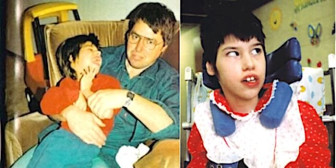
Was it Tracy’s pain, or Robert Latimer’s? 

I am also still troubled by how much I wanted my mother to be quickly put out of her misery – a merciless decade-long mental and physical decline called Alzheimer’s disease. What haunts me is whether my near-euthanasic desire was rooted in my comprehension of and commiseration for her suffering, an intuitive grasp that a quick and painless exit was what she would have wanted had she been able to make such a choice. Or was my externalized death wish a result of being tortured by the fact that my passive and uncomprehending mother was the antithesis of the loving and energetic woman who had reared and nurtured me, her last child, her baby?

This is why I am troubled by [University of Manitoba] law professor Barney Sneiderman’s contestable assertion that:

“It is uncontested that it was his daughter’s [Tracy’s] pain – pain past, present, and future – that drove [Robert] Latimer to the conviction that the only way to end her pain was to end her life” (Justice wasn’t done in Latimer’s case, Toronto Star, February 26, 2001).

Was it Tracy’s pain, or Robert Latimer’s? Even if no one knows for sure what motivated Mr. Latimer, Professor Sneiderman should at least be as concerned about what Tracy Latimer herself would have wanted if she had been given the choice to determine her fate.


How much of assisted suicide--or premeditated murder

My grandfather, despite his incredible pain and discomfort, did not want to die. What about Tracy? What if Tracy, during one of the many periods she was indeed full of the joy of life, had been transformed for a moment into a fully sentient young woman capable of telling her father whether she wanted to live or die (based on her past suffering and dim future prospects), what would she have replied? I assume that most people would answer, “I don’t know, and neither does anyone else.” If this is so, what justification did her father have to murder her?

I wonder what I would do or wish for if my daughter, and only child, of around the same age as Tracy, were in her position. I wonder particularly how much of my thinking would be based, if only subliminally, on my own distress about her tragic condition.

How much of assisted suicide--or premeditated murder, in the case of Robert Latimer--lies on one side or the other? And who really knows what motivates people in such situations?

Accordingly, shouldn’t society and the courts err on the side of moral precaution and judicial prudence when such tragedies occur? I believe that this is exactly what happened in the Latimer case.

The courts ruled, and many Canadians agreed, that Robert Latimer deserved the punishment he received, as short as it was.


Read next: Goodbye Hymietown

Email Us | Reader Friendly | Comments

Hymie Rubenstein—— Hymie Rubenstein, a retired professor of anthropology at the University of Manitoba, is editor of --REAL Indigenous Report.