Indigenous men, not Catholic priests, are the primary sexual abusers of indigenous women and girls
There are far better grounds for banishing tens of thousands of abusive sexually predatory indigenous men as well

Hymie Rubenstein , Bio and Archives--November 26, 2024
Canadian News, Opinion | Comments | Reader Friendly | Subscribe | Email Us
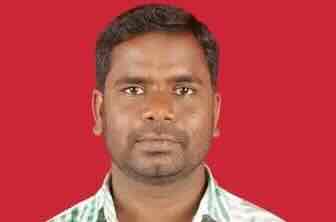
on the Little Grand Rapids Indian Reserve.
(Facebook/Arul Savari)
All criminal charges have been stayed on the second day of the trial against Fr. Arul Savari, a 48-year-old Roman Catholic priest accused of sexually assaulting an eight-year-old girl at a Catholic church on the Little Grand Rapids Indian Reserve 265 kilometres northeast of Winnipeg, Manitoba, on May 27, 2024.
The child was alone with the priest, who was charged with sexual assault, sexual interference, sexual exploitation of a young person, luring a child, and forcible confinement on May 30.
The abrupt halt to his trial occurred on November 13, the day after the now nine-year-old unnamed accuser gave testimony against him in a Winnipeg courtroom in a judge-only trial.
Crown attorney Danielle Simard told Court of King’s Bench Justice Shawn Greenberg that prosecutors made the decision after carefully looking at the evidence following the girl’s testimony.
Simard pointed to the Crown’s “ongoing and overarching legal and ethical responsibility to ensure the cases they prosecute have a reasonable likelihood of ending in conviction as the reasoning behind the decision. It is not sufficient that something probably happened but rather, ‘Can the evidence reasonably meet the test beyond a reasonable doubt?’” Simard said.
“It is in keeping with our solemn obligation to deliver justice in a responsible and thoughtful manner that we must direct a stay of proceedings on all charges before this honourable court in relation to Mr. Arul Savari.”
Indeed, a dispassionate look at the evidence from this complainant suggests the assault did not occur.
The allegations she made against Savari, whom she called “Father Arul,” included that he took his clothes off, told her he loved her, touched her legs and belly and kissed her, all in his bedroom inside the church.
Savari’s lawyers questioned some of the girl’s allegations, saying she didn’t share all the details that were eventually reported when she told her mother what she said happened.
Defence lawyer Tom Rees on Monday also noted inconsistencies in the account the girl gave in her statement, including about whether Savari’s underwear had been removed.
Rees instead suggested none of the things the child alleged occurred, in a line of questioning the child repeatedly responded to with a soft “yes,” thereby further compromising her accusations.
Rees asked the girl several other questions, including a suggestion about what the defence says happened at the church that day.
He alleged the girl and her sister were supposed to get paid to help clean the church — but when the girl’s sister didn’t show up, Savari told the child to go home and come back when her sister was with her.
“So, when he told you to go home, you felt upset about that. And that’s because you were there and you wanted to do the cleaning and then have the money,” Rees said.
The girl’s muddled responses and contradictions between what she told her mother, what was recorded in her videotaped police statement, her court testimony, and the lack of corroborating evidence were more than sufficient grounds for staying the charges.
The original May 24 story and the November 13 stay of proceedings were heavily reported on by all prominent Canadian news media.
This is because sex always draws lots of eyeballs, especially when it is about illegal, immoral, or deviant sex, all three in play when sexual behaviour involves the celibate Catholic priesthood and underage children.
But important issues were missing in these dozens of nearly identical stories, namely
the unconscionably high rate of sexual assault of indigenous women and children and the equally unconscionable attempt to blame much of this on the Roman Catholic Church.
After Fr. Savari was arrested, Oliver Owen, the reserve’s chief, announced to the media:
“We don’t want the church here…. I brought that up to the band meeting about our priest and the community right away said, ‘you know what, we don’t want that person here in the community, we don’t want him to come back and we don’t want the church here.’”
In a May 28 statement, Southern Chiefs’ Organization Grand Chief Jerry Daniels said they stand with the girl who was harmed.
“First Nations have sadly experienced predatory behaviour for generations when it comes to the churches,” Daniels said in a news release. “The leaders of the Catholic church have much work to do in repairing relationships with our nations.”
The same sentiments were expressed on June 1 by Niigaan Sinclair, an Anishinaabe Winnipeg Free Press columnist and a professor of indigenous studies at the University of Manitoba:
“It’s well known that the Catholic Church has a history of sending abusive employees to First Nations communities.
“There are, literally, thousands of arguments [read: abusive priests] to support banning the Catholic Church from First Nations communities. Most begin with the history of violence.”
These inflammatory assertions are grossly exaggerated.
Though there is no doubt that the sexual abuse of children under the age of consent has long been a problem for the Catholic Church, with up to four percent of priests having been accused – though not necessary charged – with this serious crime, this rate seems not out of line with such assaults in the larger society or among other clergy or members of different professions.
And there is no evidence that his Winnipeg Archdiocese suspected that Savari had a history of paedophilic sexual exploitation.
Nor is there any evidence that Catholic priests in Canada believed to be molesting the children under their supervision or care are still routinely transferred elsewhere, a practice said to have been common in the past.
But as horrific as these acts have been, they need to be contextualized.
It has been crudely estimated that 5,000 people committed a sex crime at an Indian Residential School during the system’s 113-year government-controlled existence. But fewer than 50 have been convicted, only a couple of them clergy. The rest, 4,950 people, must be considered innocent based on the presumption of innocence unless proven guilty.
Most important of all is the lack of any comparative context in reports about the Savari story, namely weighing the difference between sexual abuse by priests against such exploitation and other indigenous people.
In that regard, Chief Owen must have a very short memory if he believes, “It’s hard to imagine” the reputed abuse of this little girl.
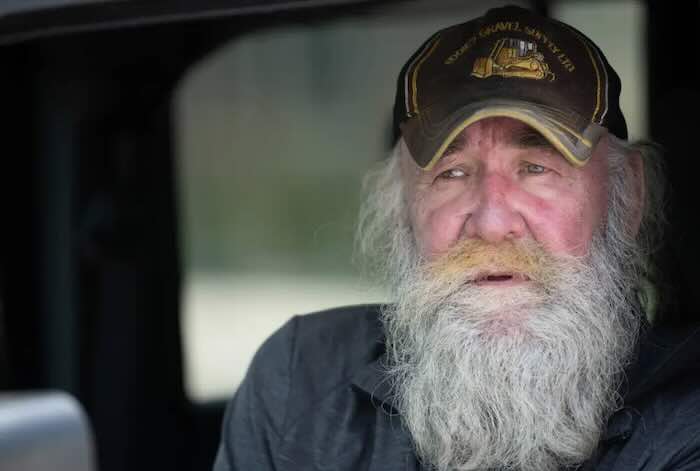
On October 21, 2021, his predecessor, Chief Raymond Keeper, 65, was arrested and charged with luring a person under 18, two counts of sexual assault, sexual assault with a weapon, and touching for a sexual purpose while in a position of authority.
At the time of his arrest, RCMP said they believe there may be more victims than this young girl.
As of March 7, 2022, RCMP confirmed no further charges have been laid but indicated the investigation has progressed and new interviews have occurred.
Band residents said they believe Keeper is still residing in the community, and there is no indication that the reserve is trying to have him exiled as is their legal right under Band Council Resolution provisions.
This is not only an indication of a double sexual abuse standard between different Canadian ethnic groups but also a window into the commonplace occurrence of indigenous sexual abuse.
As for an associated mainstream media double standard, a Google search of indigenous sexual abuse yields dozens about Fr. Savari and a meagre handful about ex-Chief Keeper, none for nearly two years.
Could this be because intra-indigenous sexual exploitation is so prevalent that it is hardly newsworthy?
This seems plausible, given other anecdotal evidence and overall statistics.
Nahanni Fontaine, a member of the Sagkeeng Anishnaabe Indian Band and an NDP member of the Manitoba provincial legislature, says she was just five when she was sexually abused for the first time.
At the age of eight, Fontaine also recounts waking up with her knees up and her panties down after family members built a place for her to sleep on the floor while guests were over.
She recalls a drunken guest pushing her body onto a bed on the floor, pulling down her underwear and performing oral sex.
Fontaine — a long-time advocate for missing and murdered indigenous women — says her story is far from an isolated case: she knows very few indigenous women who haven’t gone through a similar experience.
Even if she is exaggerating and only 60% of indigenous women have been physically or sexually assaulted at some point in their lives, as Statistics Canada data show, this would represent some 740,000 indigenous females 15 years of age and older compared to a little over four in 10 non-indigenous women.
If he had been found guilty, Fr. Savari would have been severely punished for his wicked crime, and rightly so. But he and his church should not be scapegoated for intra-group adversities and pathologies that are epidemic among indigenous people themselves.
As for the roots of contemporary intra-indigenous sexual exploitation, the signing of apartheid-like treaties and the creation of the separatist Indian Act during the late 19th century surely retarded the absorption of Western European beliefs, values, and practices have made the first settlers of Canada, whose cultures were permanently transformed by colonialism, worse off than they might otherwise be judging from the large social, economic, and health differentials between indigenous people and other Canadians.
One of these differentials is parenting. Both on and off-reserve, female-headed, single-parent households whose children, usually the offspring of multiple fathers, are an open invitation for sexual abuse by revolving door “stepfathers.”
Given the long list of tragic adversities and pathologies disproportionately found among indigenous people, now exacerbated by the hopelessness created by generations of welfare dependency, if “There are, literally, thousands of arguments [sexually abusive priests] to support banning the Catholic Church from First Nations communities,” as Sinclair claims, there are far better grounds for banishing tens of thousands of abusive and sexually predatory indigenous men as well.
View Comments
Hymie Rubenstein, a retired professor of anthropology at the University of Manitoba, is editor of —REAL Indigenous Report.