“And they had some serious stuff going on,” Gibson emphasized.
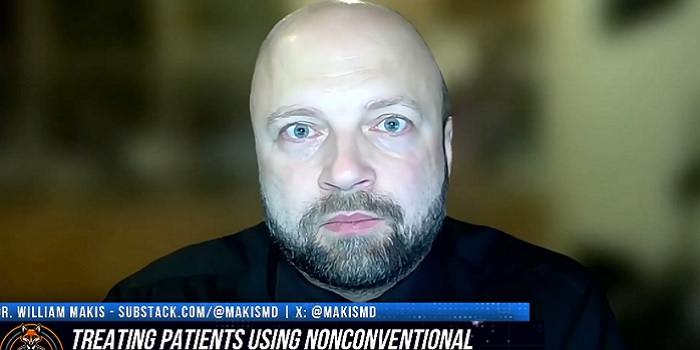
Dr. William Makis, who treated one of Gibson’s friends, has been
rigorously researching the anti-cancer potential of Ivermectin and
Fenbendazole over the past two years. During that time, he discovered,
“There are over 100 papers on the success of Ivermectin and cancer.”
“Ivermectin can actually kill cancer stem cells,” Dr. Makis
explained, noting that it targets the cells “that chemo can’t kill.” He
added, “It can also reverse resistance that cancer cells develop to
certain types of chemotherapy.”
The benefits extend further. “It [Ivermectin] makes cancer cells
susceptible to radiation treatment as well. And so it’s a
radiosensitizer,” he shared.
Yet, research into these applications has been neglected. “Big Pharma
has completely abandoned it. Ivermectin is off-patent. No one’s going
to make money on it,” Dr. Makis pointed out.
Taking action where others haven’t, Dr. Makis applied his findings to
his practice. “I have over 1,000 cancer patients who are on either a
combination of Ivermectin and Fenbendazole or Ivermectin and
Mebendazole,” he shared.
Some of his patients were “given a terminal diagnosis” but are now “cancer-free” or have their “cancer under control.”
“Patients, for example, who are taking combinations of chemo and
Ivermectin or radiation and Ivermectin are seeing dramatic results that
oncologists have never seen, that radiation oncologists have never
seen,” Dr. Makis shared.
“Tumors shrinking down to almost nothing, liver metastases disappearing, brain metastases disappearing.”
“There are hundreds, if not thousands, of testimonials” documenting
the success stories of Ivermectin and Fenbendazole, Dr. Makis added,
offering hope to patients seeking alternatives.
He strongly believes that “the future of cancer care is in repurposed drugs.”