Mamdani's Wagon Of Economic Prosperity
For the problem with Communism was simple—in the end you run out of other people’s money. And Uncle Sugar has nothing more to give;
William Kevin Stoos , Bio and Archives--November 17, 2025
American Politics, News | Comments | Reader Friendly | Subscribe | Email Us
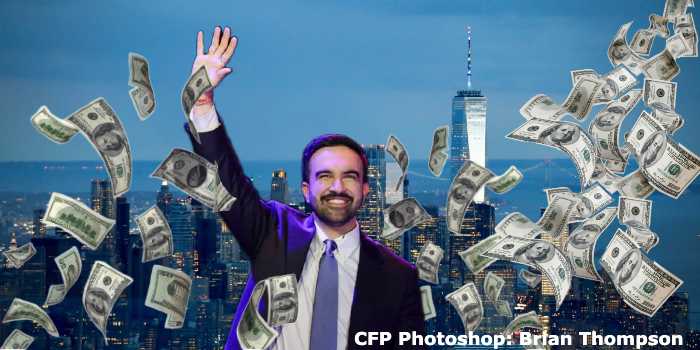
Zohran Mamdami, legislator, Mayor of New York City and, in time, Secretary General of the ruling Communist Party, USA, was handsome, articulate and spoke smooth, sanguine words which captivated millions of Americans. In time he became known as “Uncle Sugar."
Uncle Sugar promised his people a free ride for all who wanted it. He had a big wagon and anyone who wanted could ride for free—compliments of Uncle Sugar. There were plenty of folks to pull it and plenty of folks who made money—they could pay it all. A free ride and free stuff—cradle to grave care for your every need. After all what was government for? And the people loved it; those who did not, remained silent. There was nothing they could do. After all, Uncle Sugar was wildly popular among those millions who wanted a free ride. And there were more and more of them. It was more fun than working hard, and paid better.
But in time Uncle Sugar needed more money. There was a price to his munificence. But, as long as your ox wasn’t getting gored and you were getting free stuff from him you did not mind. Or so the people believed. Thus it was just fine to tax the rich and make those productive job providers pay. Someone had to pay. So Uncle Sugar decreed that those making $400,000 must pay more—it was only right; there were people who made less and did not work as hard. So it was only fair. Those pulling wagon of economic progress had a moral duty to pull harder and transport those who were riding in it for free. But, in time, taking from those who made $400,000 was not enough to pay for the free ice cream Uncle Sugar promised those who wanted it.
Therefore he decreed that those making $150,000 or more needed to help. So Uncle Sugar required them to pay more too—after all there were a lot of folks riding in the wagon for free and Uncle Sugar needed to provide for them. This was fine with most of the folks—except of course those who were moderately successful and had to pay the price.
But it came to pass that taxing even those who made moderate incomes did not produce enough to pay for the free stuff old Uncle Sugar promised. In time he decreed that those making $50,000 per year must pay more—after all, compared to others, they were rich and this could not be tolerated by Uncle Sugar. And so it went until one day there were more people riding in Uncle Sugar’s wagon of economic happiness than pulling it. It seemed that, in time, those who generated wealth and jobs no longer were able or willing to pull the wagon. After all, they thought, why should they? What was the point? It was easier to rely on Uncle Sugar.
Then it came to pass that, in time, the people became restive. It seems that they could no longer rely on Uncle Sugar to provide their every need. He had run out of free stuff to give. He could no longer afford unemployment payments, free lunches, free phones, that his follower had come to expect. Businesses, which had groaned under the weight of high taxes and regulation, had gone bankrupt leaving millions of wage earners jobless; farmers were leaving their farms by the thousands and there was not enough food to feed his subjects. Power plants closed by the score—unable to bear the billions of dollars required by Uncle Sugar to install scrubbers in order to remove every particle of pollutant from the air, causing rolling power shortages across the country. The dollar had lost its value owing to a downgrade of Uncle Sugar’s credit rating. There were riots in the streets and the once-proud country was growing more fractious by the day and coming apart at the seams.
And in the end, there was indeed equality—but no opportunity. Rather, Uncle Sugar’s subjects were equally poor and equally hopeless. For the problem with Communism was simple—in the end you run out of other people’s money. And Uncle Sugar has nothing more to give.
(c) 2025 William Kevin Stoos
View Comments
Copyright © 2020 William Kevin Stoos
William Kevin Stoos (aka Hugh Betcha) is a writer, book reviewer, and attorney, whose feature and cover articles have appeared in the Liguorian, Carmelite Digest, Catholic Digest, Catholic Medical Association Ethics Journal, Nature Conservancy Magazine, Liberty Magazine, Social Justice Review, Wall Street Journal Online and other secular and religious publications. He is a regular contributing author for The Bread of Life Magazine in Canada. His review of Shadow World, by COL. Robert Chandler, propelled that book to best seller status. His book, The Woodcarver (]And Other Stories of Faith and Inspiration) © 2009, William Kevin Stoos (Strategic Publishing Company)—a collection of feature and cover stories on matters of faith—was released in July of 2009. It can be purchased though many internet booksellers including Amazon, Tower, Barnes and Noble and others. Royalties from his writings go to support the Carmelites. He resides in Wynstone, South Dakota.
“His newest book, The Wind and the Spirit (Stories of Faith and Inspiration)” was released in 2011 with all the author’s royalties go to support the Carmelite sisters.”