Oil and Energy Security: Another Fallen "Market Failure"
The key elements of such a framework are economic liberty, respect for property, and fair and sensible rules of the market that are enforced equally for all

Institute for Energy Research , Bio and Archives--February 8, 2018
Global Warming-Energy-Environment | Comments | Reader Friendly | Subscribe | Email Us
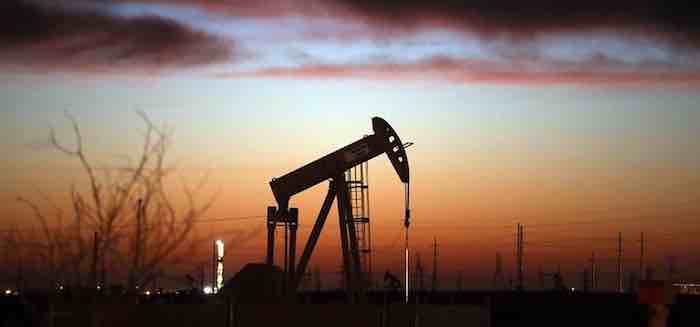 “Rising Oil Prices Give U.S. An Edge in Global Energy,” a front-page headline in the New York Times read last week. And with that, another “market failure” argument against the consumer-driven U.S. petroleum industry bit the dust, joining the "peak oil" argument for government intervention in order to usher in a post-hydrocarbon age.
Actually, the “peak oil” and “energy security” arguments are different sides of the same coin. The doubling of domestic oil production in the last decade to ten million barrels per day has resulted in a two-thirds-plus decline in US net oil imports (to 19 percent).
“Rising Oil Prices Give U.S. An Edge in Global Energy,” a front-page headline in the New York Times read last week. And with that, another “market failure” argument against the consumer-driven U.S. petroleum industry bit the dust, joining the "peak oil" argument for government intervention in order to usher in a post-hydrocarbon age.
Actually, the “peak oil” and “energy security” arguments are different sides of the same coin. The doubling of domestic oil production in the last decade to ten million barrels per day has resulted in a two-thirds-plus decline in US net oil imports (to 19 percent).Some salient quotations from the Times’s piece follow:
- “This is a 180-degree turn for the United States and the impacts are being felt around the world,” said Daniel Yergin, the economic historian and author of The Prize: The Epic Quest for Oil, Money and Power. “This not only contributes to U.S. energy security but also contributes to world energy security by bringing new supplies to the world.”
- The United States and its allies now have a supply cushion at a time when political turmoil in Venezuela, Libya and Nigeria is threatening to interrupt flows to markets.
- Only a few years ago, such threats — along with a recent pipeline failure in the North Sea and storms in the Gulf of Mexico — would have sent the price of crude soaring. Instead, the rise has been muted, and gasoline at the pump remains below $2.60 a gallon across most of the United States.
- It is a striking contrast to the 1970s, when Arab oil boycotts forced motorists to line up for blocks to fill their tanks and the economy went into a tailspin. Even more recently, during the presidency of George W. Bush, domestic oil output was declining so rapidly that the country set a course to replace oil with biofuels like ethanol.
- Technological advances … [have transformed] unlikely places like North Dakota and New Mexico into world class petroleum hubs. Pipelines are being built across Texas to serve ports where oil can be pumped onto tankers headed for China, India and other markets.
Beware of Intellectual Planners
The lesson of the U.S. oil renaissance is to trust markets and not an intellectual elite advocating a government to coerce consumers and producers. Consider the uber-confidence of Peak Oil planner Kenneth Deffeyes, a geologist and Princeton professor. “Planning for increased energy conservation and designing alternative energy sources should begin now to make good use of the few years before the crisis actually happens,” he wrote in his 2001 book, Hubbert’s Peak: The Impending World Oil Shortage. And in his next book, Beyond Oil: The View from Hubbert’s Peak (2005):[Global oil decline] is upon us…. Business as usual is not an option…. Whether we like it or not, there will be major rearrangements in the world economy. It would be more orderly if we were to generate a blueprint for a society constrained by the availability of resources. Then we need a non-catastrophic pathway that takes us from here to that blueprint.Planning? Blueprint? Professor Deffeyes has government in mind—using the superior knowledge that he, but not self-interested market participants, possesses. Harvard University energy specialists had a similar view about government intervention to correct the alleged market failure. Oil prices were too low, according to Harry Broadman and William Hogan of Harvard’s Energy & Environmental Policy Center. In 1986, they calculated the negative externality (“oil-import premium”) to be between $10–$11 per barrel, implying a “socially optimal” oil tariff of the same amount. Why? To protect us from ourselves! The authors stated in their study that “any argument for a U.S. oil tariff must bear a heavy burden of proof.” Yet the technical analysis behind their policy recommendation assumed perfect knowledge of both the problem and the solution, as well as a perfect (costless) implementation of the (governmental) solution. Real-world market entrepreneurship, and real-world government, anyone?
Freedom’s Spark
Compare Deffeyes and Broadman/Hogan to the simple prediction of Julian Simon, whose ultimate-resource theory has proven consistent with real-world developments. In his book, The Ultimate Resource 2 (1996), Simon explained, “Discoveries, like resources, may well be infinite: the more we discover, the more we are able to discover.” And: “It’s reasonable to expect the supply of energy to continue becoming more available and less scarce, forever.” Elsewhere, I summarized Simon’s theory of cascading human ingenuity as follows:Innovation does not appear to be a depleting resource but an expanding, open-ended one. Instead of encountering diminishing returns, new advances appear to be expanding the horizon of new possibilities.But far from a given, the institutional framework of freedom must be present. The last word belongs to Julian Simon:
The extent to which the political-social-economic system provides personal freedom from government coercion is a crucial element in the economics of resources and population…The key elements of such a framework are economic liberty, respect for property, and fair and sensible rules of the market that are enforced equally for all.
View Comments
The Institute for Energy Research (IER) is a not-for-profit organization that conducts intensive research and analysis on the functions, operations, and government regulation of global energy markets. IER maintains that freely-functioning energy markets provide the most efficient and effective solutions to today’s global energy and environmental challenges and, as such, are critical to the well-being of individuals and society.