Questions About Eating 'Clean' Food
Orthorexics have a fixation with the 'purity' of their food. So eliminating processed foods, dairy, wheat, other 'dirty' foods is their way of eating 'healthy.' The question remains – what about the chemicals, natural pesticides, bugs in their food
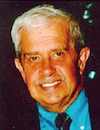
Jack Dini , Bio and Archives--June 25, 2020
Global Warming-Energy-Environment | Comments | Reader Friendly | Subscribe | Email Us
Enthusiasm for healthy eating only transforms into orthorexia when it turns into an obsession that negatively affects everyday life, such as extreme weight loss or a refusal to eat out with friends. Although studies on orthorexia are limited, this condition is likely to lead to many of the same medical complications as other eating disorders. For instance, a shortage in essential nutrients caused by restrictive eating can result in malnutrition, anemia, or an abnormally slow heart rate. For as long as people have eaten food, there have been diets and quack cures. But previously, these existed, like conspiracy theories, on the fringes of food culture. 'Clean eating' is different, because it established itself as a challenge to mainstream ways of eating, and its wild popularity over the past five years has enabled it to move far beyond the fringes. Powered by social media, it has been more absolutist in its claims and more popular in its reach than any previous school of modern nutrition advice. 2 Bee Wilson notes, “At its simplest, clean eating is about ingesting nothing but 'whole' or 'unprocessed' foods (whatever is meant by these deeply ambiguous terms). Some versions of clean eating have been vegan, while others espouse various meats (preferably wild) and something mysteriously called 'bone broth' (stock, to you and me). At first, clean eating sounded modest and even homespun: rather than counting calories, you would eat as many nutritious home-cooked substances as possible. But it quickly became clear that 'clean eating' was more than a diet; it was a belief system, which propagated the idea that the way most people eat is not simply fattening, but impure. Seemingly out of nowhere, a whole universe of coconut oil, dubious promises and spiralised courgettes has emerged. Now quinoa is in every supermarket and kale has become as normal as lettuce.” 2 Others have pointed out that, as a method of healthy eating it's founded on bad science. In June, the American Heart Association suggested that the coconut oil beloved as a panacea by clean eaters actually had 'no known offsetting favorable effects', and that consuming it could result in higher LDL cholesterol. A few weeks later, Anthony Warner—a food consultant with a background in science who blogs as The Angry Chef—published a book length assault on the science of clean eating, calling it a world of 'quinoa bowls' and 'nutribollocks' fueled by the modern information age. 3
Orthorexics commonly have rigid rules around eating. Refusing to touch sugar, salt, caffeine, alcohol, wheat, gluten yeast, soya, corn and dairy foods is just the start of their diet restrictions. Any foods that have come into contact with pesticides, herbicides or contain artificial additives are also out.4 That said, what about chemicals, bugs and pesticides? Every piece of food we eat, every breath we take, every move we make results in the ingestion of a chemical of some sort. A very large body of knowledge about food chemicals has almost been forgotten or is ignored. A monograph Edited by I. E. Liener contains some 3,000 literature references on thousands of chemicals isolated from common vegetables that have been shown to have the potential to cause negative effects on human and animal health. 5 Food scientists have discovered over 1,000 chemicals in strawberry of which only 15 significantly influence the flavor. 6 When you eat cabbage, you ingest 49 different natural pesticides and metabolites. 7 One could go on and on about chemicals in all our foods but let’s look at pesticides. Bruce Ames and his colleagues have reported that many of our foods contain pesticides created naturally by plants for self-protection. We ingest at least 10,000 times more, by weight of natural pesticides than of synthetic residues. These natural toxic chemicals vary enormously in chemical structure, appear to be present in all plants, and serve to protect plants against fungi, insects, and animal predators. 8 Bugs in food- We eat many bugs and bug parts without knowing it. Most foods have insect contaminants.9 Health inspectors know this and they even allow a set number of bugs, bug parts, and rodent contaminants in foods. These amounts are called DALs, or Defect Food Action Levels.
Here are some examples of FDA guidelines for maximum levels of certain impurities in some foods. Food- Maximum Defect Action Level 10
- Brussel sprouts--10 aphids per ounce
- Shelled peanuts--1 insect per 5 pounds
- Peanut Butter--9 insect fragments per ounce
- Chocolate--3 or more rodent hairs per 100 grams (a typical chocolate bar is about 40 grams)
- Sesame seeds--5 mg or more mammalian excreta per pound
- Raisins, natural & golden--Average of 40 mg or more of sand and grit per 100 grams
Summary
Orthorexics have a fixation with the 'purity' of their food. So, eliminating processed foods, dairy, wheat, and other 'dirty' foods is their way of eating 'healthy.' The question remains – what about the chemicals, natural pesticides and bugs in their 'healthy' foods?References
- “Orthorexia: when healthy eating becomes a disorder, healthline.com, April 2, 2020
- Bee Wilson, “Why we fell for clean eating,” theguardian.com, August 11, 2017
- Henry Jeffreys, “The angry chef by Anthony Warner review- detox and other food nonsense,” the guardian.com, July 12, 2017
- Amelia Hill, “Healthy food obsession sparks rise in new eating disorder,” The Observer, August 16, 2009
- Toxic Constituents of Plant Foodstuffs, Second Edition, I. E. Liener, Editor, (New York, Academic Press, 1980)
- Sherman K. Stein, Strength in Numbers: Discovering the Joy and Power of Mathematics in Everyday Life, (New York, John Wiley & Sons, 1996)
- James Trefil, “How the body defends itself from the risky business of living,” Smithsonian, 26, 42, December 1995
- Bruce Ames and Lois Swirsky Gold, “Environmental pollution and cancer; some misconceptions,” in Rational Readings on Environmental Concerns, Editor Jay H. Lehr, (New York, Van Nostrand Reinhold, 1992, 153
- Sylvia Branzei, Grossology Begins At Home, (Reading, MA, Addison Wesley Longman, 1997), 60
- Susan Krupp. “Insects, molds, and other legal food contaminants,” chefsblade.monsters.com
View Comments
John William Dini, know to all as ‘Jack’, passed away at the age of 89 on June 17, 2026. He was born in Cleveland, Ohio on Nov. 14, 1936.
He published two books, a technical book on materials science and coatings and another on environmental issues. In retirement, he wrote extensively on various environmental issues for online publications.
He was a skilled leaded glass hobbyist, creating more than 20 lamps and many panels. He was a jogger for many years, competing in over 300 long distance races. He was a slow runner, not wanting to take the glory away from others. His secret was to start slow and taper. He and Anne traveled extensively, visiting over 70 countries.
He is survived by his wife, Anne, of 67 years, and sons Mike, Steve, and Paul. If you were to meet him somewhere, he would sum up his life as ‘peaches and cream’.