Saskatchewan’s Potash Deal with the US is more than a Warning, it is a Harbinger
It raises the question of whether economic integration with the US will lead inevitably to political integration as Sir John A. Macdonald feared? Only time will tell but one way or the other, the shift has begun
Capt. Barry Sheehy CD. , Bio and Archives--December 26, 2025
Canadian News, Opinion | Comments | Reader Friendly | Subscribe | Email Us

Canadian Citizens For Charter Rights and Freedoms
Canada is committed to diversifying its trade to Asia and Europe and reducing its reliance of the US market which absorbs 75% of Canada’s exports. Redirecting this volume of trade by even 10% will impact 150 billion dollars in goods and services, requiring significant investment in transportation infrastructure, especially roads, rail, ports and regulatory reform.
Canada urgently needs to invest in east, west, and northern transportation infrastructure
It will further require expansion of all sources of Canadian energy accompanied by an intensive focus on extracting Canada’s abundant natural resources. In that context, recent decisions by the potash producing company Nutrien in Saskatchewan to export valuable potash through Wahington State rather than Vancouver, should raise alarm bells in Ottawa and across Canada. This represents more than the loss of a billion-dollar investment and the shift south of one of Canada’s major strategic exports, it signals loss of confidence in the existing trade order. It is a workaround on a grand scale and portends more to come.
At its most basic, this decision represents regional blowback from Canada’s resource and agriculture rich Prairie provinces of Alberta and Saskatchewan. The longstanding hostility of BC and Ottawa toward the construction of pipelines, port facilities and rail heads needed to export Prairie products (like oil, gas and potash) to market came home to roost. BC’s recalcitrance triggered a nerve. This represents more than just a shot across the bow but a real warning that existing trade structures are not serving Prairie interests. The message is clear, if Canada does not provide the exports capacity these provinces need, they will shift south for solutions.
This shows exactly why Canada urgently needs to invest in east, west, and northern transportation infrastructure. When Canada’s potash producers calculated the numbers, they concluded our transportation and port systems were not adequate. Why? Unstable labor relations, excessive regulations, transportation bottlenecks, poor port productivity, endless approvals and consultation, combined with a host of other costs all made shipping via Canada uncompetitive.[1] When Canadian potash has to go south to get to global markets, we have a problem, and it is largely of our own making. Today, Canadian ports rank among the least productive in the world.[2]
Forget Separation or Secession, Think Devolution?
The loss of shipping and port revenue for a vital Canadian commodity like potash should set hair on fire in Ottawa and across provincial capitals. It provides a living case study of the mismatch between abundant natural resources and the transportation infrastructure necessary to get it to market. The situation on the east coast is no better where no new port facilities have been built for decades and existing rail lines continue to be decommissioned.
If Canada is to leverage its abundant natural resources and diversify markets, it must upgrade transportation and port infrastructure coast to coast. Building this infrastructure is certainly within our capability; after all Canada built the CPR, one of the longest rail lines in the world back in the 1870s to secure western participation in Confederation. We later built the TransCanada highway system and St Lawrence Seaway, James Bay, the Oil Sands and many other mighty engineering projects. We know how to do this. The question is, do we have the will
In the 1870s Canada was laser focused on keeping the West in Canada. Canadian leaders understood that expansion of US railroads west (outpacing Canadian construction by a ratio of ten to one) could link western Canada to the US system using spur lines. This was a recognized threat.[3]
Once commercial traffic was linked to the US transportation system, western Canada would be drawn into the American economic orbit. Most of western Canada already had stronger commercial and cultural links to its US neighbors than to eastern Canada. The distance from Calgary to Billings, Montana was about 860 kilometers while the distance to Halifax was 3700 kilometers. All the geographic, commercial, and cultural ties pulled north-south rather than east-west.
Saskatchewan potash being shipped via a new billion-dollar facility in Longview, Washington?
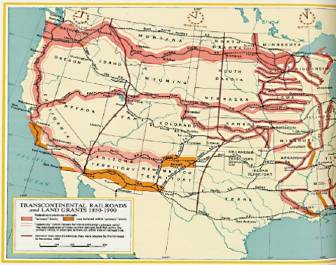
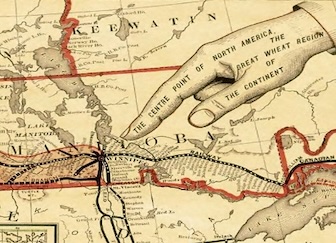
Prime Minister John A. Macdonald hit the nail on the head when he said, “If we do not lay our grasp upon the West, the United States will most certainly do so…The trade of the North-West will go to the United States unless we provide the means of carrying it eastward.” The threat presented by US rail lines like the Great Northern and Union pacific with routes paralleling the Canadian Pacific was very real. For John A. Macdonald and his Tory government in Ottawa the west was a prize worth fighting for and the solution was clear: invest in east-west transportation infrastructure to ensure the integrity of British North America.
Given this history, one can only wonder how Macdonald, Galt, Van Horne, and other champions of the CPR would view today’s announcement of Saskatchewan potash being shipped via a new billion-dollar facility in Longview, Washington? Perhaps the ultimate irony is that the carriers of this vital Canadian cargo will be the very same American rail lines (Great Northern under the BNSF Railway banner and Union Pacific Railroads) that presented such a threat in the 1870s and spurred the CPR into existence.
So how did we end up here back at the beginning, only this time on the losing end? Where did we lose our way? I postulate that beginning in the 1970’s, central Canada’s view of the west changed. Up to then the west was seen as a vast hinterland, quaint, adventurous and a good landing ground for new immigrants but not to be taken seriously politically, at least not in Ottawa, Toronto, or Montreal. When oil and gas suddenly propelled the west into a position of wealth--the two richest provinces in Canada today are Alberta and Saskatchewan, not Ontario and Quebec—it was regarded as a transitory anomaly.
Pierre Trudeau’s government in Ottawa reaction was swift and aggressive
When Alberta began to assert itself politically, the response was hardly welcoming. Pierre Trudeau’s government in Ottawa reaction was swift and aggressive. It was Alberta’s turn to be subject to Trudeau’s famous taunt before invoking the War Measures Act in 1970, “Just watch me.” The National Energy Program would be invoked, effectively nationalizing oil and gas and forcing Alberta to sell energy to central Canada at a discounted price. It amounted to expropriation. This unprecedented seizure of provincial assets, in contravention of Section 92A of the Constitution Act of 1867, crushed Alberta’s economy, creating a mini depression that spread across the west. Homes, jobs, careers, dreams were lost, families torn apart by the financial stress. It took Alberta decades to recover. The wounds inflicted by the NEP have never healed
This was Pierre Trudeau’s contribution to the problem and ironically it came after the confidence and euphoria of Canada’s Centennial in 1967. By then Canada had developed tremendous momentum in building out national infrastructure and confidence. It was amidst this confidence and optimism that Canada began taking steps to solidify a government run by “experts” who expanded the reach and power of the central government. Reforms recommended by the likes of the Glassco Commission set the stage for this transition.[4]
Then in 2015 along came the next Trudeau, Justin, obsessed with net zero religious fervor. Suddenly, the west’s oil and gas were seen not as a national bounty but a national problem to be curbed, regulated, and controlled in the interests of climate change.
Trudeau vs Macdonald--Whose Legacy will Stand?
No other region in Canada has ever faced such concerted federal efforts to undermine its key industry and reduce its standard of living. Imagine what would happen if a new junior minister elected from Alberta suddenly decided car manufacturing in Ontario was a polluting industry or Hydro in Quebec created environmental havoc with mega-dams and river diversions. In response legislation was passed to curb these industries. All hell would break loose. The “rule of law”, called up by the Canadian Charter of Rights and Freedoms own “preamble,” would be seen to have been trashed. And we wonder why there is alienation in the west.
When in 2025 a newly elected government in Ottawa recognized that things had gone too far and sought to rebalance relationships, a host of new anti-growth constituencies asserted themselves – just as they did in the run-up to the 1970s. Provinces like BC and Quebec came out in firm opposition to pipelines and oil and gas development. NGOs often funded from abroad opposed allowing western oil and gas to reach tidewater. Suddenly the number of people able to say no to needed infrastructure far outnumbered those who could say yes. To provinces like Alberta and Saskatchewan, the patterns appeared all too familiar.
It was in this environment that Saskatchewan potash giant Nutrien opted to build its new billion-dollar facility in Washington State rather than British Columbia. The transportation costs, regulatory burdens, labor relations all favored Longview, Washington. The Port of Longview welcomed the investment in contrast to the hostile reception in BC.
This case provides an interesting model for other western producers moving forward. The message is chilling. To have the best chance of moving your project or product forward, shift your strategy and investment south outside Canada’s suffocating regulatory environment. The road and rail lines exist, and supporting pipelines south can be built. This amounts to a form of devolution in which western provinces shift their trade and commercial focus south not out of choice but out of necessity.
It raises the question of whether economic integration with the US will lead inevitably to political integration as Sir John A. Macdonald feared? Only time will tell but one way or the other, the shift has begun.
View Comments
An accomplished speaker and author, Mr. Sheehy‘s works have appeared along side of those of Presidents Clinton and Bush, Alan Greenspan, Robert Rubin and business leaders such as Lou Gerstner, Jack Welch, and Michael Dell, Edwards Deming, Stephen R. Covey, Rosabeth Moss Kanter, Gary Hamel, Peter Senge and Tom Peters. His speaking tours have taken him to Europe, Latin America, the Middle East, India, Singapore, Hong Kong, Mexico, Canada, and the United States. He is the author of six books.