

Secretary Kerry's suspension of disbelief
The US' and Israel's national security, and the pursuit of peace, require long-term, tenacious commitment to realism, in defiance of oversimplification, short-term convenience and suspension of disbelief
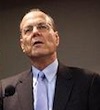
Secretary John Kerry's Middle East track record:
Kerry was the top frequent-flying Senator to Damascus, allowing his own idyllic vision of the globe and his hosts' duplicitous rhetoric to cloud reality. He contended that Hafez and Bashar Assad--two of the most ferocious, cold-blooded dictators in the world - were constructive leaders, referring to Bashar Assad as a generous reformer and a man of his word, while Bashar terrorized his people and facilitated the infiltration into Iraq of Islamic terrorists, whose aim was to murder Americans. In March 2011, Kerry stated: "My judgment is that Syria will move, Syria will change as it embraces a legitimate relationship with the US and the West...." Indeed, Syria has changed, but contrary to Kerry's assessment, with 400,000 deaths and 10MN refugees out of 18 million Syrians. In his 1997 book, The New War (sold by Amazon for $0.01), Kerry demonstrated inclination to dismiss the writing on the wall when in conflict with wishful-thinking: "Terrorist organizations with specific political agendas may be encouraged and emboldened by Yasser Arafat's transformation from outlaw to statesman." In 2012, Kerry contended thatthe Arab Street wastransitioning toward democracy,"the most important geo-strategic shift since the fall of the Berlin Wall." He referred to the Arab Tsunami as an Arab Spring and to the regime change in Tunisia, Libya, Egypt and Yemen as youth and Facebook revolutions. Kerry supported regime-change in Libya, which has transformed Libya into a leading global platform of Islamic terrorism.Critical pitfalls of Secretary Kerry's roadmap to peace:
1. In his December 28, 2016 speech, Secretary Kerry maintained that the crux of the failure to conclude a peace agreement is lack of trust: "Negotiations [between Israel and the Palestinian Authority] did not fail because gaps were too wide, but because the level of trust was too low...." 2. Apparently, Kerry takes lightly the failure of the Palestinian leadership to pass any of the crucial test of its commitment to peaceful coexistence--in 1993 (Oslo Accords), 2000 (Prime Minister Ehud Barak's unprecedented proposals) and 2005 (the uprooting of all Jewish settlements from Gaza)--by responding to unparalleled Israeli territorial and diplomatic concessions with a dramatic escalation of hate education and terrorism. Such a Palestinian track record should be expected due to the notorious hate-education and incitement, which has been a most effective production-line of terrorists, and is the most authentic reflection of the Palestinian strategic goal. 3. Contrary to the Secretary's observation, the crux of the failure has been the inherent nature of the Palestinian leadership, highlighted by its long-term track record: from waves of anti-Jewish terrorism, through the collaboration with Nazi Germany, the USSR and the East European rogue Communist regimes, the Ayatollah Khomeini, Saddam Hussein, North Korea, Cuba, Venezuela and Islamic, Asian, African, European and Latin American terror organizations. 4. While Palestinian leaders are welcome by the US State Department with a "red carpet," Arab leaders welcome them with "shabby rugs" in response to the Palestinian violent back-stabbing of Arab hosts (Egypt, Syria, Jordan, Lebanon and most painfully, Kuwait in 1990). 5. Kerry stated that "the two state solution is the only way to achieve a just and lasting peace between Israelis and Palestinians.... The vote in the UN was about preserving the two-state solution.... The US did vote in accordance with our values...." However, the aforementioned Palestinian leadership track record certifies that a Palestinian state would be another rogue, violent regime, undermining US values and national security, adding fuel to the regional fire, constituting a lethal threat to the vulnerable pro-US Hashemite regime--with potential spillover into Saudi Arabia and the pro-US Gulf states--undermining stability in Egypt, upgrading the potential of a pro-Ayatollah bloc from Teheran to Ramallah, west of the Jordan River, providing port facilities to the Russian (and possibly Chinese and Iranian) navy in the Eastern Mediterranean, and adding another anti-US vote at the already anti-US UN.Read next: Secretary Rubio Warns ICC Not to Challenge U.S. Sovereign Power
Email Us | Reader Friendly | Comments
Ambassador (Retired) Yoram Ettinger is an insider on US-Israel relations, Mideast politics and overseas investments in Israel’s high tech. He is a consultant to members of the Israeli Cabinet and Knesset, and regularly briefs US legislators and their staff. A graduate of UCLA and undergraduate at UTEP, he served amongst other things, as Minister for Congressional Affairs at Israel’s Embassy in Washington. He is the editor of “Straight from the Jerusalem Cloakroom and Boardroom” newsletters on issues of national security and overseas investments in Israel’s high-tech.