Share the Gift of Love This Christmas
It is a gift the world so desperately needs – found in a manger in Bethlehem – and we have been called to share it

Joseph J. Bucci , Bio and Archives--December 1, 2024
HeartlandLifestyles | Comments | Reader Friendly | Subscribe | Email Us
I watch in the dark as she tenderly tucks him into bed, caressing his shoulder and gazing at him to be sure that he is comfortable. He is 91 and fighting the battle of his life. Dementia has taken over his mind, and it often causes confusion and eruptions of anger and anxiety. But here, in the dark, his daughter speaks softly to him in hushed tones. She knows who he really is, and whispers to him about how much she loves him; and how she will always love him. He has done so much for her throughout her life; and now it is her time to repay him.
I sit in the silence and cry. I’m amazed at how much she loves him – but should I be? She has known him her whole life, and seen his love expressed to her in works of service and ways that only a self-taught man could express it. I start to wonder from where do we learn to love; and how does it grow? Do we learn it from our parents? What if your parents are absent, or they’re not the touchy-feely type of people? One expert wrote that loving and being loved are not things that we should assume as standards for everyone (Tower, 2019). Children who come into the world are not always loved or wanted, and that certainly impacts their own understanding of love (Tower, 2019). Is there hope for these children to know this kind of love?
The hard-wiring to feel love is within each human being. It may begin as a gentle touch, and the absence of pain. A sense of safety and security cause babies to respond to their caregivers with an open door to their hearts (Tower, 2019). There is a thing called a “secure attachment” (Psychology Today Staff, n.d.), which forms an emotional bond that is the cornerstone of a loving relationship. This attachment is built on trust, and this becomes the bridge to social and emotional development (Psychology Today Staff, n.d.). In other words, her father’s lavish support and understanding, no matter the circumstances, offered his daughter an open door to a secure reciprocal response of affection. He knew her, and he loved her through the drama and heartbreaks; and he trusted me to fill in this role as he stepped back and cheered her on from afar.
The Apostle Paul describes some characteristics of love in one of the most familiar passages in the Bible, one of the most quoted Bible passages at wedding ceremonies:
- “Love is patient and kind; love does not envy or boast; it is not arrogant or rude. It does not insist on its own way; it is not irritable or resentful; it does not rejoice at wrongdoing but rejoices with the truth. Love bears all things, believes all things, hopes all things, endures all things” (1 Corinthians 13:4-7 ESV).
There are two problems equating this description with human love – please wait a moment before calling me a heretic…
The first is that this description of love is not about human love, but Divine Love. This description mirrors the way God loves us, and God is love (1 John 4:8). If we model anything close to this type of love, it would only be because the Spirit of God was alive and active in us. Paul describes our need for a spiritual infilling in the previous chapter (1 Corinthians 12), because “the human heart is the most deceitful of all things, and desperately wicked” (Jeremiah 17:9 NLT); and because “there is none righteous, no, not one… no one does good, not even one” (Romans 3:11-12 ESV).
The second problem with considering Paul’s description as being of human love is that this passage above is taken out of context. For example, we have already mentioned the Apostle’s call for the believers to be full of the Spirit in the previous chapter (1 Corinthians 12) in order to selflessly share our gifts with the other members of the body of believers (1 Corinthians 12:27-28). Thus his admonition in Chapter 13 that we demonstrate our spiritual gifts guided by the Divine Love. But let’s also look at more of the context:
- Verse 8: “Love never ends.” Could we say that this is a human tendency, with nearly 50% of all marriages ending in divorce or separation (Wilkinson & Finkbeiner, 2024)?
- Verses 9 and 10: “For we know in part and we prophesy in part, but when the perfect comes, the partial will pass away.” God’s love continues on, while human efforts and even some spiritual gifts will make way for God’s perfect knowledge, His perfect Presence, and His perfect love. Our efforts to love fully are limited in comparison to His perfect affection for us.
- And this verse is key: Verse 12: “For now we see in a mirror dimly, but then face to face. Now I know in part; then I shall know fully, even as I have been fully known.” To me, this is the verse least mentioned, but perhaps the most important in the context of a discussion of what love truly is.
It all comes down to being known. True love – Divinely-inspired love – allows us to be fully known by someone, and yet still fully accepted – dirty laundry, yellow teeth, and all the rest. The Bible overflows with the stories of people who were horrible, deceptive, conniving… things that would mostly likely disqualify our human love. Yet God knew them fully, and He loved them and showed mercy in times of need. How can this be?
Consider people like King David, who had everything he could want and yet wanted more – the wife of one of his soldiers (2 Samuel 12). David was called out by the profit Nathan for his act of lust and deception. God knew David’s weaknesses, and yet God knew David as a man after His own heart (1 Samuel 13:14). God loved David and promised to give him an heir who would reign over His precious people forever – our Savior Jesus (Jeremiah 33:17).
How about the patriarch Jacob: consider this man who cheated to get his brother’s birthright and blessing, even as God had planned all along to give it to him (Genesis 25:23; also 27:19). God knew this man known as “the cheater” (Genesis 27:36); and even with the incredible deception by which he did almost everything, God loved Jacob and allowed him to hit rock bottom. But in the end God loved him so much that He gave him a new name and a new identity (Genesis 32:27-28) – something each of us will receive when we meet Jesus (Revelation 2:17).
So to be loved is to be known by another with all your warts and smells and eccentricities. To be loved is to be fully known and to be valued for who you are and who you can be. The Bible tells us that God so loved us that He gave His son as a sacrifice for our sins (John 3:16). God fully knew us, and yet He fully loved us – this is amazing!
In order for us to love God, and then to love another, we must be made like God through the Spirit residing within us; and to sacrificially extend ourselves to others as Jesus did for us. We can then love others knowing full well who they are at this hour; but sacrificing ourselves for them nonetheless. This act of selflessness, demonstrated by a daughter for her father in the midst of his confusion and anxiety, builds trust with others that you are for them – which is how the Apostle Paul describes God (Romans 8:31). This affirmation (“I am for you!”) – being known and yet accepted – becomes the bridge to intimacy and affection.
This quote from Tim Keller sums these thoughts up perfectly: “When over the years someone has seen you at your worst, and knows you with all your strengths and flaws, yet commits him or herself to you wholly, it is a consummate experience. To be loved but not known is comforting, but superficial. To be known and not loved is our greatest fear. But to be fully known and truly loved is, well, a lot like being loved by God. It is what we need more than anything. It liberates us from pretense, humbles us out of our self-righteousness, and fortifies us for any difficulty life can throw at us” (Keller, 2011).
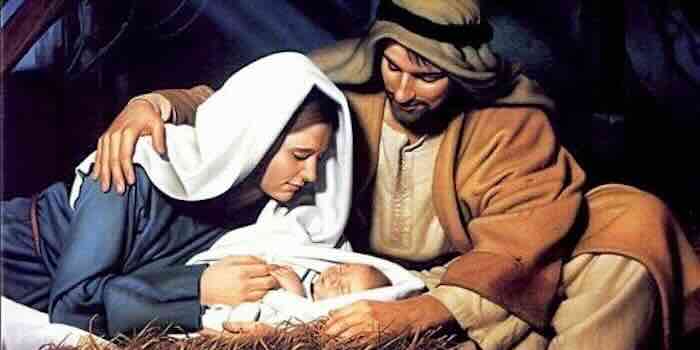
As Keller says, “[This kind of love] is what we need more than anything” (Keller, 2011). And in this season of giving, this is the perfect gift to share! So I make a commitment in this holiday season: I commit to give this gift of selfless love to others, as much as they need of me. I don’t want to hold anything back. With the Spirit’s power, I want to generously offer myself as Jesus did, and demonstrate the kind of love that only God can provide. It is a gift the world so desperately needs – found in a manger in Bethlehem – and we have been called to share it.
Sources:
Keller, T. (2011). The Meaning of Marriage: Facing the Complexities of Commitment with the Wisdom of God. New York: Penguin Books, an Imprint of Penguin Random House.
Psychology Today Staff (n.d.). Attachment. PsychologyToday.com.
Tower, R.B. (2019, February 22). Learning to Love and Be Loved. Psychology Today: Life, Refracted [Web Blog].
Wilkinson & Finkbeiner (2024). Divorce Statistics: Over 115 Studies, Facts and Rates for 2024. Wilkinson & Finkbeiner.
View Comments
Joseph J. Bucci has served as a Pastor, Author, HR Director, Director of Training, Professor and Consultant. He teaches in the College of Arts and Sciences at Regent University in Virginia Beach. He has written two books and numerous articles on the theme of integrating faith with life and our work. You can contact Dr. Bucci at: Joseph J Bucci