Solar Issues Worldwide
Any chance we could learn from the experiences of others? There have been a lot of mistakes made. Perhaps things will look differently under the new administration

Jack Dini , Bio and Archives--November 17, 2024
Global Warming-Energy-Environment | Comments | Reader Friendly | Subscribe | Email Us
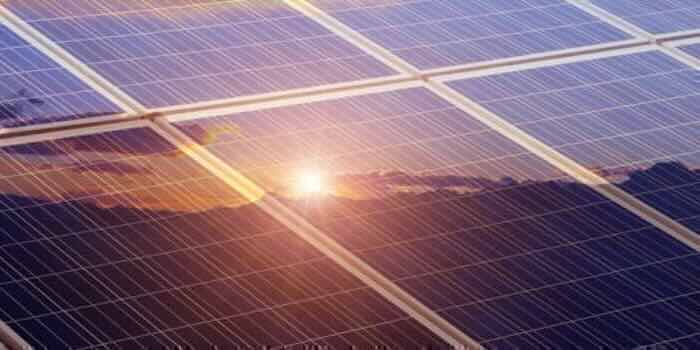
Europe --The world now has the capacity to make 1,600 GW of solar panels annually, but demand has unexpectedly flat-lined, staying at barely 500 GW. In a world awash with solar panels that no one needs, prices have fallen dramatically, but that hasn’t solved the glut which is so bad, people are using solar panels for fencing in Europe. (1)
Europe’s solar manufacturers are in a crisis.
Forty-year-old German solar panel producers are closing factories they only opened three years ago. (1)
India
The allure of a green utopia masks the harsh realities of providing affordable and reliable electricity. Americans could soon wake up to a dystopian future if proposed Net Zero and Build Better initiatives—both aimed at an illogical proliferation of unreliable renewables and a clamp down on dependable fossil fuels—are implemented. Nowhere is this better reflected than in remote regions of India where solar panels—believed to provide clean and green energy—ultimately resulted in being used to construct cattle sheds. (2)
The transformation of Dharnai in the state of Bihar into a ‘solar village’ was marked by great enthusiasm and high expectations. Villagers were told the solar micro-grid would produce reliable electricity for agriculture, social activities and daily living. The promise engendered a naïve trust in a technology that has failed repeatedly around the world. But the Dharnai system would end up on the long list of grand solar failures.
“As soon as we got solar power connections, there were also warnings to not use high power electrical appliances like television, refrigerator, motor and others,” said a villager. “These conditions are not there if you use thermal power. Then what is the use of such power? The solar energy tariff was also higher compared to thermal power.” (2)
A village shop keeper said, “But after three years, the batteries were exhausted and it was never repaired. No one uses solar power anymore here.” Hopefully, the solar panels will last longer as shelter for cows. Eventually, the village was connected to the main grid, which provided fully reliable coal powered electricity at a third of the price of solar power.
Dharnai is not an isolated case. Several other large-scale solar projects in rural India have had a similar fate. While green nonprofits and the liberal mainstream media have the embarrassment of a ballyhooed solar project being converted to cattle sheds, conventional energy sources like coal continue to power India’s more than 1.3 billion people and the industries their economies depend on. (2)
Australia
In 2016, the new Labor Government waved a magic wand and commanded they would be 50% renewable by 2030. The experts said it was doable and would save $30 million a year. They gave out the permits for large installations, which began construction in 2019, but then suddenly changed the rules in 2020, and wouldn’t let their solar plants connect to the main grid. Unbelievably, 64 megawatts of solar panels that cost $40 million dollars have sat, doing nothing for four long years. It’s just reflecting back into space, not being used to power the grid and to substitute for diesel and gas production. (3)
The reason they couldn’t be connected was that the Territory government suddenly rewrote the rules in February 2020 and insisted the solar generators had to operate like fully scheduled generators, not semi-scheduled ones.
There are about 250,000 people living in the Northern Territory. There are two separate grids and several microgrids. All of these are perfect test cases to showcase renewable energy and none of them are managing to do it. Jo Nova asks, “When will we get the message? If a town of 30,000 can’t live off the sun and wind, why would anyone bet the whole nation on it?”
Currently, 80% of the world’s solar panels are pouring out of China. With impeccable timing, just weeks ago the Australian Government threw a billion dollars at a program to help Australia become a solar panel super factory just at the moment when China is practically giving them away. (3)
An example from Broken Hill in New South Wales aligns with broader critiques of renewable energy systems worldwide, which often fail to account for their limitations in meeting constant demand, particularly during extreme weather.
During a storm, solar panels were rendered useless, and wind turbines also became non-functional. The renewable infrastructure could not deliver electricity when it was most needed, as stormy weather conditions forced solar and wind production offline. (4)
The core message is that while renewable energy projects often receive substantial support, their real-world performance during high-stress situations- like storms, heatwaves, or cold snaps- remains questionable. This incident cautions against over-reliance on renewables without adequate grid resilience planning and backup capacity.
Jo Nova concludes, “Instead of spending $650 million dollars on solar and wind and battery, we could have bought two brand new useful diesel generators for every remote town in Australia and then when transmission towers fall down, they won’t be left in the dark.” (4)
United Kingdom
A solar energy company has fallen into administration after racking up more than half a billion pounds in debt to a local authority in Essex, southern England.
Toucan Energy Holdings 1 Ltd., which owns 53 solar farms across the country had borrowed 655 million pounds over four years from Thurrock Council to fuel its expansion. (5)
Italy
The Italian government approved a decree that will ban the installation of solar panels on agricultural land. (6)
Alberta
Alberta is trying to replace coal with a combination of gas with solar and wind but the latter are contributing almost nothing to the project or energy security. (7)
Louisiana
Solar power in Louisiana has become a subject of controversy. The primary issue was land. Where should land be devoted to solar power, and more specifically, what type of land.(8)
Only a certain type of ground is good for solar farms. Farm soil is best because it’s flat, easily accessed and not over any pipelines or channels.
Although it would be more convenient in theory to have them in a place such as bayous and marches because it wouldn’t hurt any other industry, environmentalists strongly opposed that because it would hurt species habitats.
That’s not even considering how much harder it would be to manage a plant of any kind on such shaky infrastructure. (8)
Summary
In 2021, the Department of Energy released a study that claimed solar has the potential to power 40% of the nation’s electricity by 2035. That’ a mighty big claim. Last year, solar accounted for about 5% of US electricity production. The DOE has also claimed solar could reach 45% of US electricity production by 2050. (9)
Any chance we could learn from the experiences of others? There have been a lot of mistakes made. Perhaps things will look differently under the new administration.
References
- Jo Nova, “The solar boom has busted: In the last six months Europe’s solar manufacturing has collapsed by half,” joannenova.com.au, July 23, 2024
- Vijay Jayaraj, “World’s most populous nation has put solar out to pasture. Other countries should follow suit,” principia-scientific.org, July 16, 2024
- Jo Nova, “Transition hell: solar plants sat idle for 4 years in Northern Territory because of fears they’d make the grid unstable,” joannenova.com.au, August 23, 2024
- Jo Nova, “$650 million in renewable energy didn’t save Broken Hill from days of blackouts after a storm islanded it,” joannenova.com.au, October 28, 2024
- Toby Young, “Solar firm collapses, owing UK taxpayers 655 million pounds,” org, November 12, 2022l
- Handan Kazanci, “Italy approves decree banning installation of solar panels on agricultural land,” aa.com.tr/en/energy,, July 5, 2024
- Tom Shepstone, “Alberta solar and wind gave only 2.5 % of capacity when needed,” naturalgasnow.org, January 3, 2022
- Jacob Matthews, “Environmentalists, residents push back against solar farms in Louisiana,” thecentersquare.com, August 23, 2024
- Robert Bryce, “More solar silliness in the New York Times,” robertbryce.substack.com, September 14, 2024
View Comments
John William Dini, know to all as ‘Jack’, passed away at the age of 89 on June 17, 2026. He was born in Cleveland, Ohio on Nov. 14, 1936.
He published two books, a technical book on materials science and coatings and another on environmental issues. In retirement, he wrote extensively on various environmental issues for online publications.
He was a skilled leaded glass hobbyist, creating more than 20 lamps and many panels. He was a jogger for many years, competing in over 300 long distance races. He was a slow runner, not wanting to take the glory away from others. His secret was to start slow and taper. He and Anne traveled extensively, visiting over 70 countries.
He is survived by his wife, Anne, of 67 years, and sons Mike, Steve, and Paul. If you were to meet him somewhere, he would sum up his life as ‘peaches and cream’.