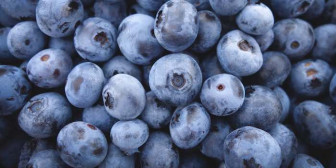
Most people still know, one hopes, that blueberries were only wild food not so long ago. Indigenous peoples across North America gathered and preserved them. One traditional name, “star berry,” refers to the tiny five-pointed star at the blossom end of the fruit.
Just over a century ago, a New Jersey woman set blueberries on the course of a commodity food. Elizabeth Coleman White was the daughter of a cranberry farmer at Whitesbog in New Jersey's Pine Barrens. In 1910, she read a paper by Frederick Coville, a botanist investigating blueberry cultivation. Coville had discovered that blueberries required acidic soil, explaining why they flourished naturally in the Pine Barrens.
White hired local woodsmen to search the surrounding countryside for bushes producing high volumes of large and sweet berries. The finders were paid for promising plants, and some varieties eventually carried the names of the people who discovered them. The Rubel variety was named for Rube Leek, who found the original wild bush.
By 1916, a collaboration between White and Coville resulted in the first commercial crop of cultivated highbush blueberries.
Today, there are sophisticated blueberry-breeding programs around the world. Researchers are developing varieties that can tolerate heat, resist disease, survive shipping and, perhaps most importantly, withstand mechanical harvesting. Blueberries have traditionally required hand-picking because ripe fruit is easily damaged. Now breeders are trying to produce berries firm enough to be harvested by machines, while remaining attractive and delicious to the consumer.
Scientists are now using DNA markers to identify desirable traits. The best blueberries that Elizabeth White's workers selected by walking through the woods are now being selected with genetic information.