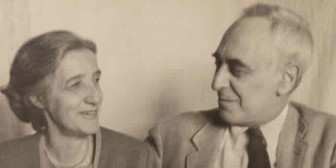
Meyer was more than a theorist, editor and mentor but a cultural force in the first degree
Meyer was more than a theorist, editor and mentor but a cultural force in the first degree. Academic pursuits at Princeton and Oxford led to his role as a founding editor of National Review, where he wrote the longstanding and weighty column “Principles and Heresies.”
His personal life is woven throughout the narrative reinforcing how belief systems are lived as much as they are theorized. The Cold War backdrop adds another layer to his intellectual fabric underscoring how anti-communism served as both a catalyst and crucible for Meyer’s eventual conversion.
Flynn’s prose blends scholarly rigor with narrative flair that transcends the conventional biography by breathing life into Meyer, long relegated to the margins of historical irrelevance. Flynn reconstructs Meyer’s journey as both theatrically charged and ideologically complex, crafting a storyline that makes convoluted ideological shifts feel personal and accessible while reading like a novel.
The sheer scope of Flynn’s research – 129 pages of acknowledgements, bibliography, and index attests to the depth of the author’s excavation and underscores Meyer’s evolution not as a clean ideological pivot, but as a layered metamorphosis. Meyer emerges as a paradoxical academic perched at the anxious intersection of Cold War conservatism.
Flynn’s treatment of Meyer evokes the Thomistic balance of charity and clarity. He probes Meyer’s contradictions not to dismiss them, but to illuminate the restless intellect of a man who believed, like Thomas Aquinas, that truth is not merely known it is lived.
The result is a well-researched and revealing portrait of a scholar whose ideas remain relevant.
In an era where ideological nuance is treated like betrayal, Meyer’s life reminds us that contradiction is not a weakness, but the price of finding truth.
Meyer’s conviction that ideas shape history is not as abstraction but a vocation with Flynn guiding readers through a life marked by philosophical and moral rigor.
For those who possess a reading list that is drawn to narrative history and biographies, Meyer’s story needs to be at the top of the list.