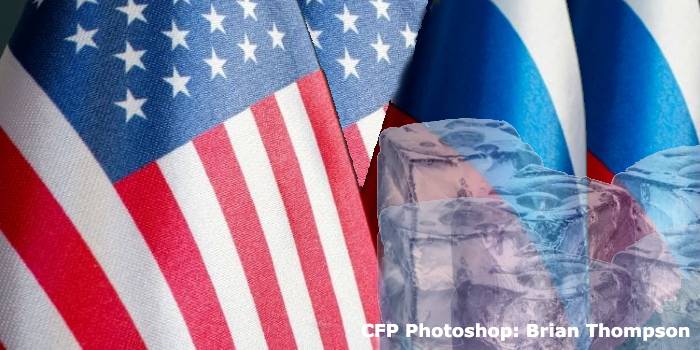
Western democracies seek long-term stability. To achieve this, the West must no longer ostracize Russia as a veritable pariah state. The predicate for such treatment is based on a perception of Moscow as the old Soviet Union, generated through a pre-1989 Cold War lens. Moreover, consideration must be given to the political intrigues which ensued after the fall of the Wall in ‘89.
There is valid, well-documented evidence that NATO leaders were not forthcoming with the “Russian Bear” since the Cold War ended. Promises were made but never kept. Assurances were given – but by people with short memories.
U.S. Secretary of State James Baker’s famous “not one inch eastward” assurance about NATO expansion in his meeting with Soviet leader Mikhail Gorbachev on February 9, 1990, was part of a cascade of assurances about Soviet security. Gorbachev and other Soviet officials received reiteration of these assurances throughout the process of German reunification in 1990 and 1991. Declassified US, Soviet, German, British and French documents posted December 12, 2017 by the National Security Archive at George Washington University attest to this.
There appears to be a structural fallacy in the West’s orientation vis-a-vis Russia, today. The view of the USSR as a threat during the Cold War was valid. The Warsaw Pact was real and its purpose clear. Today, however, “the Pact” no longer exists – not even the Russian president sees Russia as a threat to the EU or NATO.
Today, the West must follow a new path, one not dictated by a political view created over 70 years ago and designed to fight a Cold War adversary. It is a view grounded in “containment” foreign policy which was the logic behind military interventions in Korea, Vietnam, Latin America and Grenada.