Too Much Technology?
Human factors are the cause of most vehicle accidents, and the human technology interface in newer vehicles needs to be reassessed;

Steve Rossiter , Bio and Archives--January 16, 2026
American Politics, News | Comments | Reader Friendly | Subscribe | Email Us
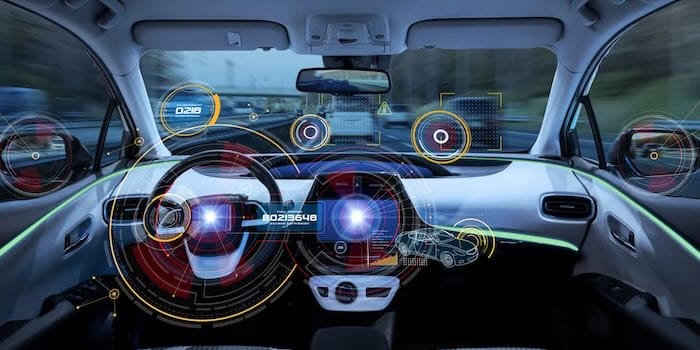
I first became a flight instructor in the U.S. Army in 1967. For the next 30 years, not very much changed in aircraft cockpits from a technological standpoint. Throughout aviation history, even today, the first rule every pilot must follow is “fly the aircraft.” The second cardinal rule is “to see and avoid” other aircraft. In the 1980s, a new device called Global Positioning Systems (GPS) started becoming common in aircraft cockpits. When that occurred, I and my fellow flight instructors began to notice a disturbing trend; pilots were diverting their attention from “see and avoid” to following the GPS indications.
In my accident, the other driver was distracted by technology and failed the see and avoid principle
Since the 1980s, more and more technology has been added to the cockpit, further reducing the time pilots should be looking out of the cockpit to see and avoid. Sadly, too many aircraft accidents are occurring because of distraction due to technology. Right now, you might be wondering: I’m not a pilot, so who cares? In just a moment, you will see my point.
Last week, I was in an automobile traffic accident. I was on a four-lane street, and I was in the left lane of traffic going in my direction. I was passing a car slowing in the right lane when that driver decided to make a U-turn. Wham, Bam, and I got to see what a full airbag deployment looks like up close and personal. Fortunately, neither I nor the other driver were seriously injured so no ambulance ride was necessary. The other driver admitted that their GPS instructed them to do a U-turn.
My point is this: where pilots must first fly the aircraft, drivers on public streets, must first and foremost “drive the vehicle.” Like pilots, drivers must follow the second cardinal rule to “see and avoid” other vehicles. In my accident, the other driver was distracted by technology and failed the see and avoid principle. Statistically, we joined the 27% of automobile accidents caused by distracted driving, which encompasses vehicle technology and cell phone usage.
I would suggest that touch screens in cars are worse than cell phones
The newest vehicle technology in my family was 2017. Last summer I had the opportunity to drive a 2024 or 2025 rental vehicle. It had technology that I never figured out in the five days I drove it. It took me three days to even feel safe driving it by avoiding the technology I didn’t understand. How much “gee whiz” stuff do we need in our vehicles? Are we getting too much technology too fast? Are touch screens too much of a distraction in cars? Are touch screens any less a distraction than cell phone usage? I would suggest that touch screens are worse than cell phones.
Buttons, switches, and dials can be controlled by feel and only require a momentary glance, at most. Human factors are the cause of most vehicle accidents, and the human technology interface in newer vehicles needs to be reassessed. Asking if there too much technology in our cars is an interesting question.
View Comments
After a 55 year career as a professional pilot in the military, in law enforcement, in the private sector, and in federal civil service, I am now retired.
In many of these positions I repeatedly took an oath to defend the United States Constitution against all enemies foreign and domestic.