Trump could enact a second massive tax cut all by himself . . . and he just might
Tax Policy

Dan Calabrese , Bio and Archives--July 16, 2018
American Politics, News | Comments | Reader Friendly | Subscribe | Email Us
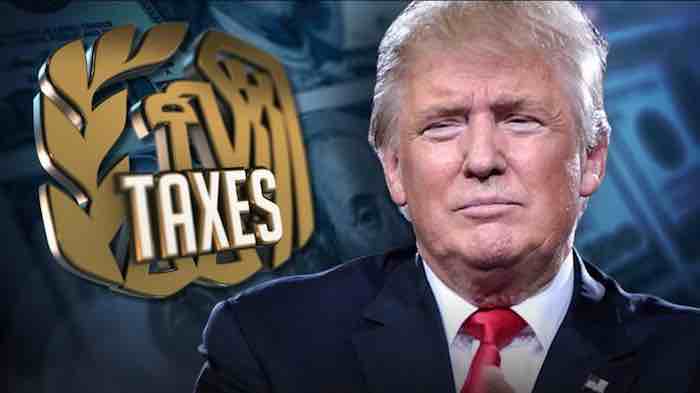 After the political battle it took to achieve the massive tax reform we got at the end of 2017, could it really be that we could get another one of equal impact just by President Trump deciding to issue a simple order?
It is possible. And it could happen.
After the political battle it took to achieve the massive tax reform we got at the end of 2017, could it really be that we could get another one of equal impact just by President Trump deciding to issue a simple order?
It is possible. And it could happen.There’s a very strong movement afford among conservatives in or around the administration for President Trump to take advantage of a 2002 Supreme Court decision that authorized presidents to order that capital gains be indexed for inflation for tax purposes. That doesn’t sound like such a big deal, does it? But it is. If Trump were to do so, it could have the effect of spurring massive new investment activity while once again reducing the tax penalty associated with investment gains. In other words, we’re talking about another massive boost to economic growth, which would be powerful on the heels of what most think will be very robust second-quarter growth numbers coming out in the next week or two. There isn’t even any question about whether Trump has the authority to do it. He just has to do decide to use that authority, and it’s a very real possibility that he will:
In the halls of Congress, the corridors of the administration, and the nerve centers of activist groups, forces are aligning behind a plan: a White House order to index capital gains for inflation. It’s a long-overdue move—one that would further unleash the economy and boost GOP election prospects. And Mr. Trump could be the president bold enough to make it finally happen. At President Reagan’s behest, Congress in the 1980s indexed much of the federal tax code for inflation. Oddly, capital gains weren’t similarly treated. The result is that businesses and individuals pay taxes on the full nominal amount they earn on investments, even though inflation eats up a good chunk of any gain. It’s not unheard of for taxes to exceed real gains after inflation. The result is significant capital distortion, as companies sit on buildings and property or investors sit on stock—rather than selling and thereby putting both assets and gains to more productive use.
Conservatives have understood this problem for decades, yet for decades they have been held hostage to a 1992 government brief. The paper by the Justice Department’s Office of Legal Counsel offered a few faulty arguments as to why the Treasury lacked the authority to make this regulatory change. Neither President Bush questioned it, but others have. Americans for Tax Reform President Grover Norquist —chief troop-rallier in this effort—has been circulating a 2012 paper by lawyers Chuck Cooper and Vincent Colatriano that details that 1992 opinion’s flaws. It points out that the Internal Revenue Code does not require that the “cost” of an asset be measured only as its original price—meaning there is no reason Treasury could not construe it in today’s dollars. More important, it noted that since the Supreme Court decision in Verizon Communications v. Federal Communications Commission (2002), regulators have leeway in how they define “cost.”
Inflation eats away at your investment gains
The basic long and short of it is that inflation eats away at your investment gains, but a tax code that doesn’t index gains for inflation socks you with a tax bill as if inflation hadn’t had any negative effect at all on the value of your earnings. Democrats hate this idea because they always think every reduction in tax liability – especially those related to investment earnings – represent a “giveaway to the rich.” But if Democrats could get past their class resentment, they might appreciate the fact that capital gains tax cuts always spur more investment activity and generate more revenue to the Treasury, not less. What do Democrats want? To fund the massive government they love, or to attack the rich people they hate? If they understood basic economics a little better they might stop acting at cross-purposes with themselves. Will Trump do it? He’s always hard to predict, but the last two Republican presidents (both of whom had the same last name) were reluctant to go against that 1992 Treasury Department guidance, as it enjoyed widespread acceptance among the Washington establishment. W. was more of a tax-cutter than his dad, but he was far less a boat-rocker than Trump, who loves disrupting things. This would be a disruption in the most positive conceivable way, and there’s not a soul on Earth who can stop him from doing it if he decides to. He should.View Comments
Dan Calabrese——Bio and Archives
Dan Calabrese’s column is distributed by HermanCain.com, which can be found at HermanCain
Follow all of Dan’s work, including his series of Christian spiritual warfare novels, by liking his page on Facebook.