UBC Faculty lawsuit challenges the historical, prehistorical accuracy of the “traditional, ancestral, and unceded territory”
University of British Columbia faculty lawsuit against indigenous land acknowledgements and EDI requirements

Hymie Rubenstein , Bio and Archives--April 24, 2025
Canadian News, Opinion | Comments | Reader Friendly | Subscribe | Email Us
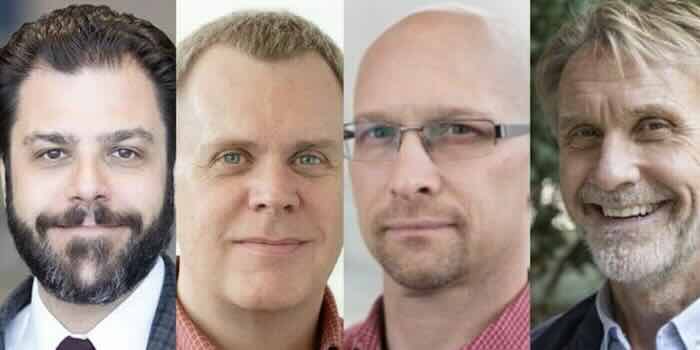
Four University of British Columbia professors and a recent PhD graduate student have filed a lawsuit against their university alleging official indigenous-focused land acknowledgments made by UBC along with equity, diversity and inclusion (EDI) hiring requirements underpinning these acknowledgements violate UBC’s duty to “be non-sectarian and non-political in principle,” as legally codified in section 66 of the University Act.
The lawsuit, filed on April 7 at the BC Supreme Court, seeks orders demanding the university remove “assertions that UBC lands are ‘unceded’ from its website, internal guidance documents and official communications on behalf of UBC,” and “adherence to EDI values and requirements to require applicants to make EDI adherence statements [favouring indigenous candidates] as a condition of applications for faculty positions.”
These five plaintiffs – UBC philosophy professor and former Vice-Chair of UBC's Board of Governors Andrew Irvine, PhD graduate Nathan Cockram, UBC political science associate professor Brad Epperly, UBC political science professor Christopher Kam, and UBC English associate professor Michael Treschow – are claiming statements that UBC is on unceded Indigenous land imply that “Canada” is not “a lawful or legitimate state” but continue to exist on “stolen land.”
- “By repeatedly asserting that UBC lands are unceded,” the petition states, “UBC takes a political position on one side of a controversial political debate about Canada’s sovereignty and the political need for or claim to Indigenous cultural autonomy and/or sovereignty.”
According to the petitioners, land acknowledgements “have adverse effects on their academic freedom,” claiming they inhibit “free inquiry, discussion, lecture and debate of the scope of Indigenous political rights in Canada.”
The lawsuit singled out by name the “Musqueam and/or Okanagan people,” on whose pre-contact territories both major campuses operate.
The petition outlines that UBC’s land acknowledgements and the declaration of UBC lands as unceded are encouraged by university administration and do not give staff or students the ability to disagree or argue against them. “In this sense, UBC’s declarations that UBC lands are unceded is authoritatively and prescriptively political,” reads the petition.
For example, the land acknowledgement for the University of British Columbia, Okanagan Campus (Kelowna) reads, “I would like to acknowledge that we are gathered today on the traditional, ancestral, and unceded territory of the Syilx (Okanagan) peoples.”
The petitioners claim, “their political views or legal opinions are not welcome at UBC” if they believe that the nations “effectively ceded their lands,” or if their “rights or title have been fully or partially extinguished.”
The litigants’ petition additionally alleges that the application process UBC uses to hire faculty members requires applicants to agree with “EDI political principles,” fully or semi-codified rules that differentially and racially favour indigenous people.
- "UBC imposes and/or requires application processes for hiring faculty members and criteria for hiring or appointing faculty members that require applicants to express agreement with/adherence to, fidelity with or loyalty to diversity, equity and inclusion doctrines and ideologies ‘DEI’ or ‘EDI,’” the petition also claims.
The applicants also highlight how some job postings, like on UBC’s Department of Psychology website, include EDI and encourage applicants who would further such initiatives.
The applicants' central position is that UBC is pressuring students, staff and faculty to adhere to certain “political positions advanced by the University,” or risk losing opportunities – all in violation of the University Act.
As might be expected, indigenous leaders, including the Okanagan Nation Alliance and Westbank First Nation, have denounced the lawsuit, calling it “a denial of Indigenous rights and a thinly veiled attempt to erase Indigenous presence.” The Union of British Columbia Indian Chiefs also condemned the lawsuit, stating “it mischaracterizes Indigenous rights and calling on UBC to defend itself.”
The elected leader of the Okanagan Nation Alliance’s (ONA) Chiefs Executive Council said in a statement that the recognition of unceded Syilx Okanagan land is not political but simply fact.
“It is an acknowledgment of historical truths and legal realities,” said Chief Clarence Louie. “Attempts to silence these acknowledgments are attempts to erase Syilx Okanagan presence and rights.”
Meanwhile, Westbank First Nation (WFN) Chief Robert Louie said institutions like universities have a duty to uphold spaces that foster truth and reconciliation.
- “Challenging the acknowledgment of unceded Syilx Okanagan territories undermines this duty and disrespects the Syilx Okanagan communities whose lands these institutions occupy,” he said.
WFN, which is a member community of the ONA, issued its own open letter addressing the petition, saying the nation is deeply concerned by the court filing.
- “The petitioners argue that these actions stifle academic freedom,” WFN’s open letter states. “Yet it is clear to us that their claims veiled under the banner of ‘academic freedom’ are, in fact, a thinly disguised attempt to perpetuate harmful rhetoric rooted in racism, bigotry, and historical denialism.”
Scott Franks, an assistant professor at the Allard School of Law, University of British Columbia, who claims “expertise in Aboriginal law” strongly sides with the indigenous opponents of the legal petition against the land acknowledgements and EDI requirements. In an April 16 Globe and Mail editorial, he argued “Land acknowledgments aren’t political. They uphold the rule of law in Canada” because:
- Land acknowledgments are statements of legal fact. Their use in institutional contexts reaffirms the rule of law – in particular, the constitutional affirmation and recognition of Indigenous peoples’ rights. The main campus of the University of British Columbia is located on Musqueam territory, which the Musqueam have never surrendered nor ceded to the Crown. As a legal fact, this means that the land is unceded and that the Musqueam Nation retains title to those lands. In making these acknowledgments, the university affirms the Crown’s relationship with the Musqueam Nation.
Franks also rejects “the bare fact that settlers are “here to stay” – something called de facto [as opposed to de jure or legal] control.”
- In much of British Columbia, where there are no treaties Crown sovereignty is based on de facto control.
- BC’s de facto control of Crown lands, however, does not magically change the status of lands within the province to ceded lands. The lands remain unceded, unsurrendered, and constitutionally protected by Canada’s constitutional framework.
Other indigenous law experts would disagree. In private communication, one knowledgeable critic has argued:
- "Ceded" means surrendering in a treaty. Unceded means there is no surrender. Hence it is not entirely wrong to refer to any land in BC which is subject to a claim of aboriginal title as unceded. But unceded certainly does not mean the land is in fact or law subject to aboriginal title. To establish aboriginal title requires proof of exclusive possession in 1846 [when Britain and the United States entered the Oregon Boundary Treaty in 1846. Under the Treaty, Vancouver Island became subject to British control.] In all the court cases to date the Indians have failed to establish aboriginal title over about 90% of what they were claiming.
- Land acknowledgements are mere political grandstanding. No one knows today what lands the Indians could prove they had exclusive possession of in 1846. Therefore, to call land acknowledgements statements of fact is completely misguided.
- This assistant professor is so wrong in his assertions it is embarrassing. To assert, as he does, that the fact land is unceded means it is subject to aboriginal title is nonsense. The most that could be said is that the unceded land is subject to a claim of aboriginal title.
- Of course, [BC Premier] Eby is intent on caving to every claim of aboriginal title that is made, as he did in Haida Gwaii. But that is capitulation to claims that in all likelihood could not be proven in a court of law. It is an outrageous sacrifice of the interests of the 95% of British Columbians who are not Indians.
This opinion is validated by several court decisions in British Columbia, including the June 2023 BC Supreme Court decision in The Nuchatlaht v British Columbia. The Court held that the Nuchatlaht failed to provide sufficient evidence to establish their claim to Aboriginal title on the west coast of Vancouver Island. There are other cases like this as well.
A second commentator argued:
- I own and live on ceded land located on southern Vancouver Island.
- The territories of the city of Victoria and all of the surrounding towns were ceded by the 14 Douglas Treaties (1850’s) . The Supreme Court of Canada has confirmed that these treaties are in fact “treaties” given the meaning of treaties under the Indian Act.
- If we extend the logic of Franks then before every public event at the local theatre, before every town Council meeting, and in preface to every BC legislature sitting someone should stand up and announce that we are meeting on ceded native land.
- I wonder how supportive Mr. Franks would be of his loopy idea of the requirement for such a superfluous announcement if this were the case?
A third expert opined that:
- Franks column must be restricted to BC because that is the only part of Canada not subject to a surrender treaty.
- He makes BC look like it is still entirely owned by the Musqueam and all the other tribes there. In fact, the Courts have recognized Crown title but say that it is subject to the underlying burden of Aboriginal title, which still exists.
- He fails to acknowledge that Crown title is a legal reality in BC, along with Aboriginal title.
With respect to the rest of Canada, Franks is completely out to lunch
- Aboriginal title can be extinguished there if certain tests are met: pressing and substantial circumstances, the Crown exhausting all consultation duties, and the Crown continuing to uphold its fiduciary duty to Aboriginal peoples affected. It’s a severe test, but the fact that it exists proves the existence of Crown title, which, if it can be the extinguisher, is a practical admission that it is more than it seems.
- With respect to the rest of Canada, Franks is completely out to lunch.
- He elides over the issue that all his writing about BC does not apply to the rest of Canada. He makes it appear, to the uninitiated, that it does.
- He ignores the land surrender wording – “surrender, transfer and convey” – in the surrender treaties. He gives no explanation of or justification for land acknowledgements in all parts of Canada where title to land was conveyed to the Crown by treaties.
My own position is that the petition could have been strengthened had it challenged the historical and prehistorical accuracy of the “traditional, ancestral, and unceded territory” claim. This can be done easily because the lands now claimed to have been traditionally used and/or occupied exclusively by the Syilx people, like lands all across Canada, were also used and/or occupied by other semi-nomadic hunting, fishing, and gathering indigenous peoples for at least the last 14,000 years. The term ancestral also presupposes thousands of years of uninterrupted Syilx occupation of these same lands, an assumption that has never been proven for any New or Old World indigenous people.
Also, de facto land possession has easily and legally become de jure land ownership over time all around the world, at least partly because nomadic or semi-nomadic indigenous fishers, hunters, and gatherers – including the indigenous peoples of BC – had little pre-contact understanding or need for inalienable collective land ownership except in very limited and transitory circumstances (e.g., a very reliable berry patch or river fishing spot that could still be lost as a result of inter-tribal warfare).
So far, the UBC has not filed a response, instead issuing a media statement saying it was aware of the petition and would review it.
View Comments
Hymie Rubenstein, a retired professor of anthropology at the University of Manitoba, is editor of —REAL Indigenous Report.