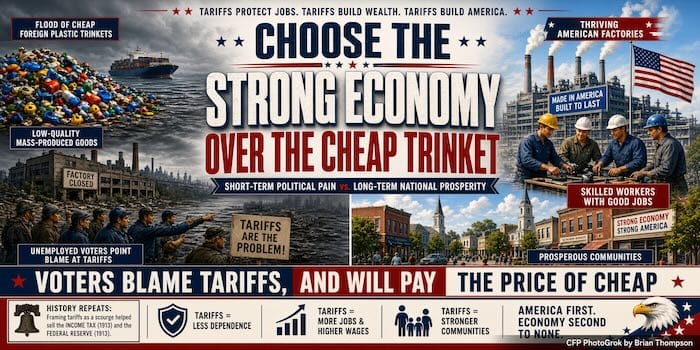
What we owe voters isn't a retreat from tariffs. It's an honest accounting
Constitutionally, the objection is thinner than it sounds. The Founders themselves (Washington, Adams, Jefferson, Madison, Monroe) adjusted tariffs and negotiated tariff agreements without prior congressional sign-off. Presidents did it all through the nineteenth century. Theodore Roosevelt did it with Cuba. Wilson did it during the blockade. Hoover and FDR did it repeatedly before the Reciprocal Trade Agreements Act of 1934. Congress sets the schedule; the President conducts the negotiation. That is the design, and it long predates the emergency statute everyone is now litigating.
The cost of the old arrangement is not abstract. We run a trade deficit with China approaching $300 billion and depend on a communist rival for the goods a modern country ought to be able to make for itself. When someone says there's no American substitute for a given product, the correct reply is a one-word question: why? Why don't we make it? Why can't we compete? If the honest answer is "because their labor is cheaper and their rules are looser," then tariffs are the mechanism that closes the gap, and the only real alternative is to keep depending on them and hope they stay friendly.
What we owe voters isn't a retreat from tariffs. It's an honest accounting. Some prices went up, and that is a real cost, paid at the register by real people, and pretending otherwise insults them. But the other side of the ledger is factories, payrolls, apprenticeships, and supply chains that don't cross an ocean. Seventy-plus countries came to the table rather than eat the surcharge. That's leverage we didn't have before.
Republicans should stop apologizing for the policy in the stack that actually builds something. Choose the fairway. Choose the strong economy over the cheap trinket. And say so out loud, because the voters who blamed tariffs in that poll weren't rejecting the goal, they were waiting for someone to explain why the price is worth paying.