Material-Specific Installation Techniques
Modern Wallpaper Is Not a Single Product Category
Today’s wallcovering market includes vinyls, non-woven materials, grasscloth, silk, and specialty designer papers. Each behaves differently during handling, adhesive application, and curing.
Vinyl wallcoverings require expansion management and controlled adhesive distribution. Natural materials demand stable environmental conditions and precise seam handling. Non-woven products allow for alternative paste methods but still require exact alignment.
Professional installers adjust their process to the material — not the other way around.
Pattern Alignment and Architectural Reference Points
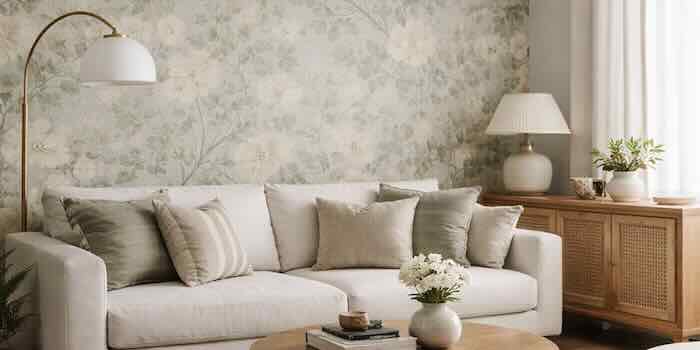
Large-scale patterns and murals must be aligned to architectural features rather than wall edges. Ceilings, trim lines, cabinetry, and sightlines dictate reference points.
Lighting plays a critical role. Natural daylight and directional artificial lighting can exaggerate even minor misalignments, especially in stairwells, entry spaces, and living areas.
Regional Factors That Influence Installation Outcomes
Denver Metro Area Conditions
In the Denver metro area, altitude, dry winter air, and seasonal humidity swings significantly affect installation behavior. Adhesives can skin over too quickly. Materials may not fully relax before setting. Shrinkage risks increase if environmental conditions are not controlled.
Installers familiar with these conditions adapt their workflow — adjusting open times, sequencing walls strategically, and stabilizing indoor environments before and during installation.
This regional knowledge separates general contractors from specialists providing wallcovering installation services in Colorado.
Coordination With Designers, Architects, and Builders
High-quality wallpaper installation rarely happens in isolation. It requires coordination with other trades and alignment with the broader design intent.
Installers must anticipate trim details, cabinetry tolerances, ceiling conditions, and sequencing constraints. When wallpaper is treated as an integrated finish rather than an afterthought, it enhances the architecture instead of competing with it.
Design consultants such as Kris A. often act as technical intermediaries on complex projects — translating design vision into practical execution decisions and helping teams avoid costly rework.
Long-Term Value of Professional Installation
When installed correctly, wallpaper delivers depth, texture, and durability that paint cannot replicate. It becomes a long-term interior solution rather than a temporary design experiment.
The true value of professional installation lies not in speed, but in restraint: careful preparation, material understanding, and disciplined execution. These factors determine whether wallpaper elevates a space for years — or becomes a visible liability shortly after installation.
Bradley Coleman writes on Social Media, Tech, Health and Wellness issues