Winter Is Coming
Survival in Tough Times: Winter is coming in the troubled Northern Hemisphere. What's the next right thing to do?

Dr. Bruce Smith , Bio and Archives--September 5, 2022
HeartlandLifestyles | Comments | Reader Friendly | Subscribe | Email Us

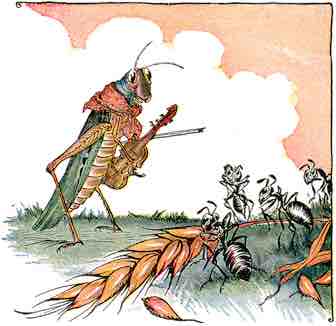
There was frost along the Yellowstone River last week. Right now, it's late summer in the Northern Hemisphere. September is the month of great abundance. There are roadside stands and abundant gardens and neighbors with too much zucchini and too many tomatoes and green beans. Recall the story of the grasshopper and the ants. The grasshopper sings and fiddles and has plenty to eat all Summer. The ants have plenty to eat, too, but the industrious ants keep busy filling their storehouses with food. When Winter comes, the ants have ample supplies to hold them through the cold weather. The grasshopper, who has failed to make any preparations, shivers in the cold and must starve.
There's a serious war in the European bread basket-- Ukraine
 It's happened every year for a very long time, but I'm here to tell you that Winter is coming. Winter always comes after fall, but there's a pretty good chance that this winter will be different in some important parts of the world.
There have been years without a Summer, like in 1816. The Tambora eruption began in April 1815 and went on for four months, the greatest volcanic eruption in history. It put out ten times the dust and ash that Krakatoa did. The Mt. St. Helens eruption was trivial compared to both of these. The Tambora eruption brought colder winters in its wake. We've had years without a Summer, but we don't hear about years without a Winter.
Nearly 90% of world's population lives in the Northern Hemisphere, and half of the world's population lives north of 27 degrees North Latitude. When Winter is coming to an area where that large a portion of the total population lives, it means that disruptions to the yearly routine are serious, indeed.
In the Aesop fable, the ants and the grasshopper enjoy a normal summer, but they have different attitudes toward preparation for what might come next.
Believe me, it's not a normal summer this Anno Domini 2022. For one thing, there's a serious war in the European bread basket, the country of Ukraine. Production has fallen there, but more importantly, the transport of wheat has been disrupted. The first effect of the Industrial Revolution was on transportation. Improved transportation brought an end to famines because food could be moved from where it was produced to where it was needed much more efficiently. Improved communication put out the word that there was a shortage developing. Improved transportation helped move food to those areas when it was allowed. Legal barriers to trade, such as the Corn Laws in Britain, prevented food from being moved to Ireland during the Potato Famine. Millions starved and fled. These days we have a war in Ukraine which has already interrupted the transport of grain from the Ukrainian bread basket. It's a factor that makes this year abnormal.
It's happened every year for a very long time, but I'm here to tell you that Winter is coming. Winter always comes after fall, but there's a pretty good chance that this winter will be different in some important parts of the world.
There have been years without a Summer, like in 1816. The Tambora eruption began in April 1815 and went on for four months, the greatest volcanic eruption in history. It put out ten times the dust and ash that Krakatoa did. The Mt. St. Helens eruption was trivial compared to both of these. The Tambora eruption brought colder winters in its wake. We've had years without a Summer, but we don't hear about years without a Winter.
Nearly 90% of world's population lives in the Northern Hemisphere, and half of the world's population lives north of 27 degrees North Latitude. When Winter is coming to an area where that large a portion of the total population lives, it means that disruptions to the yearly routine are serious, indeed.
In the Aesop fable, the ants and the grasshopper enjoy a normal summer, but they have different attitudes toward preparation for what might come next.
Believe me, it's not a normal summer this Anno Domini 2022. For one thing, there's a serious war in the European bread basket, the country of Ukraine. Production has fallen there, but more importantly, the transport of wheat has been disrupted. The first effect of the Industrial Revolution was on transportation. Improved transportation brought an end to famines because food could be moved from where it was produced to where it was needed much more efficiently. Improved communication put out the word that there was a shortage developing. Improved transportation helped move food to those areas when it was allowed. Legal barriers to trade, such as the Corn Laws in Britain, prevented food from being moved to Ireland during the Potato Famine. Millions starved and fled. These days we have a war in Ukraine which has already interrupted the transport of grain from the Ukrainian bread basket. It's a factor that makes this year abnormal. There's also a war going on in the North American bread basket
The Ukraine war has already had other sinister results. Russia, a major supplier of energy in the form of natural gas to Europe, has cut much of it off as winter approaches. One major gas pipeline supplying Germany and northern Europe has been shut down entirely. European governments have already warned people that it will be a cold and miserable winter across much of the continent. That misery will affect economies and populations around the world. It's not going to be pretty. But there's also a war going on in the North American bread basket. Canadian and US wheat production combined make the region the third largest producer in the world after China and India. From Texas north through the Great Plains states and into Canada's great wheat-producing Prairie Provinces, there's a war being conducted against farmers. There are shortages of fertilizer brought on by deliberate policies to reduce oil production and raise fuel prices. There's a growing push to reduce the agricultural output of nitrogen (of all things!) by Canada's WEF Great Reset-compliant government. Both governments control the rail lines which transport the grain to terminals and ports. When world grain prices rise, the effect will be felt here at home, too. When the Ukraine war began, wheat prices soared. The Dutch government provoked resistance and protests when it decided Dutch agriculture would have to be wrecked in order to comply with the WEF's nitrogen reduction fantasy. Those protests continue. How odd that when food prices soar across the world, many governments have acted to drive them even higher. I wonder who benefits from those policies? A little known secret is that the USDA already largely controls production for all grains in the US. In recent years grain prices have soared as government restricted production to drive prices up. A few years back there were ad campaigns touting the fact that "Food is a Bargain!" How long since we saw one of those ads? Another factor making this year abnormal is the aftermath of the covid disruption. Governments took a hammer to much of the world economy in order to "stop the spread." It isn't all that hard to stop a nation's economy in its tracks, but it has been much more difficult to get it going again the way it was. When governments don't want to return to the status quo ante, then it becomes much harder to get to anything like normal. Those same governments now advocate for a new normal, and that's what the Great Reset is all about. The people who wrecked the world economy want to decide how it should be run in the future. That must be nice for them.Numbers of people in influential positions who would actually like to see more chaos in the world
Another anomaly this year is inflation. Inflation is a creature of government because government controls the money supply. One of the main ways to increase the money supply is through government spending. In 2017 and 2018 the US government spent about $4 trillion each year. In 2019 it spent about $4.5 trillion. In 2020 it spent $6.5 trillion, and in 2021 close to $7 trillion. About everything above $4 trillion per year is deficit spending, which means more debt. No one expects it to go down next year. They have other ways to boost the money supply, too. They're using them all. So officially, inflation is at about 8.5% per year. That means that everybody's savings and income has been reduced by 8.5%. We all have less buying power than we did last year to purchase goods that have gone way up. One of the things that makes this year different is that there are numbers of people in influential positions who would actually like to see more chaos in the world. It's hard to accept that some people actually want things to get worse. Trouble is, they're in the kinds of positions to help bring about said chaos. Some of them have come out and said that real chaos would be fine because their side would gain power and influence over more of the world. They must think they'd be the ones to gain the control. Others sit silently while the aggressive ones go about their work with an evil gleam in the eye, or worse yet, with a look of innocence about them. When power-hungry people seek to create more chaos, they can usually manage it. If you've noticed, there's plenty of unrest and chaos going on already. It's odd, though, isn't it? Decent people don't aspire to gain control over others. People who believe in freedom and liberty like to see people make up their own minds and solve their own problems and live freely. Decent people want to be left alone. Unfortunately, it's not the decent people running things right now. The people running things are fine with it getting worse. It's September. If you live in the Southern Hemisphere, Spring and Summer are coming, and that's good. Get that garden planted and work on stocking up.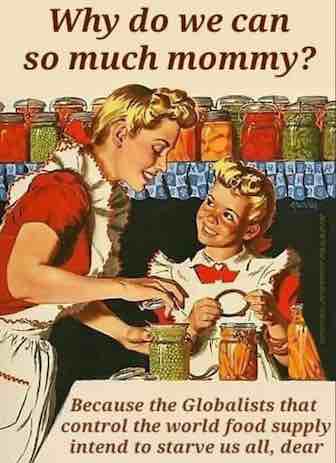
Winter is coming in the troubled Northern Hemisphere
If you live in the Northern Hemisphere with most everybody else, size up your situation. So here we are. Look around. What is abundant right now that you really like to eat? Sweet corn? It takes up too much room if left on the cob, but it's easy to cut it off and freeze it in quart packages. Green beans? Blanch and freeze or pressure can these. Winter squash? Store correctly for great roasted vegetables and stews all winter. Other vegetables? Chicken? Beef? Pork? Seafood? Fruit? All can be processed and stored in various ways. Fats and carbs are easily stored just as they come from the market. In your supermarket and at produce markets, pallets of this summer's bounty are waiting for you right now, and more are on the way. People with solid connections to the natural world do this preparation every year. Those same people are doing more of it now because they know this is not a normal year. Look to the lesson of the ants. When we don't know what's coming, expect normal and be ready for it. When we know that what's coming is likely to be worse than normal, who would choose to be a grasshopper, singing "eat, drink, and be merry, for tomorrow may never come!" Winter is coming in the troubled Northern Hemisphere. What's the next right thing to do?View Comments
Dr. Bruce Smith——Bio and Archives
Dr. Bruce Smith (Inkwell, Hearth and Plow) is a retired professor of history and a lifelong observer of politics and world events. He holds degrees from Indiana University and the University of Notre Dame. In addition to writing, he works as a caretaker and handyman. His non-fiction book The War Comes to Plum Street, about daily life in the 1930s and during World War II, may be ordered from Indiana University Press.