

By Dan Calabrese ——Bio and Archives--April 12, 2018
American Politics, News | CFP Comments | Subscribe | Email Us
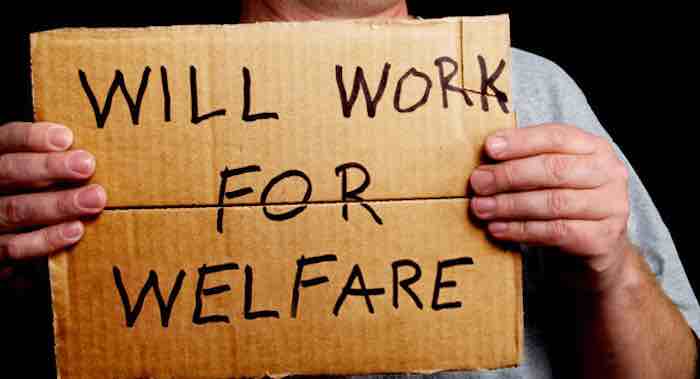 No reasonable person could really disagree with the idea that a person receiving welfare should have to do some sort of work as part of the bargain. Of course, the political world is not really filled with reasonable people, which is probably why we’re only just now getting around to maybe doing it.
But a very serious proposal is bubbling up in the House that has President Trump’s general support, and while it might be far too sensible to gain the votes of Susan Collins, Lisa Murkowski and John McCain in the Senate, it’s also far too sensible for us not to take a close look at.
No reasonable person could really disagree with the idea that a person receiving welfare should have to do some sort of work as part of the bargain. Of course, the political world is not really filled with reasonable people, which is probably why we’re only just now getting around to maybe doing it.
But a very serious proposal is bubbling up in the House that has President Trump’s general support, and while it might be far too sensible to gain the votes of Susan Collins, Lisa Murkowski and John McCain in the Senate, it’s also far too sensible for us not to take a close look at.
Enter the House’s first proposal: A 20 hours a week work requirement for able-bodied adults, ages 18 through 59. This usually elicits panic about child labor or single moms, but the requirement does not apply to seniors, children, the disabled, or anyone who cares for a child under six or is pregnant. That exemption covers roughly two-thirds of everyone on food stamps. The folks subject to the work rule have many ways to satisfy the requirement, including apprenticeships that could contribute to higher earnings later. States will have to offer access to training programs, which can also count as work. The bill stipulates case management and other techniques to help people transition off assistance. Food stamps already has a de minimis work rule for some participants, but states have applied for waivers and exemptions that have diluted it. Yet the results of real welfare work requirements in states have been encouraging, including former Governor Sam Brownback’s reform in Kansas. A Foundation for Government Accountability paper last year noted that Kansas tracked 6,000 families who moved off welfare and went to work in 600 different industries. Incomes on average more than doubled over a year. The House proposal includes other good ideas, notably eliminating “broad-based categorical eligibility.” This is a notorious loophole that declares someone eligible for food stamps because he received a brochure on heating assistance or a number for a hot line. The bill retains cross-eligibility that allow the truly needy to qualify for multiple programs without redundant asset tests.

View Comments
Dan Calabrese’s column is distributed by HermanCain.com, which can be found at HermanCain
Follow all of Dan’s work, including his series of Christian spiritual warfare novels, by liking his page on Facebook.