

By Diana Gifford Jones ——Bio and Archives--November 28, 2026
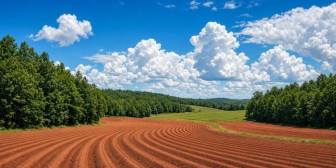
Not so long ago, we needed to know about the basics of living. Now, few would survive if we had to grow our own food. The soil is an annoyance on our shoes.
But that soil produces our food. It is a living ecosystem, containing billions of microorganisms, fungi, insects and other organisms that perform essential functions. They recycle nutrients, help plants absorb minerals, maintain soil structure and regulate water. Without this biological activity, agriculture would be impossible. Yet we have been treating soil as though it were an inexhaustible resource.

Decades of intensive farming, tillage, deforestation, overgrazing, chemical contamination and the loss of organic matter have damaged soils across the world. Urban development continues to cover productive land with concrete. Droughts parch the topsoil and extreme rainfall washes it away. The United Nations estimates that roughly one-third of the world's soils are moderately to highly degraded.
When an ecosystem deteriorates, wildlife loses habitat. Livestock and people compete for scarce water and grazing land. Agricultural productivity suffers. Changes in temperature and rainfall can alter the distribution of disease-carrying insects and other organisms. Communities face food insecurity. What might initially appear to be an environmental problem becomes a public-health problem.
I have been involved with research taking place in East Africa, where scientists are investigating the relationships between soil health and plant, animal, human, and planetary wellbeing.
I am currently assembling a group of government, business, academic and other leaders to visit key research centers in Kenya, Tanzania and Uganda. We will see the issues up close, meet the scientific teams, and examine their work firsthand.
One destination is the Mpala Research Centre in Kenya. Its vast research landscape provides a remarkable living laboratory in which scientists study wildlife, livestock, vegetation, human activity and environmental change. Research there is helping to explain how these different elements interact and how landscapes can become more resilient.
We will also engage with the International Livestock Research Institute in Nairobi, where researchers examine the connections between animal health, human health, food security and the sustainability of livestock systems.

In Tanzania and Uganda, we will explore further research and institutional partnerships, including the work of the Aga Khan Development Network.
Why should we travel halfway around the world to learn about these subjects? Because the questions are universal and the extent of the problems are acute in East Africa. I would argue, we had better get a handle on them.
In East Africa dire problems can be observed. But it is also a place where important scientific knowledge is being generated. There is much for everyone to learn, and considerable opportunity for collaboration.
Good things have come of travel for scientific discovery in the past. In 1964, during a Canadian expedition to Easter Island, also known as Rapa Nui, microbiologist Georges Nógrády collected soil samples. These eventually reached Ayerst Laboratories in Montreal. Researchers isolated a microorganism that produced a compound they named rapamycin, after the island. Rapamycin was found to have immunosuppressive properties and became an important drug in preventing organ-transplant rejection and has also contributed to cancer research.
Alas, today we have become accustomed to treating environmental issues as somebody else's responsibility. Yet the consequences of inaction affect all of us. We cannot expect good health if the natural systems that sustain us are in decline.
If you know someone who should be a part of the group traveling to East Africa, let me know.
Next week, expect a column about Healing Earth, a supplement that gives us a little remedial support while we work on replenishing the health of the world’s soil.
View Comments