

By Jack Dini ——Bio and Archives--July 6, 2024
Global Warming-Energy-Environment | CFP Comments | Subscribe | Email Us
The mainstream media often skews scientific reporting to serve the interests of the climate industrial complex. This bias often manifests in selective coverage, where sensationalist narratives about climate change are given prominence, while contradictory nuanced findings are ignored. If it bleeds, it leads.(1)

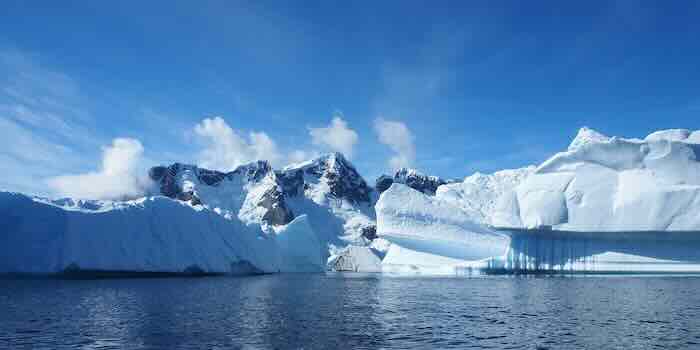
A prime example is the recent study highlighting significant ice growth in Eastern Antarctica, which has received little to no media attention compared to the constant alarmist coverage of the Thwaites Glacier and Western Antarctica. Eastern Antarctica is experiencing significant ice growth and stability in many regions, contradicting the prevalent narrative of uniform ice melt across the continent. The authors state: “Our results demonstrate that the stability and growth in ice elevations observed in terrestrial basins over the past few decades are part of a trend spanning at least a century.” (2)
Using hundreds of old aerial photographs dating back to 1937, combined with modern computer technology, researchers have tracked the evolution of glaciers in East Antarctic. The area covers approximately 2,000 kilometers of coastline and contains as much ice as the entire Greenland Ice Sheet.
Compared to modern data, the ice flow speeds are unchanged, or at least not in any way related to our emission of 1,600 billion tons of carbon dioxide. (3)
In stark contrast, the Thwaites Glacier in Western Antarctica has been the subject of extensive media coverage. Dubbed the ‘Doomsday Glacier’, it is often portrayed as a ticking time bomb that could lead to catastrophic sea level rise. Yet research in 2018 funded by National Science reported unsuspected volcanic activity in the region.

Recent data have been reported for 10 Antarctic stations under operation scattered along the Antarctic coastline. These results are not impacted by volcanic activity. Results? Zero warming which is really inconvenient news for global warming activists. (4)
West Antarctica’s mean annual surface temperatures cooled by more than -1.8 C (-0.93 C per decade) from 1999-2018. Not just West Antarctica, but most of the continent also has cooled by more than -1 C in the 21st century. (5)
Throughout the Holocene (Medieval Warm Period, Roman Warm Period, and earlier) and until a few hundred years ago (from ~ 7,100 to 500 years before the present), coastal Antarctica’s Victoria Land (VLC) was substantially warmer than today.
The Ross Sea was also sufficiently ice free to allow for elephant seal populations (as large as ~200,000 individuals) to thrive. Today, however, elephant seal populations, which require extended sea ice free sea waters to breed, forage, and provide nourishment for their pups, can no longer subsist anywhere even remotely close to the coasts of the Antarctic continent. It is now too cold and the sea ice is too extensive. (6)
More evidence emerges that Antarctica has undergone rapid glacier and sea ice expansion in recent centuries, in line with long term and recent Antarctic cooling trend.
About 6,000 years ago Antarctica’s Collins Glacier frontline was a full 1 km southwest of its current extent. The frontline advanced to today’s extent—~5,000 years ago. The glacier then continuously retreated south of the modern extent for another 4,000 years, with peak ice loss 1,000 years ago. (7)
One last note: Extreme cold was reported in Antarctica as the mercury plummeted to almost minus 80 C on April 29, 2024, and it is not even winter yet. The record, -89.3 C was recorded in the middle of winter, on July 21, 1983, thus making the last week’s late April reading very unusual. (8)
View Comments
John William Dini, know to all as ‘Jack’, passed away at the age of 89 on June 17, 2026. He was born in Cleveland, Ohio on Nov. 14, 1936.
He published two books, a technical book on materials science and coatings and another on environmental issues. In retirement, he wrote extensively on various environmental issues for online publications.
He was a skilled leaded glass hobbyist, creating more than 20 lamps and many panels. He was a jogger for many years, competing in over 300 long distance races. He was a slow runner, not wanting to take the glory away from others. His secret was to start slow and taper. He and Anne traveled extensively, visiting over 70 countries.
He is survived by his wife, Anne, of 67 years, and sons Mike, Steve, and Paul. If you were to meet him somewhere, he would sum up his life as ‘peaches and cream’.