

By Dan Calabrese ——Bio and Archives--March 2, 2018
American Politics, News | CFP Comments | Subscribe | Email Us
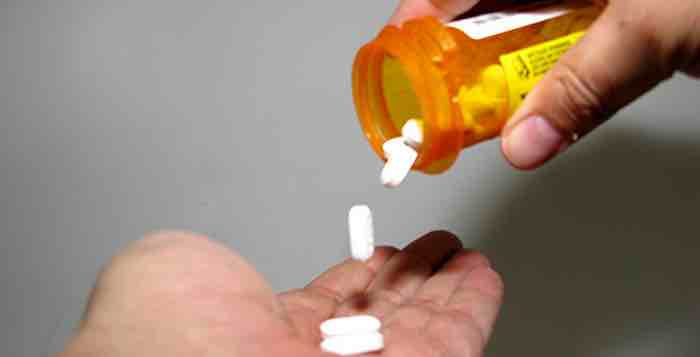 I have never been pro-death penalty and I'm not going to start now. But I've also always believed this: Whatever the most severe criminal penalty is, drug dealers should get it. They should be right up there with mass murderers, because they're essentially doing the same thing. They're sowing the seeds of destroyed lives, knowing full well that's what they're doing, simply because it makes them money.
That is not very much in vogue to believe these days. People have either signed on to the moronic notion that illicit drugs are not all that harmful, or else they're clinging to the insane idea that the law should not concern itself with the distribution of these substances of death, disease, broken families and hopelessness. When you talk like a drug warrior these days you get mocked for sounding like Nancy Reagan. People snicker as they wear DARE shirts ironically. Morons dismiss the notion that "a little Mary Jane" should concern anyone.
I have never been pro-death penalty and I'm not going to start now. But I've also always believed this: Whatever the most severe criminal penalty is, drug dealers should get it. They should be right up there with mass murderers, because they're essentially doing the same thing. They're sowing the seeds of destroyed lives, knowing full well that's what they're doing, simply because it makes them money.
That is not very much in vogue to believe these days. People have either signed on to the moronic notion that illicit drugs are not all that harmful, or else they're clinging to the insane idea that the law should not concern itself with the distribution of these substances of death, disease, broken families and hopelessness. When you talk like a drug warrior these days you get mocked for sounding like Nancy Reagan. People snicker as they wear DARE shirts ironically. Morons dismiss the notion that "a little Mary Jane" should concern anyone.
President Donald Trump on Thursday suggested using the death penalty on drug dealers to address the opioid epidemic, equating providing lethal drugs with murder. "We have pushers and drugs dealers, they are killing hundreds and hundreds of people," Trump said at a White House summit on opioid abuse. "If you shoot one person, they give you life, they give you the death penalty. These people can kill 2,000, 3,000 people and nothing happens to them." Trump said countries that impose the death penalty on drug dealers have a better record than the United States in combating substance abuse.
"Some countries have a very, very tough penalty — the ultimate penalty — and by the way, they have much less of a drug problem than we do," he said. The remarks follow media reports earlier this week that Trump has privately praised countries like Singapore that mandate the death penalty for drug traffickers, arguing a softer approach to substance abuse won't be successful. The remarks are likely to rankle administration critics who have urged the White House to focus on the public health component of the opioid crisis. The president's remarks did not touch on health approaches like providing additional funding for treatment. “It makes us all very nervous” that the U.S. could move back to a “penal-first approach,” said Andrew Kessler, who leads Slingshot Solutions, a consulting firm specializing in behavioral health policy that advocates for substance abuse treatment and prevention. “I have no love for high-level traffickers or cartels, but a very high percentage of people who sell drugs do it to support their own habit.” He and others said the government would be better offer treating people for addiction than imprisoning them.
View Comments
Dan Calabrese’s column is distributed by HermanCain.com, which can be found at HermanCain
Follow all of Dan’s work, including his series of Christian spiritual warfare novels, by liking his page on Facebook.