

By Hymie Rubenstein ——Bio and Archives--October 12, 2026
Happy Canadian Thanksgiving Day to everyone! Also, Happy Columbus Day, an important event we should celebrate today, too, for the reasons I discuss below.
The following photo shows United States President Donald Trump delivering remarks at a Columbus Day event in the White House East Room in Washington, D.C. on October 9, 2026.

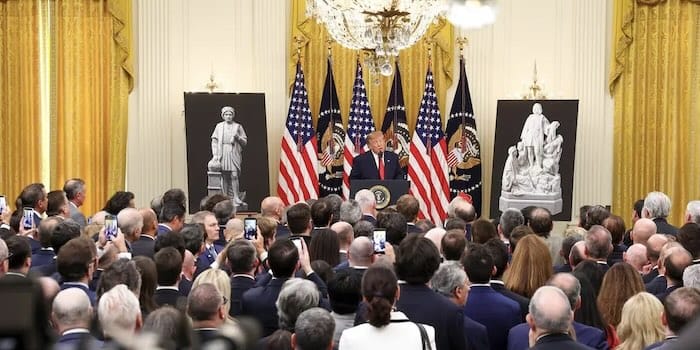
In his speech, the president said Columbus ‘undertook one of the boldest voyages in the history of our planet.’
I heartily agree.
According to the Epoch Times, President Trump honoured Christopher Columbus three days ago, lauding the Italian explorer’s legacy and criticizing those who want to destroy his statues, even though Columbus never landed in what became the United States.
The White House celebration of Columbus came ahead of Columbus Day, October 12. It is a federal holiday in the United States and honours both Columbus and Italian Americans.
Regrettably, Canada has no such celebration, although Columbus’s four voyages to the New World opened the underdeveloped and stagnant Western Hemisphere to European exploration and colonization. Most importantly, it spread the wondrous fruits of Old World civilization to the indigenous people of the Americas, fruits without which most would still suffer under a meagre, pre-literate, pre-industrial, and pre-scientific hunting-and-gathering way of life.
In his speech, Trump said Columbus “undertook one of the boldest voyages in the history of our planet” when he set sail westward in 1492 to reach Asia but instead landed in the New World.
The president noted that Columbus’s crew begged him to turn back to Spain, but Columbus pressed on.
During his speech, Trump also criticized those on the far left, saying they were trying to tarnish Columbus’s legacy by vandalizing or taking down statues of him. In October 2019, two Columbus statues in Rhode Island and California were covered in red paint and graffiti.
Even more destructive acts like these are exactly what we Canadians still suffer from following a totally fallacious press release from the Kamloops Indian Band on May 27, 2021.
The following inspiring remarks from Donald Trump are almost never uttered by our cowardly or nation-hating Canadian politicians:
Trump said the District of Columbia, home to the nation’s capital, is named after Columbus and that early settlers called the 13 colonies Columbia.
Trump said that critics of Columbus want to abolish Columbus Day, which is also known as Indigenous People’s Day, a recognition given by disgraced U.S. President Joe Biden to mark the negative colonial treatment of aboriginal Americans, in the process sidelining the many Western gifts brought to these same people during the colonial era.
If truth be told, however, conflating these two commemorations in America has strong historical justification. Among other travesties, Columbus actually enslaved many Aboriginal people. During the early settlement of America, aboriginal land seizures, Indian wars, and ethnic cleansing were common south of the border.
But these contrast with the mostly benevolent way both the British and Canadian governments have interacted with our Indigenous peoples, all the more reason to celebrate Columbus’s New World legacy. I will never tire of saying that no country in the world has treated its indigenous people with more respect and kindness than Canada.
“They want to tear down the history and heritage that makes us who we are,” President Trump also said, a sentiment that applies to Canada as well.
The president’s strong support for the Italian explorer was evident in an executive order he signed in 2025 that recognized October 12 as Columbus Day.
In Trump’s proclamation, he lauded Columbus as “the original American hero” and “a giant of Western civilization.”
No words were truer, given Columbus’s overall contribution to the European discovery and settlement of the New World.
We have--or had--our very own national hero, Sir John A. Macdonald, the country’s founder. He was surely a giant of Canadian civilization.
Trump also criticized “left-wing radicals” for seeking to “erase our history” and “attack our heritage” by toppling Columbus statues and defaming the explorer’s character.
He could have well said the same about Canada.
When will our own nightmare of historical ignorance be finally over? Perhaps when we get a Prime Minister with Donald Trump's courage and tenacity.
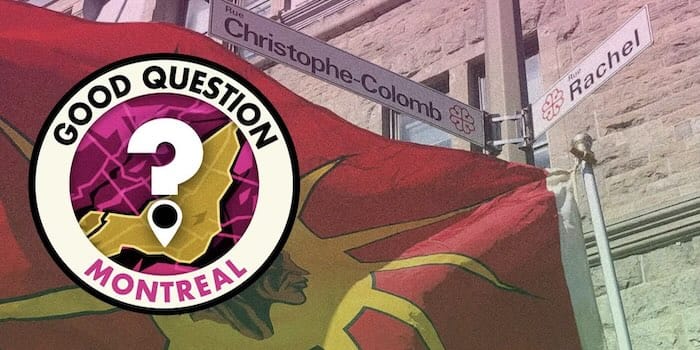
Although Columbus should also be considered a true Canadian hero, to the best of my knowledge, only one Canadian place name honours him: for more than a century, Montreal street signs have carried the name Christophe-Colomb Avenue.
The mighty Columbus completed four Spanish transatlantic voyages for that country’s Catholic Monarchs, opening the way for the widespread European exploration and colonization of the Americas, including Canada, that followed, so he should be celebrated here as well.
Largely self-educated, Columbus was knowledgeable in geography, astronomy, and history. He developed a plan to seek a western sea passage to the East Indies, hoping to profit from the lucrative spice trade. After the Granada War and Columbus’s persistent lobbying across multiple kingdoms, the Catholic Monarchs, Queen Isabella I and King Ferdinand II, agreed to sponsor a westward journey. Columbus left the Port of Palos in August 1492 with three ships and made landfall in the Americas on October 12, ending the period of human habitation in the Americas now referred to as the pre-Columbian era.
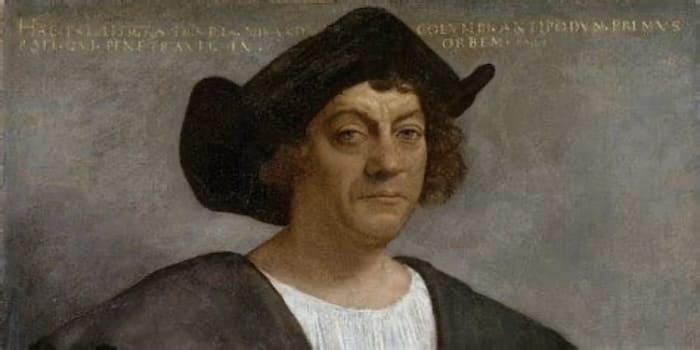
He landed on an island in the Bahamas and then visited the islands now known as Cuba and Hispaniola, establishing a colony in what is now Haiti. Columbus returned to Castile in early 1493, with captured natives. Word of his voyage soon spread throughout Europe.
Columbus made three further voyages to the Americas, exploring the Lesser Antilles in 1493, Trinidad and the northern coast of South America in 1498, and the east coast of Central America in 1502. Many of the geographical names Columbus gave, particularly island names, are still in use. He gave the name indios (‘Indians’) to the indigenous peoples he encountered.
His expeditions were the first known European contact with the Caribbean and Central and South America.
Columbus's pioneering expeditions inaugurated a period of exploration, conquest, and colonization that lasted for centuries, thus bringing the Americas into the European sphere of influence. The transfer of plants, animals, precious metals, culture, human populations, technology, diseases, and ideas between the Old World and New World following his first voyage is known as the Columbian Exchange. These events and their effects, which persist today, are often cited as the beginning of the modern era.
Next Thanksgiving Day, let us also celebrate Christopher Columbus's life and achievements.
Hymie Rubenstein, editor of REAL Indigenous Report, is a retired professor of anthropology at the University of Manitoba and a senior fellow at the Frontier Centre for Public Policy.
View Comments
Hymie Rubenstein, a retired professor of anthropology at the University of Manitoba, is editor of —REAL Indigenous Report.