

By Jack Dini ——Bio and Archives--January 10, 2025
Global Warming-Energy-Environment | CFP Comments | Subscribe | Email Us
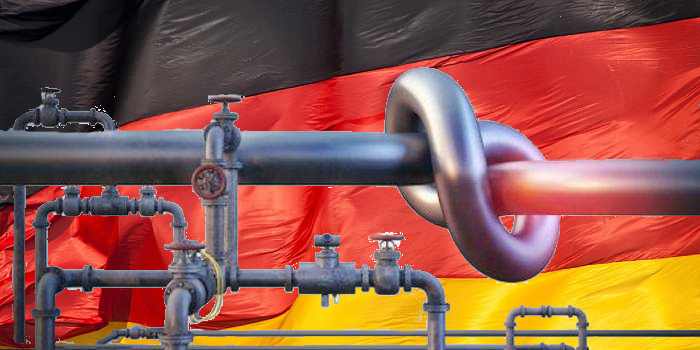
The travails of Germany, along with the economic stagnation of Europe as a whole, have been apparent for some years now and the spate of dire headlines have gathered pace in recent weeks as the coalition government collapsed. (1)

If Europe, and its economic powerhouse Germany, remains on its current trajectory, its future, Politico says, “will also be Italian: that of a decaying, if beautiful, debt-ridden, open-air museum for American and Chinese tourists.”
The economic rot induced by the adoption of Energiewende policies for the energy transition in 2010 resulted ultimately in the recession of the German economy in the last two years.
Germany’s CO2 tax is set to increase from the current 45 euros a ton to 55 euros at the turn of 2025. This will drive up heating and energy costs for consumers and businesses. The hefty rise means the tax on CO2 will almost double in just 2 years. In 2023 the carbon tax was 30 euros a ton. (2)
The CO2 tax is set to rise to 65 euros a ton in 2026, making the energy cost gap between Germany and other countries potentially unsustainable. Already there’s a growing dissatisfaction among German citizens and businesses as energy prices skyrocket.

In mid-November, the 1602 offshore wind turbines in the North and Baltic seas, each one the size of the Eiffel Tower, were at a complete standstill. Zero electricity production. (3)
The onshore wind turbines produced only 114 megawatt hours with German electricity consumption at 63,000 megawatt hours.
This means that the 87,000 megawatts of photovoltaic capacity and around 72,000 megawatts of wind power installed in Germany with triple digit euro subsidies were virtually unused for hours on end. (3)
At times, over 20,000 MW, more than a quarter of Germany’s electricity requirements had to be imported. Electricity prices rose tenfold.
The reason: the socialist/green-led coalition government and the prior Merkel governments had decommissioned 19 nuclear power plants (30% of Germany’s electricity demand) and 15 coal fired power plants were taken off the grid on April 1, 2023. (4)
At one point in December, Germany consumer prices hit 936 euros per megawatt hour because wind energy had failed. This was the highest level in 18 years. Things were so bad, companies stopped production in Germany. (5)
The wind drought didn’t just hit Germany. Electricity prices across Europe soared amid the wind drought. In response, Norwegian politicians are promising to dismantle the undersea power cables that connect Norway’s grid to mainland Europe to protect Norwegians from Europe’s tumultuous electricity market. (6)
Robert Bryce notes, “The latest wind drought provides more evidence of the foolishness of Germany’s Energiewende, an insanely expensive effort designed to force the country off of hydrocarbons and onto alternate energy. Between 2002 and 2022, Energiewende cost Germany $746 billion. Of that sum, more than half was spent on alternate energy production and distribution. The remainder was spent on subsidies. If Germany had spent about half that sum on nuclear energy, it would have achieved greater emissions reductions than it did by chasing the mirage of alternate energy.”
Things may be bad but don’t ever underestimate Germany’s ability to make things even worse.
The German government plans to provide an additional $17 billion in subsidies for Germany’s wind sector. These new payments will be added to existing alternate energy subsidies which are estimated to cost $19.3 billion in 2025. (6)
The wind lull highlights the vulnerabilities posed by relying too much on wind and solar energy, especially in the winter time when Germany sees very little sunshine while occasionally getting periods of little wind in times of high energy demand. (7)
Among the manifestations of this problem are the growth of corporate bankruptcies in double digits, soaring layoffs as the Federal Employment Agency said the unemployment figure could exceed the three million marks for the first time in 10 years at the beginning of 2025, and the crown jewel of German industry, its automotive sector, announcing massive job cuts.
According to a recent poll, 40% of industrial companies are currently considering reducing their production in Germany or relocating it abroad due to the energy situation; among industrial companies with more than 500 employees, more than half are now considering this. High labor costs, caused by the myriad regulations of a hyperactive administrative state, are among the world’s highest energy process brought about by its Energiewende folly have led to the nation’s de-industrialization. (1)
Some companies that have been in operation for over a century were forced to halt production. The Saxon Feralpi electric steel making plant in Riesa completely ceased operations. Company executives expressed that the situation was dire and stressed the urgent need for power plants that can start operating in the near future to mitigate the crisis.
The steep rise in electricity prices is also expected to affect individual consumers, including one million families. (8)
The fatal thing about the situation is the prices. Fossil power generation was made politically more expensive and in times of shortage, prices really go through the roof.
Germany’s Energiewende has had one unmistakable result: Germany now finds itself rapidly nearing the brink of a third world country where the power supply is no longer reliable and brownouts are becoming more and more a daily routine.
What’s happening is the opposite of what was once promised by the know-it-all climate wisemen: “Green energies would lead to a clean and prosperous country that would be the envy of the world.” So much for their fantasy.
The reality is that Germans in south Germany are now being told that their laundry and e-car charging are to be done only at certain times. In addition, consumers were asked to avoid use of all energy intensive appliances.
The year 2025 will not be an easy one for dissenters and critics of the government, as this is increasingly being criminalized in Germany thanks to recently passed laws and acts that aim to suppress free speech. In a nutshell, the German government aims to regulate human thoughts. (9)
Europe’s economic collapse is self-induced. Its ruling elites over-tax and over-regulate the private sector and obsess with promoting unreliable renewable energy to replace fossil and nuclear fuels in its crusade to save the planet from an alleged impending climate apocalypse.
To go from opulence to poverty and potential barbarism is but a short road, assured by the burden of high taxes in service of an alleged climate crisis, and an intolerable administration of ‘climate justice’ that demands suffocating regulations on the private sector. (1)
View Comments
John William Dini, know to all as ‘Jack’, passed away at the age of 89 on June 17, 2026. He was born in Cleveland, Ohio on Nov. 14, 1936.
He published two books, a technical book on materials science and coatings and another on environmental issues. In retirement, he wrote extensively on various environmental issues for online publications.
He was a skilled leaded glass hobbyist, creating more than 20 lamps and many panels. He was a jogger for many years, competing in over 300 long distance races. He was a slow runner, not wanting to take the glory away from others. His secret was to start slow and taper. He and Anne traveled extensively, visiting over 70 countries.
He is survived by his wife, Anne, of 67 years, and sons Mike, Steve, and Paul. If you were to meet him somewhere, he would sum up his life as ‘peaches and cream’.