
By Ray d'Entremont ——Bio and Archives--August 14, 2026
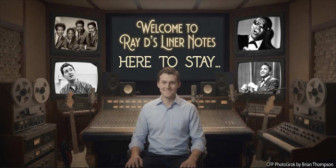
They said it wouldn’t last. Back in the mid-fifties, when the first electric guitars started snarling out of small Southern studios and teenage dance floors began to quake, the “old folks” were almost unanimous: this noise--this hormone fueled craziness--was a passing fad.
A moral lapse, perhaps. Something the kids would mature out of as they settled down. Disc jockeys in suits called it jungle music. Preachers called it the devil’s din. Newspaper columnists assured their readers that the kids would soon be back to Perry Como and foxtrots. Like my bandmate, who said of the early Beatles, “They’re not going to get anywhere playing that Chuck Berry crap,” the skeptics were wrong in the most spectacular way.

The beat was just too strong to be denied. Once those first records hit the jukeboxes--Berry’s guitar, Little Richard’s screams, Elvis’ hips, the raw cry of a hundred unknowns on Sun and Chess labels--the genie had gyrated out of the bottle.
The naysayers kept predicting rock ’n’ roll’s death. When the British Invasion arrived, they said the original spirit was gone. When the sixties grew heavier and stranger, they said it had lost its innocence. Every decade produced a new funeral announcement. In every decade the corpse got up, plugged in, and rocked harder. The rock music they dismissed is still here--reworked, reinvented, endlessly quarried, but stubbornly alive--outlasted them all! These liner notes are for an imaginary album that features some of those iconic high-energy tunes that paved the new way.
This is a very sophisticated recording. The writers Leiber and Stoller are rock royalty--having written “Hound Dog,” “Kansas City,” “Jailhouse Rock,” “Poison Ivy,” “Stand By Me” and “On Broadway.” The Coasters evolved to sing comedy. Their incredible singing was embellished with character sketches, mischievous timing and the ability to paint colourful scenes with playful interaction. The Coasters were considered doo-wop because they had the chops but this piece doesn’t fit neatly into any box--more like R&B clowns under a rock and roll big top. The Coasters biggest hit, it reached No.1 on Billboard’s Top 100 and sat as a No. 1 R&B hit for a long time. It is a big part of why they earned the honour of being the first vocal group inducted into the Rock & Roll Hall of Fame. Most folks have heard of the great King Curtis, but few can conjure up what he sounds like. That’s him on sax making this piece absolutely cook.
This is a breakthrough record, leading to the prominence of rock music in western pop culture. Haley was playing it live but his record company refused to record it because of a feud with one of its writers. When Haley switched to Decca it was recorded with session guitarist Danny Cedrone providing a blistering solo that every guitarist noticed and that earned Cedrone the reputation as the fastest guitar player in the world--likely more hype than fact. Sadly Cedrone died a few weeks later and never knew of the massive success of the recording. It was slow to catch on but that all changed when the 10-year old son of Glen Ford loaned his copy to the director of Blackboard Jungle (starring Glen Ford and a young Sidney Poitier). Kids were dancing in the aisles at the movie and it shot to No. 1 and stayed there for 8 weeks, a first for rock.
A significant part of the soundtrack of my life sounds like Neil Sedaka. When I was 12, Laurie Mullen (Vic Mullen’s kid brother) & I used to hitchhike to Yarmouth to go wenchin’. We’d met an early bloomer named Donna at exhibition & were smitten. Oh! Donna. At 14 she was way too mature for the likes of us, and we soon found that she dated boys four years older; so settled for her kid sister Carol & her best friend Sharon. We thumbed the 12-mile journey every weekend. I had loved “Oh! Carol,” “Stairway to Heaven,” “Run, Samson, Run,” “Calendar Girl,” and this song; so by the time “Breaking Up is Hard to Do” hit the airwaves, I was a hardcore Sedaka fan. Did you know that Sedaka is a world-class concert pianist? Once I took a tour group to the classy Digby Pines for lunch; Sedaka’s aunt was one of six New Jersey Jewish ladies at a table; on my advice, they had ordered the Rappie Pie--a French Acadian meat dish baked with grated potato. They sent it back to the kitchen saying, “We don’t eat goo!”
The original recording was by Chuck Berry, who wrote it. There were several notables on that original session - Johnnie Johnson on piano, Willie Dixon on bass, and Etta James and Marvin Gaye on background vocals. But this is a version that appeared on a 1966 Electra compilation album called What’s Shakin’, which was to introduce their foray into electric rock from their historic folk fare. Four of the tracks are by The Lovin’ Spoonful. On this tune they sure got the feel right.
This Beatles hit was written and recorded by Larry Williams on September 11, 1957. He was never big in the U.S. but was popular in the UK in the late 1950s and early 1960s which explains why John Lennon covered three of his songs: “Slow Down,” “Bad Boy” and “Dizzy Miss Lizzy.” They recorded it during the A Hard Day’s Night sessions. John double-tracked his vocals. George Martin played piano on it. George Harrison contributed a memorable guitar solo which is one of the first guitar breaks I learned note-for-note. As the Beatles honed their skills in the steamy clubs of Germany, Larry Williams, Little Richard, Chuck Berry and Carl Perkins were major influences on what became the Beatles sound.
I remember my ear to the radio one night when Cousin Brucie (WMEX, Boston) waxed cool about this new song. I didn’t know Ray was blind, or black. I had heard him before, but thought this song perfection. Listen to The Raelettes! They take you to church. Speaking of which, when I visit my daughter in Texas, her friend takes me to her church on Sunday. I’m the only white face there, but made to feel welcome and the music is as close to heaven as I’ll ever get! Watching TV you’d think the United States is very perilous these days. If you’re in the wrong place at the wrong time, it can be. But I avoid protest riots by day and crack houses by night, and I’ve experienced only goodwill these past few years. I say, “If I’d known how nice people would be to me, I’d have gotten old sooner.” Folks of all types have treated me with kindness. Two years ago I went to a Chipotle for lunch while charging my Tesla rental. When the dark-skinned stranger behind me found out it was my first time there, he gave me advice; when I got to the cashier she said it was paid for - the guy had supersized my order and paid for it! That’s just one such incident. Great country! Good people!
One night in Greenwich Village I saw a marquee: The Music Machine playing tonight. We’d played this song in PSN, so I excitedly went in, but couldn’t stay all evening--had to work next morning. The lead guitarist was real fast and used lots of distortion. After an hour, I reluctantly headed for the door, but was stopped in my tracks by a fabulous bluesy guitar solo.. I turned around to see the singer-songwriter-frontman Sean Bonniwell playing lead. I stayed until that song ended before I was forced to tear myself away due to toxic conscientiousness.
I have always wanted to play this great song in a band, but either the lead vocal was beyond my singer’s capability, or he was uninterested in doing a 1950s’ song. Jackie Wilson’s spins, splits, and drops inspired the stage performances of Elvis, Michael Jackson and Prince among others. Jackie had a rough childhood, dropped out of school, joined a gang, and did a stint in juvie. Understandably concerned about his competitive boxing, his mother pushed him into music. Early solo success came via songs co-written by a pre-Motown Berry Gordy, including this breakthrough hit. Its acceptance led to Gordy launching Motown Records. For his part, Jackie suffered money problems throughout his career. Then while performing this song he had a heart attack, hit his head and spent the next eight years semi-comatose before dying of pneumonia at age 49. Three years later he was inducted into the Rock & Roll Hall of Fame. Rolling Stone ranked him among the greatest, adding credibility to his nickname, Mr. Entertainment.
I remember being blown away by PSN’s bassist who nailed this bass break with ease the first try. I’d never played with a bass player who could have pulled that off. Then it dawned on me that he was a classically trained pianist and finger coordination was not an issue. Although he’d only been playing bass for less than two years, he’d been doing it all with just his left hand for years.
I hadn’t paid much attention to “The Artist Formerly Known as Prince,” the moniker fans gave him after he changed his name to an unpronounceable symbol amid a contractual dispute with Warner Brothers in 1993. Then I heard this tribute to George Harrison. I like his guitar break better than the Beatles’ original played by Eric Clapton. Prince was a child prodigy. He played most of the instruments on his records (27 on one). He was a great singer, actor, producer, dancer, and songwriter. He released 39 official albums (with hundreds more unreleased tracks) and continued innovating until his death from a fentanyl overdose. His main contribution may have been as an innovator. It is touching to see George’s son Dhani on stage with all of these greats honouring his father. One of my favourite Beatles songs, it was written by Harrison. It is proof that George would have been a standout songwriter in almost any other band (he wrote “Something,” “Here Comes the Sun” and “Taxman” too) where he didn’t stand in the long shadow cast by a Lennon and McCartney.
View Comments
A boy soprano, lifelong music lover, and serial starter of things, Ray has worn more hats than most people have ever owned. Music has been a constant companion.
His playlists are an eclectic mix of genres accessed by mood and time. Over the years, he variously played in mostly rock and electric blues bands, but jazz and country too, in the Runic Stones, X-Men of Note, Purple Splintered Night, Broken Vessel, Country Gold, Eddy & The Hubcaps, ORCA, Hardscratch Road 2.0, and several others. His wife of 57 years (high school sweetheart) doesn’t agree that he needs 25 guitars!