
By Dr. Bruce Smith ——Bio and Archives--December 10, 2024
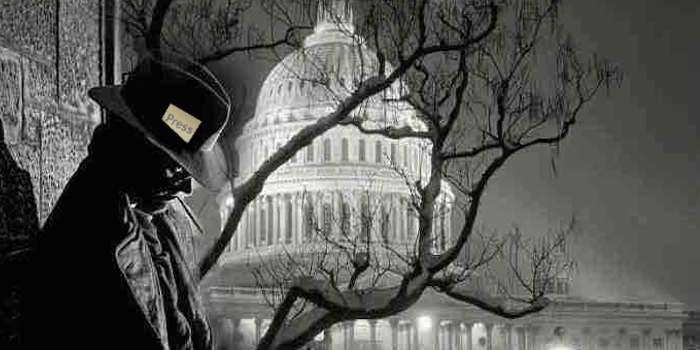
It doesn’t take much to lose credibility in today’s world, even when it has been built up over many decades. Founded as a voluntary organization of newspapers in 1846 to facilitate transmission of news of the Mexican War (yes, I still use the old term), the Associated Press grew into a behemoth of leased telephone lines and pooled reporters. There were many alliances and agreements and split-offs between it and other press associations over the years. Its power became so great that the government used antitrust legislation to loosen its stranglehold on the news in the 1940s.

Growing up with excellent small town and state capital news papers like the Indianapolis Star, I recall that practically every story of national or world interest came from either the Associated Press or United Press International. Even in my early years as a news hound, I remember having deep respect for the two capital letters in parentheses (AP) that followed the names of reporters that I might or might not recognize, but could rely on to be solid.
Biased news reporting wasn’t really called that until perhaps the 1970s, and then the idea was noted with skepticism by many people. There were little hints that began to appear, however. I remember being astonished when watching Walter Cronkite report after his return from Vietnam in the wake of the Tet Offensive on February 27, 1968. We had lost the battle and lost the war and should get out, he said. The report threw Washington and the political system into a turmoil. It was a presidential election year with heavy fighting going on in Vietnam since President Johnson’s escalation starting in 1965.
Just a month after Cronkite’s report, Johnson dropped out of the race, leaving it wide open for Robert F. Kennedy, Eugene McCarthy, and others. That year Johnson’s vice president Hubert Humphrey won the nomination after the assassinations of Kennedy and Martin Luther King, Jr. After that year I still respected Cronkite’s experience, but never trusted him again. It was a clear example of a reporter inserting his own perspective into an important story instead of just reporting the facts.

Cronkite went from covering what happened to editorializing on and editing the facts to suit himself. Others at CBS followed suit, from Eric Sevareid to Roger Mudd to Morley Safer they became so obviously biased that they simply couldn’t be trusted, at least not by me. Other networks and news sources did the same. Then there was the Dan Rather fiasco. We could see it building.
The wire pool reporters gradually went the same way. I began to link their names to outrageous stories. For many years we only had Paul Harvey to give us an alternative new of events. William F. Buckley, Jr., publications like Human Events, and a few stellar individuals like Milton Friedman came along to give us much truer versions of the of the facts and understanding to go with it. When Rush Limbaugh appeared on the scene in 1989, there was finally a national voice to point out what we had felt for years. Press bias became recognized for what it was among the “New Media” that provided information outside the influence of the legacy media. We waited a long time for that.
There was a growing awareness of implicit bias which mirrored a growing divide among the public. Some people were happy with the direction the legacy media was going while others grew more alarmed about the bias they believed was increasing. After the 2000 election it became clear to anyone who wanted to notice that large segments of the legacy media openly favored the Democrat presidential candidate over the Republican.
After the second Bush administrations the legacy press practically swooned over the candidacy of a little-known senator from Illinois. During the years 2009-2017 all kinds of media figures and political movers and shakers began to just come right out in the open and admit bias in what they called a good cause, the cause of proudly socialist candidates of every kind. At the same time, print reporters began to show their biases, too. Over more time I began to discount the stories I saw from AP reporters and to expect them to be flawed. A great many of them were.
I had marked the AP off my list of reliable sources some time back. There were other places to find truth in the news. On a recent visit to Ohio I picked up a copy of the Dayton Daily News, long a Democrat paper. I like to keep track of sources of biased news to monitor changes over time. I even tune into NPR now and then. I’m that dedicated. The paper I picked up was from November 1, 2024, four days before the election. The page one story headline and first two paragraphs were as follows.
The reporter inserts the editorial line effortlessly. “. . .Donald Trump made baseless claims to dispute his loss . . . .” He gave himself away right there. There’s no effort to just report the fact that there was a dispute over election results or that there were irregularities because of the COVID scare. It’s the Trump campaign that made the baseless claims. The Biden campaign just wanted to count all the votes, legal or not, and that’s only fair, after all.
When I saw this article it didn’t surprise me. I know people who still deny there was anything amiss at any polling place or tabulation site anywhere. I guess they can believe what they like, but it’s still no excuse for putting editorial comments in a news story. It figures, I thought to myself. A couple of weeks later, after the election results were known to all, I ran across another story. This time it was in a new media source, the Liberty Daily, on November 19, and the story wasn’t from AP.
Here is the headline.
Global Propagandists Find Out: AP to Slash Staff by 8% as Major News Outlets Stop Buying Its Content
The writer of this story didn’t get all snooty and condescending. It reported the facts of the AP layoffs and explained why they were happening. Imagine that.
This story didn’t surprise me. It takes time and serious hemorrhaging of customers and reputation to cause a behemoth like AP to make a cut like this. Sooner or later there emerge enough people who don’t like a product to say ‘No, thanks.’ Print media is a mere shadow of its former self. We can expect the institution and its shadow to shrink even more. Imagine that.
Walter Cronkite used to end his nightly news broadcast on CBS with a smug “And that’s the way it is.” Well, those of us who wanted real news instead of editorials disguised as news decided that old Walter might have a tilted point of view. We began looking elsewhere for reporting that made sense and gave us facts.
In a free marketplace, consumers always have the option of going elsewhere or doing without or making their own. It looks like that is what has happened, and even the Associated Press has found out about it after considerable delay.
View Comments
Dr. Bruce Smith (Inkwell, Hearth and Plow) is a retired professor of history and a lifelong observer of politics and world events. He holds degrees from Indiana University and the University of Notre Dame. In addition to writing, he works as a caretaker and handyman. His non-fiction book The War Comes to Plum Street, about daily life in the 1930s and during World War II, may be ordered from Indiana University Press.