
By Dr. Sam Clovis ——Bio and Archives--January 1, 2025
American Politics, News | CFP Comments | Subscribe | Email Us
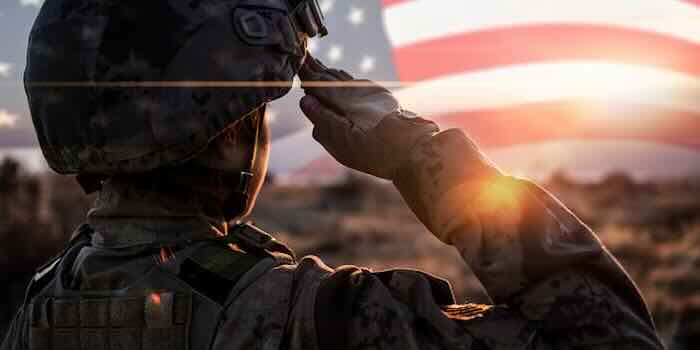
The priorities for the new administration seem easy to discern—Secure the border, fix taxes and then fix the military.
I think the first two ought to be relatively easy, given the mandate handed the incoming administration. However, I worry that many people would be in favor of the administration concentrating on military readiness, but I don’t think most people really understand what military readiness entails.

Frankly, I am not sure the incoming president has anyone around him who truly understands military readiness or if he does, are those people able to articulate the incredible importance of that topic and what strong military readiness means to national security.
Military readiness is comprised of four elements— people, equipment, training and time. I will cover each in the following paragraphs.
First, the first component of military readiness is people. Are our services able to recruit the numbers of qualified individuals needed to staff our armed forces? Is our military personnel system in each service adequate for achieving service goals? Right now, it does not appear that our services are able to meet their recruiting goals without lowering standards to dangerous levels. Anecdotal evidence indicates that those retained by some of the services are woefully out of shape, apparently unable to meet the physical demands of high tempo military operations. If our services are unable to recruit the type and quality of individuals needed to staff our services, what are the alternatives? Perhaps “the draft” will have to be considered at some point. We shall see.
The second element of readiness is equipment. Are our services procuring the necessary equipment to meet the needs of our service members in fighting today’s and tomorrow’s wars? I submit that the services are still parochial in their procurements and true joint warfare procurement is a myth.

In government, power is measured in people or stuff, and our services are no different:
Shouldn’t we clean up military procurement so we can get what we need from the drawing board to the runway in a more timely manner? Shouldn’t our pentagon staffers shoot to do what is best for our warfighters instead of what is best for members of congress or defense industry stockholders?
The third element is training. I was spoiled in my time in the military as we trained and we trained hard. The more we trained, the better we got at warfighting and the safer our operations became. Our leaders insisted on excellence in all we did, and we were outrageously successful.
Today, the stories are that we are not flying enough to really conduct large mission operations. We are not spending enough time in the field to really learn to fire and maneuver to effectiveness. Our ships are run down and in need of repair, so our sailors are not getting the sea time to train as they should. Our forces are rusting, and knocking the rust off may come too late to win the next conflict.
Finally, our forces need time to recruit, acquire and train. Time, as everyone knows, is the one commodity that is not renewable. We may not have time to fix all the other elements of readiness, so we must address the other elements with some urgency. I am hopeful the president-elect will have enough good people around him who will have the will and the courage to school him on military readiness. That means he needs to have national security staff and general officers around him that represent ALL perspectives in national security.
Sadly, I have little confidence that is currently the case.
View Comments
Samuel H. Clovis, Jr., Doctor of Public Administration
Liston to Sam on LATalkRadio, Sundays: 1:00 to 3:00 PM (PST)
(Impact With Sam Clovis)
Sam Clovis was raised in Kansas and attended the United States Air Force Academy, serving for 25 years on active duty as a fighter pilot. He retired as a Colonel and the Inspector General of NORAD and the United States Space Command.
Sam served as a Fellow at the Homeland Security Institute, contributing in national preparedness and immigration policy. He recently served as a tenured full professor of economics at Morningside College.
Sam has a BS from the Academy, an MBA from Golden Gate University and a doctorate from the University of Alabama. He served as national co-chair and chief policy advisor for the Trump for President Campaign, was a policy director during the transition period and served as the Senior White House Advisor to the US Department of Agriculture. He currently lives in rural Iowa.