

By Jack Dini ——Bio and Archives--September 17, 2024
Global Warming-Energy-Environment | CFP Comments | Subscribe | Email Us
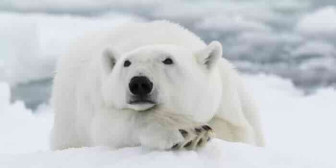
Images of distressed polar bears clinging to ice floes or in far-flung Arctic landscapes have become instantly recognizable as emblems for the climate crisis. However, over the last decade, scientists, campaigners and news desks have begun to drift away from these visuals, questioning if they really paint a realistic image of climate change.

For decades distressed polar bears on distant ice caps were an emblem for climate change—until experts began to doubt the effectiveness of these visuals. (1)
Over the past 20 years, climate activists have elevated various stories of climate catastrophe, then quietly dropped them without apology when the opposing evidence became overwhelming.
The only constant is the scare tactics, says Bjorn Lomborg. (2)
The Washington Post warned in 2004 that the species could face extinction and the World Wildlife Fund’s chief scientist claimed some polar bear populations would be unable to reproduce by 2012.
Then in the 2010s, campaigners stopped talking about them. After years of misrepresentation, it finally became impossible to ignore the mountain of evidence showing that the global polar bear population has increased substantially. (2)
Recent survey results suggest the global polar bear population is at least 32,000, although the estimate has a wide range of potential error. (3)
The assessment that polar bears are currently thriving is not based solely on estimates of a slight increase in global population size but on the published data gathered from studies on the bears physical and reproductive health.
Let’s look at various locations:

There is irrefutable evidence from Barents and Churchill Sea subpopulations, among others, that polar bears are fat and reproducing well despite marked declines in summer sea ice over the last two decades. (4)
These facts negate the premise that polar bears require abundant summer sea ice to flourish, and that creates a problem for polar bear specialists who continue to make that claim.
Sea ice in Western Hudson Bay, where Churchill is located has not been declining more and more with rising CO2 emissions according to data published by polar bear specialists. (5)
Like clockwork, before the end of winter (March 30) every year, the Svalbard sea ice pack ice returns in time in spring for ringed and bearded seals to give birth and for the polar bears to gorge themselves on the fat newborns. In 2023 there was even ice as far south as Bear Island by March 15. This has happened several times in the last 10 years. (6) Polar bear specialist Jon Aars is quoted as saying that Svalbard bears are ’unexpectedly’ thriving
Walrus and polar bear populations in the Russian Far East continue to thrive, despite some researchers insisting that polar bears face a dire future without human interference. Chukchi polar bears, regardless of the fact they are thriving, are still tagged with a status of threatened based entirely on computer models that predict a dire outcome 30 years from now. (7)
As assessment of the health of Davis Strait polar bears by 35 Inuit bear experts revealed thar virtually all polar bears were healthy and populations have been growing over the past decades, so much so that public safety has become an increasing concern. Mainstream media has ignored this information. (8)
A genetically distinct and isolated population of polar bears have been documented living in southeast Greenland. Scientists who studied and tracked the bears determined that they survive despite having limited access to sea ice—something that is critical for polar bears—and instead use the fresh water ice supplied by Greenland’s ice sheet. (9)
It really is getting tiresome that so much is falsely blamed on climate change. The most blatantly wrong example is the supposed pending demise of polar bears that, activists claim, will soon occur due to human caused climate change. The information included in this report clearly refutes this. (10)
View Comments
John William Dini, know to all as ‘Jack’, passed away at the age of 89 on June 17, 2026. He was born in Cleveland, Ohio on Nov. 14, 1936.
He published two books, a technical book on materials science and coatings and another on environmental issues. In retirement, he wrote extensively on various environmental issues for online publications.
He was a skilled leaded glass hobbyist, creating more than 20 lamps and many panels. He was a jogger for many years, competing in over 300 long distance races. He was a slow runner, not wanting to take the glory away from others. His secret was to start slow and taper. He and Anne traveled extensively, visiting over 70 countries.
He is survived by his wife, Anne, of 67 years, and sons Mike, Steve, and Paul. If you were to meet him somewhere, he would sum up his life as ‘peaches and cream’.