
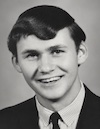
By Ray d'Entremont ——Bio and Archives--July 13, 2026
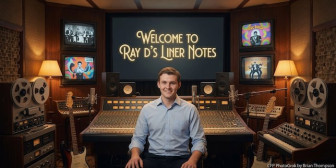
Editor’s note: Today, fellow Nova Scotian Ray d'Entremont joins CFP as a regular columnist, writing about the nostalgia from the many talented musicians, whose unforgettable music takes so many of us back to fond memories of better days.
In his younger years as the founder of his own '60s and ‘70s bands, including Purple Splintered Night, and Ray was one of them.
This idea to bring these talented singers and musicians back into memory got its start last Christmas when Ray, his wife Heather and son Peter joined CFP for an old-fashioned turkey-with-trimmings dinner. Warm memories of us all sitting around the table after dinner, holding hands and belting out songs from 'Judi’s Playlist' will live in our memory forever, as the happiest of all our days in lonely Nova Scotia.
As with many musicians, melodies register immediately--but lyrics? I’ve gotten better at catching them--maybe thanks to bittersweet lessons from my songwriting, my over-priced hearing aids, or even more likely, retirement granting me time to slow down and smell the roses. Back in the day though, a few lyrics did pierce the 11 p.m. static of our modest AM radio, and they resonated and stuck.

Music has always sweetened my existence. Significant events--even entire decades--tuck neatly into analogue grooves, magnetic tape and digital bits, with endless shindigs, milestones and subgenres fitting in between. Certain songs instantly transport me back to places, people and events even better than a family photo album.
Don’t you miss liner notes? As a youngun’, I’d buy an album, rush home, drop it on the spindle, then devour the jacket for the skinny on my idols. Those nuggets made the grooves glisten even more.
Then came cassettes & CDs, and stingy type--barely room for titles, let alone a soul injection. Shouldn’t they at least include a magnifying glass? This could be thought of as a love letter to the trailblazers of Memory Lane. A few names will be old friends, but I hope a few become happy discoveries as well. Be sure to watch the video for “Sham-A-Ling-Ding-Dong” by Montrealer Jesse Winchester!
Perhaps this is just about music-geekery. My best friend once suggested I start a radio show to offload this mountain of useless trivia rattling around in my head. Instead, I torture folks with unsolicited, annotated playlists. I trust you will forgive the self-indulgence of these 21st century editions of liner notes for imaginary LPs. Piecing this together has been an absolute blast, and if it rekindles a memory or introduces you to a new gem, then it will have been well worth the effort.
There’s a joke that goes: “How do you get a guitar player to turn down?” Answer: “Put some sheet music in front of him.” As a freshman at StFX, playing in “The X-Men of Note” with classically-trained horn players (Dixieland for proms, but folk, rockish tunes & easy listening too), was my introduction to jazz standards. “I Left My Heart in San Francisco” hit #5 on Billboard’s Hot 100 so it made the repertoire & I learned of Tony Bennett, guardian of the Great American Songbook. He delivers an intimate rendition of one of the best songs ever written (according to a book I read on songwriting). Written by Jerome Kern & Dorothy Fields, an iconic version by song-&-dance man Fred Astaire has been our dinner music playlist forever. Fields doesn’t revert to clichés; consider: “And that laugh that wrinkles your nose touches my foolish heart.”

Written in Spanish, this translation takes the liberty to alter the painted personal Spanish scenes, alluding to a space where love changes darkness to light. My favourite female singer for 50 years, Dinah still ranks near the top. Her timbre lends itself equally to feelings of longing or joy at the toss of a sequined skirt. She won a well-deserved Grammy in 1959.
Whereas Louis Armstrong sported a joyful grin, and Sinatra a cool swagger, Como sits you in his barber chair, puts a warm towel around your neck, & offers advice in avuncular modulation. The song was around long before these luminaries--since the roaring 20s in fact. And before the crash of 1929, it perfectly fit the euphoria of a carefree decade that spawned jazz, talkies, radios in the homes, short skirts, flappers, the Black Bottom & the Charleston.
Cowardly? I thought so, but in Vegas, Elvis framed it as a poem written by a dying man whose wife had dutifully sat bedside for 3 days & nights. When she fell into a deep sleep, he felt himself slipping away, & in a final moment of lucidity, he emptied a quill pen: “Softly, I will leave you softly, For my heart would break if you should wake & see me go. So I leave you softly, long before you miss me; Long before your arms can beg me stay, For one more hour, Or one more day”. In New Zealand in 1968, a Māori chief (unconcerned with the holes in socks) told us of a colonial battle with the British. The Māori leader hoisted a white flag & met his enemy mid-field. “Out of bullets!” he spat. The young English officer told his adjutant to bring ammunition from the King’s stores. Once the Māori had received it, the battle resumed. I’m skeptical that this really happened, but I’d like to think it did. The English can be that noble. I feel the same about this song. It came from Italy, and my intuition may have been right, but I won’t ‘Snopes’ it, fearing it might just have been the King tugging at our heartstrings as he did so well.
Damn! The New York Post’s Linda Stasi once wrote, “With the possible exception of Bernadette Peters, not everyone stays young & cute forever.” God’s gift to Stephen Sondheim, Bernadette is the consummate Broadway interpreter--with warmth, humour & ability to deliver complex lines devoid of artifice. Here, she rearranges one of maybe a dozen songs that leave little doubt that Paul McCartney’s oeuvre will still be served up 100 years from now.
Watching a performance by Eric Johnson I had to go to the restroom and accidentally ended up at the artists’ bar with one man, John Sebastian. I told him my college band played his tunes. He asked our name. When I said “Purple Splintered Night,” he generously quipped, "Wish I'd thought of that!" The heat of 1960s Greenwich Village incubated New Christy Minstrels, Phil Ochs, Tim Hardin, Odetta, Judy Collins, Dylan, The Byrds, Joan Baez, and the Mugwumps (which had Mama Cass & Denny Doherty of Mamas & Papas, as well as John Sebastian & Zal Yanovsky of Lovin’ Spoonful). Doherty had been in The Halifax Three Plus One; Zal Yanovsky was “the Plus One.” When Doherty’s group split in NYC, those two had founded “The Mugwumps.” In 1967, Purple Splintered Night played at a coffee house in Halifax, N.S. When half the crowd left holding their ears, the manager lectured the audience that had stayed about how our Acid Rock, with amplifiers cranked to 11, was state of the art--the coming thing. That was Richard Byrne, another former Halifax Three member. Written by Sebastian, this tune is not just a nod to his jug band roots, but a testament to his wonderful Samuel Taylor Coleridge way with words.
It all started in 1946 when an unknown songwriter entered the Acuff-Rose offices in Nashville to plug his catalogue. Fred Rose was impressed with the songs, but skeptical that one man could have written them all. He said he had to step out for a few minutes and challenged Hank to write a song about a woman leaving true love for a richer man. 20 minutes later, the young man had written his first “Hank Williams” hit. In 1949, his version of “Lovesick Blues” went to #1 and stayed for 16+ weeks, cementing his superstar status. His emotional storytelling had an explosive influence on honky-tonk and the posthumous legend of his early demise en route to a show elevated him to mythic status. He owned the airwaves of the late-1940s.
My late brother loved story songs & sang this whenever he picked up a guitar. Kristofferson was a Renaissance man--a Golden Gloves boxer; army captain; helicopter pilot; star college football player; & Rhodes scholar. My favourite line is one every man who has ever been single can relate to: “I fumbled through my closet for my clothes and found my cleanest dirty shirt.”
James’ trumpet--resonant, evocative, melodic--was a sonorous echo in the wake of Pearl Harbor. Helen Forrest’s warmth wafted through the fog of war to comfort many a homesick soldier. She’d sung for both Artie Shaw & Benny Goodman, so was known, but it took chutzpah to approach James, not with Freddie Mercury hubris (“You chaps need me!”), but a hunch that “Jewish phrasing” suited her style. She said, "I don’t care how much you pay me, I don’t care about arrangements. The one thing I want is to start a chorus and finish it. Don’t put me up for a chorus in the middle of an instrumental.” When Eric Clapton morphed from guitar god to larynx lead, he famously explained that the human voice is the best instrument. But singers were “second fiddles" in 1939. Wisely, Harry checked his ego at the ballroom door & crafted his arrangements for voice & trumpet, creating warmer, singer-centric moods. It moved the vocalist centre stage and their fresh vision revolutionized popular music, creating ample space for the “star-maker machinery” to deepen emotional bonds between singer and audience. And that, Mrs. Miniver, is how you win a cultural war.
Marie Dionne Warrick of East Orange, New Jersey, changed her name to “Warwick” after a misspelling on her first hit. If there’s greater musical alchemy than Bacharach/David/Warwick, God kept it for Himself. Burt’s sophistication/Hal’s humanity/Dionne’s interpretive genius = many, many masterpieces! Like the Beatles, they were greater than the sum of their parts. After decades of hits & Grammys, her net worth sits around a modest $300,000. Whitney Houston’s beloved Auntie Dionne was still performing in 2013, when bankruptcy filings revealed $10 million in debts. Sheesh!
Watch for Ray's next Installment: Doo-wop

Ray d’Entremont comes from a small Nova Scotia village where children were raised on the shoulders of the fishermen.
A boy soprano, lifelong music lover, and serial starter of things, Ray has worn more hats than most people have ever owned. Along the way, he played hockey and baseball, boxed, swam, rafted (“built ‘em after seeing the Huckleberry Finn film”), and laboured in a fish plant at age 12. As a young man, he worked in tourism in New York City, and as social staff on cruise ships where he wore a tux and was taught ballroom dancing by Marlene and Michael--the dance team that had performed for three years at the Rainbow Room, Radio City, Manhattan. Next he was an account executive for Hertz and then managed a travel agency. Entrepreneurial by nature, he’s started three companies and bought a fourth which he ran for 16 years. As he wryly observes, it’s obvious he can’t hold a job.
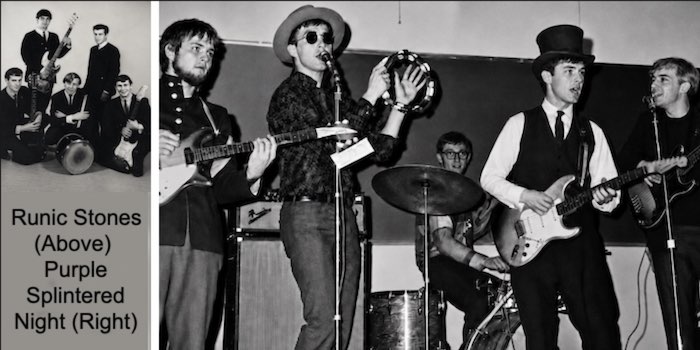
Music has been a constant companion. His playlists are an eclectic mix of genres accessed by mood and time. Over the years, he variously played in mostly rock and electric blues bands, but jazz and country too, in the Runic Stones, X-Men of Note, Purple Splintered Night, Broken Vessel, Country Gold, Eddy & The Hubcaps, ORCA, Hardscratch Road 2.0, and several others. His wife of 57 years (high school sweetheart) doesn’t agree that he needs 25 guitars!
He has never been much for envy, preferring instead to learn from those who have done remarkable things with their lives. People he admires include Jordan Peterson, Paul McCartney, Leonardo da Vinci, Sir Guy Carleton, Thomas Jefferson, Roger Penrose, Elon Musk, Plato, James Joyce, William Wilberforce, Dr. Harry Henteleff, Baruch Spinoza, Viktor Frankl, MLK, Mozart, and Ray’s own two children.
His travels have taken him to the Caribbean, Asia, Europe, South America, Australia and the South Pacific Islands, as well as through 49 U.S. states, every Canadian province and two of its territories.
Eight years ago he was given just a 20% chance of surviving oesophageal cancer. But thanks to marvellous medical miracle workers, he’s cancer-free. These days, he is busy hanging out with family, taking university courses from Peterson Academy, and inventing a trivia/baseball game. In his spare time he’s writing a children’s novella, watching podcasts, writing and recording songs, and working on an 45-minute essay on gratitude for a writers’ club (which started in 1898). He continues to juggle far too many projects, proving that retirement has done little to slow his curiosity, creativity, or appetite for a good story. No one has ever seen him sleep.
View Comments
A boy soprano, lifelong music lover, and serial starter of things, Ray has worn more hats than most people have ever owned. Music has been a constant companion.
His playlists are an eclectic mix of genres accessed by mood and time. Over the years, he variously played in mostly rock and electric blues bands, but jazz and country too, in the Runic Stones, X-Men of Note, Purple Splintered Night, Broken Vessel, Country Gold, Eddy & The Hubcaps, ORCA, Hardscratch Road 2.0, and several others. His wife of 57 years (high school sweetheart) doesn’t agree that he needs 25 guitars!