

By Paul Driessen ——Bio and Archives--January 20, 2014
American Politics, News | CFP Comments | Subscribe | Email Us
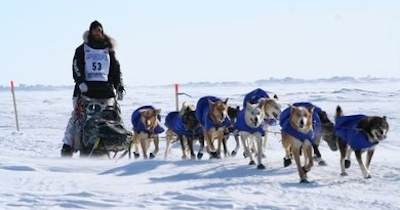


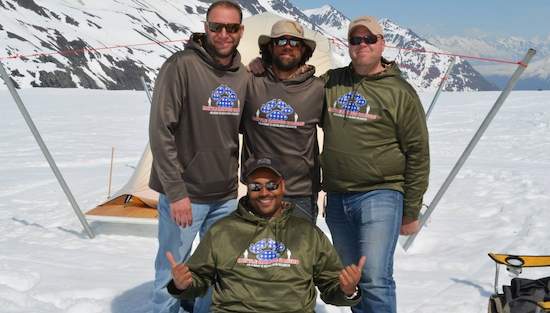
 Some of warriors will actually be members of Rick's "pit crew" during dog races. One will be on his sled for the "ceremonial" portion of the 2014 Iditarod, from Anchorage to Eagle River, where the teams regroup and start the actual race. Few can imagine what goes into this race.
Pre-season racing is like pre-season football, Rick says. "You use it to gauge younger dogs and give them valuable racing experience. I'm looking for attitude, recovery time, eating habits, drive and desire. These dogs are all born to run, but I need dogs that can do these runs over and over, willingly and happily." Usually he spots these characteristics by opening day, but sometimes there are surprises.
"The toughest situation I was ever in was easily in 2007 when I was going up the Alaska Range from Rainey Pass," Rick recalls. "The temperature was minus 30, with 40 mph winds--making it feel like minus 71--and we were climbing in a complete whiteout. My goggles froze up solid and were useless. I was forced to take them off. Minutes later, frostbite set in on my nose, cheeks and eyelids. Sometimes I had to walk in front of the team to find the trail. All of a sudden, an 18-month-old dog started demanding to be up front, leading. Normally I would never rely on a young dog in a situation like that, but Grisman was jumping five feet in the air, howling to go. So I gave him a chance. Once I put Gris in lead, he never balked once. Not only did he take us up and over the range. He continued to be one of best dogs in that race and went on to be the best dog I have ever run."
That experience underscores what are perhaps the six most important factors in Iditarod racing. (1) Bond and trust. "If you don't have the dogs' trust, you have nothing," Rick emphasizes. (2) Mental and physical toughness, for dogs and musher alike. By the end of the race, each musher is tired, battered and cut up--attesting to the difficulty of the trail and weather, and to the need to just keep going, no matter what. (3) Logistics. More on that in a minute. (4-6) "Dog care, dog care, dog care. As the dogs go, you go."
For UPS and Amazon, logistics are vital. "Brown" even has a jingle about logistics, and Amazon.com hires numerous veterans because of their logistical skills. But for the military and Iditarod racers, logistics mean the difference between success and failure, life or death. "We're on our own out there," Rick told me. "No cell phones, no communications. Careful planning and preparation are critical."
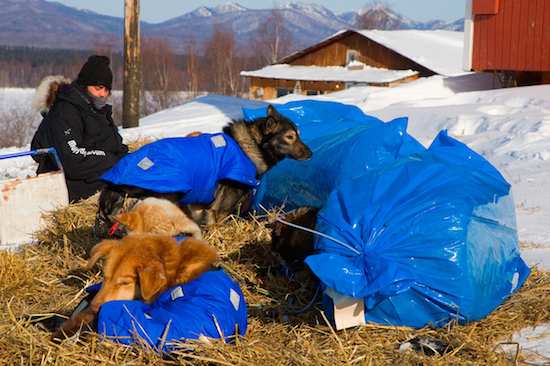
Each dog burns 12,000 calories a day during the Iditarod, Rick points out. That's what Olympic swimming champion Michael Phelps reportedly consumes on racing days. Rick's dogs eat a combination of beef, horse, fish and chicken; beef fat and turkey and chicken skins; tripe and high-grade dry dog food; salmon oil and natural supplements. They wear booties to protect their feet from the cold and bruising.
Mushers are required to carry a sleeping bag, ax, snow shoes, extra dog booties, a veterinary care book, a dog food cooker and sufficient food for the dogs, in their sleds at all times. So they are hauling about 60 pounds of food and gear in sleds similar to what Inupiaq and Yup'ik Natives used for centuries. For each musher, some 3,000 pairs of booties and 2,000 pounds of food and personal gear are divided up and airlifted by volunteer flyers two weeks before the race to each of 20 check points along the route.
"We cover 125 to 150 miles a day. Our average runs are 60 miles, followed by a four-to-five-hour break to eat, rest, massage and care for the dogs--and then we do it again, and again, until we reach Nome," Rick explains. Mushers are also required to shut down completely for two 8-hour and one 24-hour rest periods. Tough hills, rocks, swollen creeks, high winds, frigid temperatures, storms, whiteout conditions, accidents and injuries to dogs or mushers, and other adventures can slow that pace down. But somehow they need to make it to the next check point, where volunteer veterinarians examine the dogs and they can replenish their supplies. More volunteers fly any injured dogs from the nearest checkpoint back to Eagle River, where Hiland Mountain Correctional Center inmates care for them until the mushers finish the race.
Some of warriors will actually be members of Rick's "pit crew" during dog races. One will be on his sled for the "ceremonial" portion of the 2014 Iditarod, from Anchorage to Eagle River, where the teams regroup and start the actual race. Few can imagine what goes into this race.
Pre-season racing is like pre-season football, Rick says. "You use it to gauge younger dogs and give them valuable racing experience. I'm looking for attitude, recovery time, eating habits, drive and desire. These dogs are all born to run, but I need dogs that can do these runs over and over, willingly and happily." Usually he spots these characteristics by opening day, but sometimes there are surprises.
"The toughest situation I was ever in was easily in 2007 when I was going up the Alaska Range from Rainey Pass," Rick recalls. "The temperature was minus 30, with 40 mph winds--making it feel like minus 71--and we were climbing in a complete whiteout. My goggles froze up solid and were useless. I was forced to take them off. Minutes later, frostbite set in on my nose, cheeks and eyelids. Sometimes I had to walk in front of the team to find the trail. All of a sudden, an 18-month-old dog started demanding to be up front, leading. Normally I would never rely on a young dog in a situation like that, but Grisman was jumping five feet in the air, howling to go. So I gave him a chance. Once I put Gris in lead, he never balked once. Not only did he take us up and over the range. He continued to be one of best dogs in that race and went on to be the best dog I have ever run."
That experience underscores what are perhaps the six most important factors in Iditarod racing. (1) Bond and trust. "If you don't have the dogs' trust, you have nothing," Rick emphasizes. (2) Mental and physical toughness, for dogs and musher alike. By the end of the race, each musher is tired, battered and cut up--attesting to the difficulty of the trail and weather, and to the need to just keep going, no matter what. (3) Logistics. More on that in a minute. (4-6) "Dog care, dog care, dog care. As the dogs go, you go."
For UPS and Amazon, logistics are vital. "Brown" even has a jingle about logistics, and Amazon.com hires numerous veterans because of their logistical skills. But for the military and Iditarod racers, logistics mean the difference between success and failure, life or death. "We're on our own out there," Rick told me. "No cell phones, no communications. Careful planning and preparation are critical."
Each dog burns 12,000 calories a day during the Iditarod, Rick points out. That's what Olympic swimming champion Michael Phelps reportedly consumes on racing days. Rick's dogs eat a combination of beef, horse, fish and chicken; beef fat and turkey and chicken skins; tripe and high-grade dry dog food; salmon oil and natural supplements. They wear booties to protect their feet from the cold and bruising.
Mushers are required to carry a sleeping bag, ax, snow shoes, extra dog booties, a veterinary care book, a dog food cooker and sufficient food for the dogs, in their sleds at all times. So they are hauling about 60 pounds of food and gear in sleds similar to what Inupiaq and Yup'ik Natives used for centuries. For each musher, some 3,000 pairs of booties and 2,000 pounds of food and personal gear are divided up and airlifted by volunteer flyers two weeks before the race to each of 20 check points along the route.
"We cover 125 to 150 miles a day. Our average runs are 60 miles, followed by a four-to-five-hour break to eat, rest, massage and care for the dogs--and then we do it again, and again, until we reach Nome," Rick explains. Mushers are also required to shut down completely for two 8-hour and one 24-hour rest periods. Tough hills, rocks, swollen creeks, high winds, frigid temperatures, storms, whiteout conditions, accidents and injuries to dogs or mushers, and other adventures can slow that pace down. But somehow they need to make it to the next check point, where volunteer veterinarians examine the dogs and they can replenish their supplies. More volunteers fly any injured dogs from the nearest checkpoint back to Eagle River, where Hiland Mountain Correctional Center inmates care for them until the mushers finish the race.
 The hard training and careful preparation pay off. Rick has entered and finished four Iditarod races and is now preparing for his fifth. He's also competed in many other dogsled races. This year he plans to run at a slower pace that requires less exertion and less rest--and results in less fatigue and healthier dogs that can chew up miles. That's a bit different from a musher who "ran" all 188 miles to Rohn with minimal breaks in the first race of the 2013-14 season. It will be fascinating to watch all the mushers' strategies in action.
They're all straining, sweating and freezing for the $50,000 first place prize--and smaller cash prizes for the next 30 top finishers, plus the joys and thrills of just being in this premier race. But competing in the Iditarod costs $30,000 or more in fees, supplies, dog care, preparation, training and prelims.
So follow Rick Casillo on BattleDawgsRacing.com and all the mushers, preparations, history and thrills of this amazing race at Iditarod.com. Buy some gear and DVDs. Support your favorite mushers and dogs with donations or by volunteering. And watch the race on television. It starts March 1--and now you know enough to really understand and appreciate "the last great race," the Iditarod.
The hard training and careful preparation pay off. Rick has entered and finished four Iditarod races and is now preparing for his fifth. He's also competed in many other dogsled races. This year he plans to run at a slower pace that requires less exertion and less rest--and results in less fatigue and healthier dogs that can chew up miles. That's a bit different from a musher who "ran" all 188 miles to Rohn with minimal breaks in the first race of the 2013-14 season. It will be fascinating to watch all the mushers' strategies in action.
They're all straining, sweating and freezing for the $50,000 first place prize--and smaller cash prizes for the next 30 top finishers, plus the joys and thrills of just being in this premier race. But competing in the Iditarod costs $30,000 or more in fees, supplies, dog care, preparation, training and prelims.
So follow Rick Casillo on BattleDawgsRacing.com and all the mushers, preparations, history and thrills of this amazing race at Iditarod.com. Buy some gear and DVDs. Support your favorite mushers and dogs with donations or by volunteering. And watch the race on television. It starts March 1--and now you know enough to really understand and appreciate "the last great race," the Iditarod.View Comments
Paul Driessen is a senior fellow with the Committee For A Constructive Tomorrow and Center for the Defense of Free Enterprise, nonprofit public policy institutes that focus on energy, the environment, economic development and international affairs. Paul Driessen is author of Eco-Imperialism:// Green power, Black death