
By Russ Cooper ——Bio and Archives--October 9, 2026
-- Canadian Citizens for Charter Rights & Freedoms
Then we will no longer be infants, tossed back and forth by the waves, and blown here and there by every wind of teaching and by the cunning and craftiness of people in their deceitful scheming. Ephesians 4:14

For a government that promised transparency way back in its beginnings in 2015 under Justin Trudeau, it certainly seems to have fallen short. Recall in the run-up to the election in that year that the young dauphin declared that “Only Liberals have a plan for real change that will restore trust in our democracy, and ensure an open and transparent government.” What happened to the plan? Has transparency ruled the day of successive Liberal governments to the present day under a new leader in the form of Mark Carney? Consider this partial list of buried scandals:
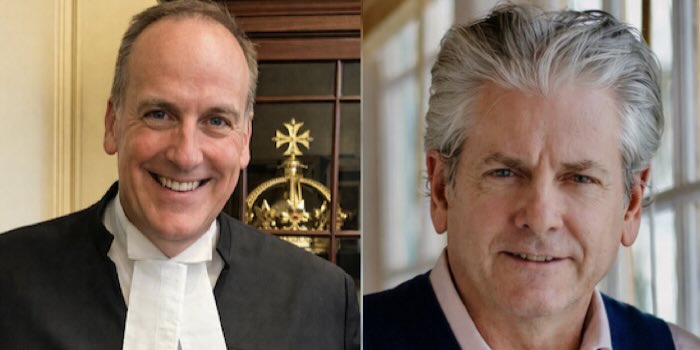
And then there are the questions that must never even be asked in our sacred political halls of power. Recall, for example, the question asked by Conservative Member of Parliament Colin Carrie in the House of Commons on 19 February 2022. He asked, “in the interests of transparency”, the extent to which the World Economic Forum (WEF) was influencing Liberal party policies.
The question, as can be seen in the related YouTube video, was obviously a source of great consternation for both the speaker of the day, Chris d’Entremont, and NDP MP Charlie Angus. D’Entremont would claim that there was something wrong with the audio system but had no problem hearing MP Angus call for a point of order. The Angus point of order complained that the question itself was “disinformation” and should not be allowed. The flustered speaker seemed to agree and then cut off any attempt by Carrie to re-table the question and, instead and with not so much as a how-do-you-do, moved onto the next questioner. For his part, Charlie Angus would later write in his blog that the whole affair sparked unprecedented and unfavourable feedback regarding his effort to shut down such a simple question. Amazingly, he would then write that the problem was not that the people’s voice was being throttled in the House but that fringe conspiracy theories were “now becoming normalized within mainstream Canadian views.” But was the question really an expression of conspiratorial views that had no place in Parliament?
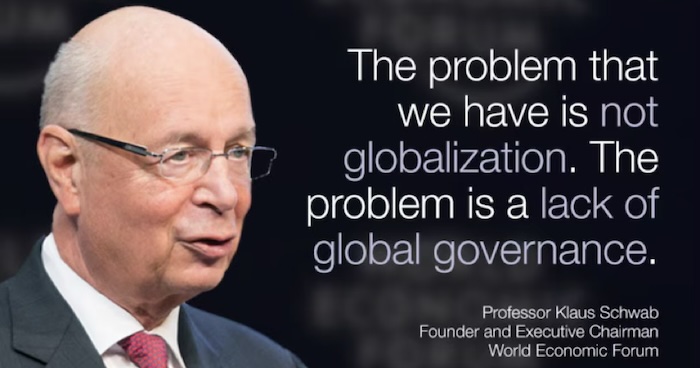
The good folk of Canada might be just as confused as MP Carrie to hear that tabling questions on WEF influence on Canadian political matters is “fringe” and not allowed. After all, WEF founder Klaus Schwab stated matter-of-factly at a 2017 Harvard University event that the WEF’s own “Young Global Leaders” program has seen many of its alumni instated in governments around the world. Indeed, he was quite proud of the organization’s Canadian record and boasted that a “more than half” of Justin Trudeau’s cabinet were from the “Young Global Leader” lineage. Furthermore, there is the fact that these WEF offspring could be found on both sides of the aisle on both government and opposition benches. In fact, with notables like Andrew Scheer, Rona Ambrose, Michelle Rempel-Garner, Jagmeet Singh, Chrystia Freeland and Pierre Poilievre, not to mention Justin Trudeau and Melanie Joly, it could be alleged that a sizeable portion of the House of Commons’ membership is sympathetic with WEF concerns and policy recommendations.
Whoever digs a pit may fall into it; whoever breaks through a wall may be bitten by a snake. Ecclesiastes 10:8
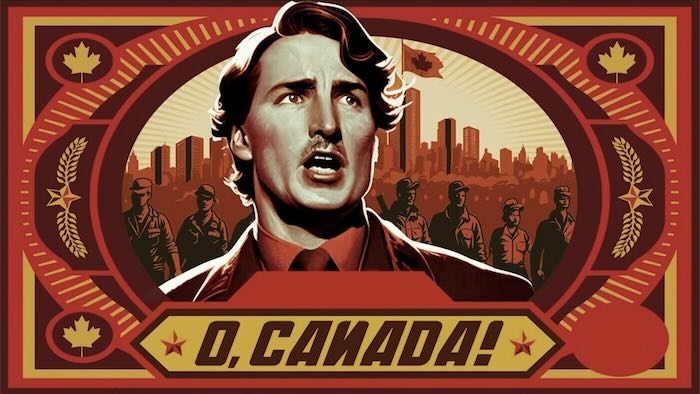
Prime among the policy recommendations offered up by the WEF-inspired Davos crowd was, and is, the idea of a “great reset”. This reset was proposed by Klaus Schwab himself in 2020 and was bolstered, in person, by notables such as His Majesty Charles III. After all, some sort of drastic reconfiguration was required to deal with a Wuhan virus crisis that “has shown us that our old systems are not fit any more for the 21st century”. It was past time to get the world on board with the development of a “better, fairer, greener, healthier planet” and to do so by morphing the free market economic systems that had lifted all boats on a tide of free enterprise into something called “stakeholder capitalism”. His Majesty would be joined by other world leaders, including our own in the form of one Justin Trudeau. Indeed, Trudeau would go so far as to say, in a speech to the United Nations in 2020, that the “pandemic has provided an opportunity for a reset” and that it was time to
On closer examination the thing called “stakeholder capitalism” had, at its core, the notion that “companies do not only optimize short-term profits for shareholders, but seek long term value creation, by taking into account the needs of all their stakeholders, and society at large”. Forget about national interests, this new animal would require the consideration of the needs of society-writ-large on a global scale and, by definition, would require the centralization of political power in a supranational entity such as the United Nations. And what a coincidence, the mechanization of such a cosmopolitan project would be found in the UN’s own Agenda 2030 with its emphasis on Sustainable Development Goals (SDGs) that featured such globe-saving enterprises as “climate change” and a variety of equity-based initiatives. The former SDG would drive solutions like “net-zero 2050” while the latter would call up the need for the recognition and normalization of non-traditional sexual and biological arrangements and a massive re-distribution of humanity from poorer to richer regions. What could go wrong?
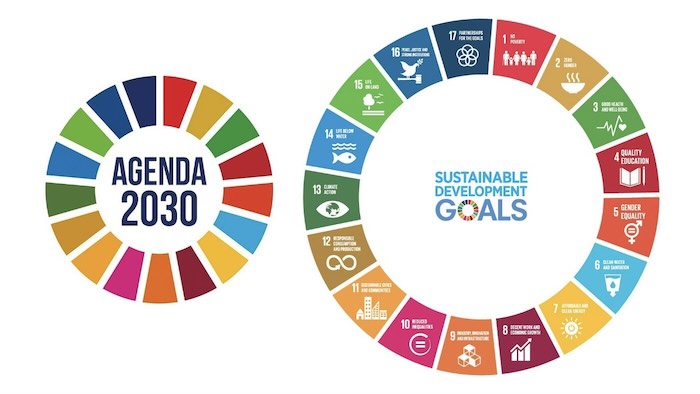
What could go wrong might easily be encapsulated by the observation that the globalist solutions derived from Agenda 2030 are not easily reconcilable within societies that prize individual rights and freedoms. After all, the sweeping changes required to accommodate Agenda 2030’s SDGs necessarily mandates the sacrifice of individual wants and needs to the global “public good”. The template for such sacrifice, as noted by Prime Minister Justin Trudeau, can be seen to have been put in place during the Wuhan virus crisis at the insistence of yet another United Nations organization in the form of the World Health Organization (WHO). It is interesting to note that at the intersection of the WEF’s “stakeholder capitalism” and the UN’s Agenda 2030 is Canada’s own, current Prime Minister, Mark Carney. This, as he not only served the WEF as a member of its Board of Trustees, along with Chrystia Freeland, but also the United Nations as its envoy for climate action and finance.
Dear friends, do not believe every spirit, but test the spirits to see whether they are from God, because many false prophets have gone out into the world. 1 John 4:1
In making an assessment of MP Colin Carrie’s original question about the extent to which the WEF had penetrated Canada’s ship of state, one could simply measure the variance between what that ship is doing in service of the best interests of its citizens versus what it is doing in aid of WEF objectives. In Western societies the best interests of a citizen or a “freeman” go all the way back to the Magna Carta of 1515 and are rooted in the Judeo-Christian belief that each human life is created in the image of God and has its own intrinsic value. Compare this with the stated objectives of a WEF that sees the need to instate and measure a data-driven Environmental, Social and Governance (ESG) framework capable of solving global problems through centralized control and decision making. This framework will, out of necessity, supplant individual agency and personal judgement with digital identity systems that can nudge, or coerce if required, a person to act in the public good.

When determining which path the Canadian ship of state is travelling one might simply look into its efforts to advance the most fundamental of the “fundamental” rights found within its own Charter. In this particular case, the most rudimentary of examinations reveals that the Government of Canada, over the past decade plus, has been relentlessly pursuing the diminishment of free speech to the detriment of all other Charter rights and freedoms that are dependent upon it. What else to think as efforts to impose a digital ID system on Canadians, mirroring those of the WEF in the matter of its Known Traveler Digital Identification (KTDI) and Agile Nations programs, have been attempted on multiple occasions. Such has been the case with not one but two attempts to introduce a Digital Safety Commission through Bills C-63 and C-34. C-63 was the Online Harms Act that fell apart with the call of the federal election of 2025 while C-34, the Safe Social Media Act, has just been tabled by a Liberal government with a manufactured majority. Both of these bills called, or now call, for the punishment of speech that “foments” hatred in what can only be seen as a subjective exercise. And then there is Bill C-34 that additionally calls for a digital ID system for all citizens desiring to access the internet.
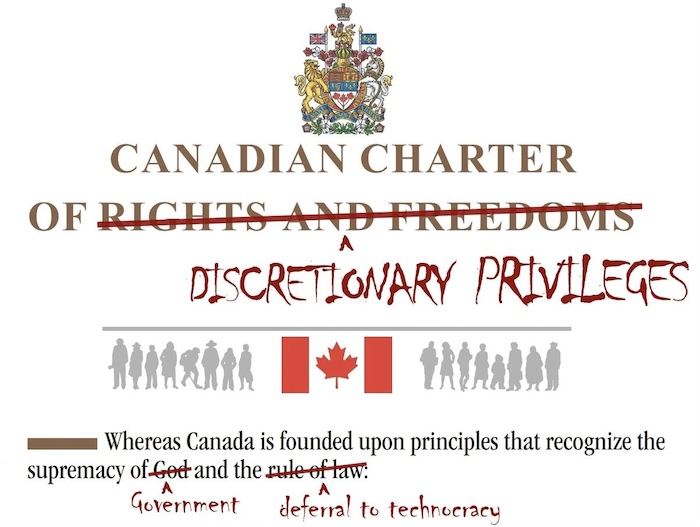
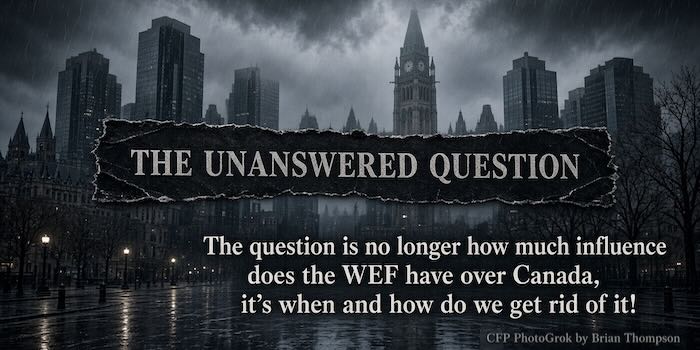
The evidence would seem to indicate that Canada’s representative government has undergone a transition, somewhere along the way, from speaking on behalf of what Canadians see as their priorities to what the WEF sees as its. MP Colin Carrie’s question then becomes a rhetorical one as such a shift in emphasis can only be indicative of a great influence by WEF acolytes on Canada’s political landscape. Moving beyond the rhetorical, a follow-on to Carrie’s question might be, “how does Canada get back to a place where its politicians represent their own electorate”. The answer to such a critical question might have its start in reviewing all policies that have their origins in offshore authorities and institutions to see if they pass the “responsible government” test. If, for example, Canada produces only 1.6% of greenhouse gases, what is it doing choking off its own economy with crippling fuel and energy taxes to meet Agenda 2030 targets? If a quarter of all Canadians are suffering from food insecurity, what is the government doing shipping more that $25 billion to Ukraine to feed that country’s meat-grinder war with Russia? The question is no longer how much influence does the WEF have over Canada, it’s when and how do we get rid of it!
Your patronage makes a world of difference in the ability of C3RF to educate, advocate and act in service of preserving the individual and fundamental rights of all Canadians. Please consider clicking here to support C3RF today. And while you're considering making a difference, please follow C3RF on Facebook, on Twitter, on Gab, on Gettr and on our web site and share with friends our great content and a realistic outlook on the continuing battle for Charter rights in Canada. You can also view our social media archive here and view our videos here as well as on YouTube, on Rumble and on Odysee.
Major Russ Cooper (Ret'd)
President and CEO, C3RF
View Comments
Major Russ Cooper (Ret’d), Founding Member, Board Chair, President and CEO of Canadian Citizens for Charter Rights and Freedoms (C3RF).
Russ Cooper is retired from both the Royal Canadian Air Force and Air Canada. In his military career, he was a decorated CF18 combat pilot and served in several staff positions as a Director of major capital acquisition projects. In the civilian aviation sector, he complimented service as an international airliner pilot with national responsibilities in the field of post 9/11 civil aviation security. He is published internationally in this latter area.
Now fully retired from his follow-on career as a Human Factors Engineer and a Transport Canada Flight Test Pilot delegate, he is pursuing an abiding interest in the preservation of fundamental Canadian Charter rights. This latter pursuit has been prompted by his sense that these rights, hard-won by the sacrifice of Canadians past, are under attack and on the verge of being lost.