Pakistan believes it is surrounded by enemies in general and fears India in particular. With a mindset like that, friendship is not a priority, but survival
The answer to whether Pakistan is our friend is “It depends.”
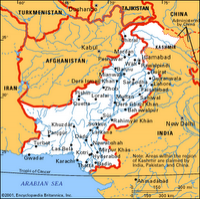
That’s an apt description of U.S.-Pakistani relations over the years, but one thing is sure, Pakistan believes it is surrounded by enemies in general and fears India in particular. With a mindset like that, friendship is not a priority, but survival—even if it just means muddling through another day—most surely is.
I have read several books about Pakistan in order to understand this odd nation that was peeled off from India in 1947 when the British left. Divided between eastern and western sections, even Bangladesh, formerly East Bengal, separated from its western cousin, declaring its independence in 1971. In the ensuing civil war, a million died and ten million fled to India.
In “The Unraveling: Pakistan in the Age of Jihad” by John R. Schmidt, a former State Department diplomat for three decades, reflects on his years in Islamabad in the years leading up to 9/11. He is a sharp observer of Pakistan and provides a lively history while unraveling the complexities of its various tribal groups, who the Taliban were and are, and how Al Qaeda established itself there.
To understand Pakistan is to understand how very different it is from America. It is a feudal society from top to bottom and it came about because its founding father, Mohammed Ali Jinnah, a Bombay lawyer, envisioned a nation separate from India because he feared that Muslims would become a political underclass in a unified India dominated by Hindus.


 The answer to whether Pakistan is our friend is “It depends.”
That’s an apt description of U.S.-Pakistani relations over the years, but one thing is sure, Pakistan believes it is surrounded by enemies in general and fears India in particular. With a mindset like that, friendship is not a priority, but survival—even if it just means muddling through another day—most surely is.
I have read several books about Pakistan in order to understand this odd nation that was peeled off from India in 1947 when the British left. Divided between eastern and western sections, even Bangladesh, formerly East Bengal, separated from its western cousin, declaring its independence in 1971. In the ensuing civil war, a million died and ten million fled to India.
The answer to whether Pakistan is our friend is “It depends.”
That’s an apt description of U.S.-Pakistani relations over the years, but one thing is sure, Pakistan believes it is surrounded by enemies in general and fears India in particular. With a mindset like that, friendship is not a priority, but survival—even if it just means muddling through another day—most surely is.
I have read several books about Pakistan in order to understand this odd nation that was peeled off from India in 1947 when the British left. Divided between eastern and western sections, even Bangladesh, formerly East Bengal, separated from its western cousin, declaring its independence in 1971. In the ensuing civil war, a million died and ten million fled to India.