

By Hymie Rubenstein ——Bio and Archives--July 22, 2025
Canadian News, Opinion | CFP Comments | Subscribe | Email Us
“It’s hard to imagine a reputation being trashed so hatefully, so suddenly, and so thoroughly…. Students are taught that Macdonald is a person of whom Canadians should be ashamed … a racist, a colonialist, a prototypical Nazi, an architect of Indigenous genocide.” (Patrice Dutil, Professor, Toronto Metropolitan University, 2025)
‘Sir John A. Macdonald, the greatest PM of all’ was the title of a January 9, 2015, Toronto Star opinion piece commemorating the 200th anniversary of the birth of Canada’s first Prime Minister. The author was the late Richard Gwyn, for years the Toronto Star’s leading political columnist.

Given the present-day vilification of Macdonald based on a combination of the flawed application of simplistic “woke” contemporary beliefs and values to their late 19th-century counterparts and a misuse of the term genocide and génocidaire, a person who commits mass murder to destroy a whole identified group of people, it is well worth considering Gwyn’s celebration of Canada’s founder.
This is particularly worth exploring because Gwyn was a left-of-centre journalist who wrote a highly acclaimed, best-selling and award-winning two-volume biography of Canada’s founder.
According to Gwyn, Macdonald’s first and most important achievement was Canada’s very creation: “… had there been no Macdonald, there would be no Canada for anyone to be a citizen of.” Gwyn tells us why:
Other achievements during Macdonald’s two terms in office (1867-1873 and 1878-1891) were the extension of Canada from sea to sea, largely by building a railway from eastern Canada to the West Coast; enacting high tariffs to protect Canadian companies from their far more efficient American rivals; founding the North-West Mounted Police (today, the RCMP), which he dispatched to the Prairies to support the rule of law throughout the region.
Canadian law and order was critical during the course of Macdonald’s reign because:
Gwyn also acknowledged Macdonald’s alleged faults, albeit tempered by positive observations:
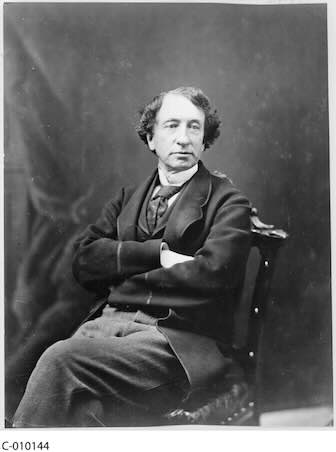
Comments from Macdonald’s many academic, institutional, and public detractors have tried to paint Gwyn and other Macdonald supporters as ideological or racist outliers, as a brief sample suggests.
That Macdonald committed genocide against Indigenous people, including Indian Residential School Children, is the most scurrilous slur hurled against him. Accordingly, it needs far more examination than Gwyn was able to give it in his short Toronto Star article, not the least because it has been levelled against Macdonald and his regime by so many of his critics.
In particular, claims of genocide against Indian Residential School students need to be carefully analyzed using the 1948 United Nations Convention on the Prevention and Punishment of the Crime of Genocide.
The Convention lists five “acts committed with intent to destroy, in whole or in part, a national, ethnical, racial or religious group,” any one of which constitutes genocide.
As applied to the Indian Residential Schools, four of these acts can easily be dismissed:
Absent from this list is the act ostentatiously called “cultural genocide,” the only genocide accusation levelled at the Indian Residential Schools by the authors of the 2015 Final Report of the Truth and Reconciliation Commission of Canada charged with reporting on the history, operation, and legacy of these government-funded and mainly church operated boarding schools:
As for genocidal acts recognized by the UN Convention, two influential Canadian social activists, Phil Fontaine, former National Chief of the Assembly of First Nations, and Bernie Farber, former chief executive officer of the Canadian Jewish Congress, have argued that:
This is the most common claim made about deliberately inflicting on Indigenous children a plague calculated to bring about their deaths, the proof being that many Aboriginal children died from TB during the first six decades of their operation. In doing so, genocide proponents always ignore the elementary fact that TB was rampant throughout Canada, including the Indian reserves, during the same era. They also never mention there was no effective treatment for this disease until the use streptomycin in 1944. Most important of all, they ignore Dr. Bryce’s assertion that most children entered these boarding schools already infected with this disease or that this deadly affliction also killed thousands of non-native Canadians in urban areas throughout Macdonald’s time in office.
Fontaine and Farber are not exceptions in making this specious genocide claim.
While the word genocide wasn’t heard in any of Pope Francis’s addresses during his July 24-30, 2022 “penitential pilgrimage” to Canada, on his flight back to Rome, he said everything he described about the residential school system and its “forced assimilation” of Indigenous children amounts to genocide: “I didn’t use the word genocide because it didn’t come to mind, but I described genocide,” Pope Francis told reporters on the papal flight from Iqaluit to Rome.
In a historic move, Canada’s House of Commons unanimously recognized the Indian Residential School System as genocide on October 27, 2022.
As for the genocide claims made by Indigenous people, though many students have claimed they were harmed by their attendance at residential schools because they were physically assaulted, sexually abused, given little or spoiled food to eat, demeaned for their indigenous status, or culturally prevented from speaking their native languages in their classrooms and playgrounds, there is no proof that any such claims rose to the level of an “intent to destroy, in whole or in part” their indigeneity.
Even if such an “intent to destroy, in whole or in part” their indigeneity could be proven, it was a colossal failure from an evidentiary perspective.
Though Indian Residential Students often complained about the food they were served--a common complaint in government funded institutions of all kind, especially hospitals, around the world--there is no evidence they were starved to death. Indeed, conditions on the reserves regarding food, clothing, and shelter were far worse than in the schools.
Still, Macdonald made unprecedented efforts to prevent starvation on the students’ home reserves even though contemporary writers have condemned the inadequacy of his emergency food measures for Indigenous people. Patrice Dutil, Macdonald’s latest biographer, has shown that our first prime minister devoted, against fierce Liberal Party opposition in Parliament, as much money to food relief as his government spent on the entire justice system. The aid was never enough, but he did what he could against the daunting barriers of geography and politics.
As Greg Piasetzki has argued:
Other commentators have supported these observations:
So much for the act of “deliberately inflicting on the group--Indigenous people generally and boarding school students in particular--conditions of life calculated to bring about its physical destruction in whole or in part.”
Of the five genocide acts, the only remotely credible claim of genocide in the Indian Residential Schools is “Imposing measures intended to prevent births within the group.” This was partially achieved by segregating the sleeping quarters of students based on their gender, a practice that lowered but did not eradicate occasional pregnancy among female students. Still, such girls were immediately sent home or dispatched to homes for unwed mothers to deliver their child if they had no home to go back to after their condition was discovered. There is no evidence that any of them were forced to accept an abortion at any Indian Residential School.
More importantly, the perennial claim that genocide occurred because children were forcibly transferred from loving homes to another group, namely those who ran the boarding schools, is contradicted by a substantial body of evidence contained in its own report.
The strongest counter-evidence is that, until 1920, parents had to sign an application form for their children’s admission to these schools. When school attendance became mandatory in 1920, parents could still send their children to Indigenous Day Schools on their home reserves, if these were locally available, or to nearby provincial public schools. If residential school attendance was the sole option, force was not used to compel students to attend unless they were orphans or living in neglectful or abusive households.
Conversely, there are many examples in the 2015 Truth and Reconciliation Commission of Canada’s final report of Aboriginal parents refusing to send their children to certain schools, withdrawing their children from them, and insisting that specific changes be made before they returned their children.
All this evidence also disputes assertions of “cultural genocide,” a deliberately twisted way of labelling voluntary acculturation: assimilation to a different culture, typically the dominant one.
Moreover, church-run schools for Indigenous children were established decades before the Dominion of Canada was created and well before the out-of-context parliamentary quotes from Prime Minister Sir John A. Macdonald and others were employed to bolster unsubstantiated allegations of genocide. For example, Ojibway people who had converted to Christianity promoted such schools in the early 1800s as a means of rescuing children from the widespread alcohol abuse in many of their communities.
As for the extra-legal “cultural genocide” accusation levelled against the Indian Residential Schools in the Truth and Reconciliation Commission’s final report, the very same report admits, “Aboriginal peoples and cultures have been badly damaged, [but] they continue to exist. Aboriginal people have refused to surrender their identity.”
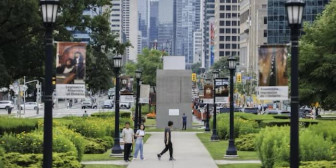
Richard Gwyn died at the age of 86 of Alzheimer’s disease in 2020, a few short weeks after Black Lives Matter protesters splashed a statue of Sir John A. with pink paint at Queen’s Park, Toronto. Had he still been in good enough health to understand this mindless desecration, it would surely have deeply saddened him.
This vandalism was only one of several instances of statues of the first prime minister damaged or removed from public view across the country because of Macdonald’s role in establishing Canada’s Indigenous Residential School system.
What Gwyn called scapegoating can no better be seen than by a June 5 Globe and Mail Editorial Board commentary excoriating the government of Ontario’s decision to remove the security boards from the repaired statue because Macdonald’s “legacy is stained by the establishment of a national residential school system aimed at stamping out Indigenous culture, causing generations of trauma.” Instead, it suggests, “To reflect Macdonald’s legacy properly, remove the protective box now hiding his statue--and erect an equally prominent memorial to the victims of residential schools.”
The editorial board members also argued that such a memorial should be in the hands of Indigenous bands who best know “how to commemorate that sorry [Indian Residential School] history, in which thousands of children died and more than 150,000 in total were victimized. Position Macdonald’s statue so he is left to gaze at the memorial.”
These inflammatory claims obscure the well-documented facts about these boarding schools.
These facts show that thousands of children were sent to these schools to escape chronic economic deprivation or the trauma of dysfunctional home life on poverty-stricken reserves.
Moreover, according to the True and Reconciliation Commission’s final report, there were 28,429 school-age Aboriginal children in the 1944-45 school year. Only 16,438 (57.8%) went to school. Of those, 8,865 (53.9%) attended a residential school and 7,573 (46%) attended day school. The report says: “This meant that 31.1% of the school-age Aboriginal children were in residential school.” That also means that 68.9% were not.
“Stamping out Indigenous culture” was impossible given the short period most students spent in these schools, namely an average of only 4.5 years. As Greg Piasetzki notes:
All these facts also contradict the notion of “cultural genocide.”
Moreover, few deaths--and even fewer burials--of Indigenous students took place on school property because students who became very ill normally were sent home or to designated Indian federal hospitals for treatment.
In addition, the Truth and Reconciliation Commission's final report never claimed, let alone proved, that 150,000 students “were victimized” in any way while attending them.
This does not deny that far too many Aboriginal children were separated from their parents, physically and/or sexually abused, forbidden to or discouraged from speaking their native languages, poorly fed and forced to live in overcrowded facilities, and, overall, denied the benefits of an adequate education.
Still, as Robert MacBain has pointed out:
The single most telling fact disputing the genocide accusation is the absence of a single substantiated case of an Indian Residential School student murdered at any of the boarding schools during the 113 years of their operation, 1883-1996. So much for the genocidal act of “killing members of the group.”
Each of the counter-claims discussed above are also carefully documented here, here, here, here, and here. Taken together, they prove genocide never occurred in Canada’s Indian Residential Schools.
Conversely, this doesn’t mean that there was never any genocide in what became Canada but such brutalities were always confined to inter-indigenous warfare. The Beaver Wars, also known as the Iroquois Wars, were a series of genocidal battles fought intermittently during the 17th century throughout the Saint Lawrence River valley in Canada and the Great Lakes region pitting the Iroquois against the Hurons, northern Algonquians and their French allies.
None of this is meant to defend all of Sir John A. Macdonald’s policies or programmes directed at Indigenous people. More importantly, no rational or objective person would ever claim he was anything close to a perfect Prime Minister.
Still, Richard Gywn’s last sentence in his 2015 essay asks and answers the most critical question of all: “Who else among our 22 [now 24] other prime ministers has done more than Sir John A. Macdonald did for his country?”
View Comments